Why Do Water Heaters Leak in Norman Homes?
Water heaters leak because of internal tank corrosion, failed temperature and pressure relief valves, loose drain valves, or cracked inlet and outlet connections. Norman's hard water accelerates sediment buildup at the tank bottom, which creates hot spots that weaken the steel liner and eventually cause pinhole leaks or catastrophic ruptures.
In our experience working water damage calls in Norman, most homeowner-owned tanks sit in garages, utility closets, or attics. Garage units often go unnoticed until water spreads under stored boxes. Attic installations can dump hundreds of gallons onto ceilings and insulation before anyone realizes there's a problem.
Norman sits on the edge of the Cross Timbers region where groundwater carries dissolved minerals. These minerals precipitate inside your tank and form a crust. Over time, that crust insulates the heating element or burner flame from the water, forcing the system to work harder and overheat the metal below.
We've seen 40-gallon tanks in Norman neighborhoods near Oklahoma City lose 30 percent of their capacity to sediment alone. That buildup shortens tank life and increases leak risk. Age matters too. Most manufacturers design tanks to last 8-12 years under normal conditions, but Oklahoma water chemistry can cut that window short.
Pressure spikes also contribute. During cold snaps or after extended absences, rapid heating cycles cause expansion and contraction. If the relief valve sticks or the expansion tank fails, the stress cracks welds and seams. We recently dried out a garage in Norman where a 15-year-old tank split along the bottom seam and released 50 gallons before the homeowner returned from work.
How to Inspect Your Water Heater for Early Warning Signs
Start by looking at the tank base. Corrosion, rust stains, or dampness around the bottom edge signal an active or imminent leak. Use a flashlight to check under the insulation jacket if your model has an exposed metal base.
Next, examine the temperature and pressure relief valve on the side or top. This valve should have a discharge pipe running down toward the floor. Test it once a year by lifting the lever briefly. You should hear a rush of water into the pipe. If nothing happens, the valve may be clogged with sediment. If water continues to drip after you release the lever, the valve seat is damaged and needs replacement.
Check both the cold water inlet and hot water outlet fittings at the top of the tank. Look for moisture, mineral crust, or green corrosion on copper fittings. Tighten any loose connections gently. Over-tightening can crack the dielectric unions that prevent galvanic corrosion between dissimilar metals.
Inspect the drain valve at the tank bottom. A slow drip here often means sediment has lodged in the valve seat. You can try flushing the tank to clear it, but sometimes the valve itself needs replacement. Plastic drain valves are especially prone to cracking as they age.
Listen for unusual sounds. Popping or rumbling noises indicate sediment boiling on the tank floor. That's a sign you need to flush the system soon. Hissing or sizzling suggests water is dripping onto the burner assembly or heating element, which means a leak is already underway.
Finally, note the installation date. Most tanks have a sticker or stamped serial number that encodes the manufacture date. If your water heater is over ten years old and you've never had it serviced, plan for replacement rather than waiting for a failure. Proactive replacement prevents the kind of water damage that costs thousands to repair.
Annual Maintenance Tasks That Prevent Leaks
Flush the tank every 12 months to remove sediment. Turn off the power or gas, connect a garden hose to the drain valve, and run the hose outside or into a floor drain. Open the valve and let several gallons flow out. The first discharge will be cloudy or rust-colored. Continue until the water runs clear. This process removes the mineral layer that accelerates tank corrosion.
Test the temperature and pressure relief valve annually. Lift the lever and let a few cups of water discharge through the overflow pipe. If the valve fails to open or continues dripping afterward, replace it immediately. A stuck relief valve can allow dangerous pressure buildup or fail to prevent a rupture.
Inspect the anode rod every three years. This sacrificial metal rod attracts corrosive elements in your water, protecting the steel tank. Most rods are accessible through a hex head on the tank top. If the rod is less than half an inch thick or coated in calcium, replace it. Homeowners in Norman often skip this step, but we've seen tanks last 15 years or more with regular anode replacement.
Check the expansion tank if your system has one. Tap the tank with your knuckles. A hollow sound at the top and dull thud at the bottom is normal. If the entire tank sounds dull, the internal bladder has failed and the tank is waterlogged. A failed expansion tank forces excess pressure through the relief valve, which shortens its life and increases leak risk.
Adjust the thermostat to 120 degrees Fahrenheit. Higher temperatures accelerate corrosion and increase pressure. Most households don't need water hotter than 120. The lower setting also reduces energy costs and scalding risk.
Insulate hot water pipes and the tank itself if it sits in an unconditioned space. Pipe insulation reduces heat loss and prevents condensation, which can be mistaken for a leak. Tank blankets are available at hardware stores but check your owner's manual first. Some newer models have enough factory insulation that adding more can interfere with ventilation or safety features.
What to Do the Moment You Discover a Water Heater Leak
Shut off the water supply immediately. The cold water inlet valve sits on the pipe feeding the top of the tank. Turn it clockwise until it stops. This prevents additional water from entering and limits the total volume that can leak out.
Next, cut power to the unit. For electric heaters, flip the dedicated circuit breaker in your electrical panel. For gas models, turn the dial on the gas control valve to the off position. Do not attempt repairs or cleanup while the unit is energized or has an active gas supply.
If water is actively pooling, start containment. Move valuables and furniture away from the area. Use towels, a wet vacuum, or a mop to control the spread. If the tank is in an attic or second-floor closet, water may already be dripping through the ceiling below. Place buckets to catch drips and call for help immediately.
Document the damage with photos and video. Capture the water heater itself, any visible corrosion or cracks, and the extent of water spread on floors, walls, or ceilings. Your insurance adjuster will need this evidence. If you're unsure whether your policy covers sudden water heater failure, call your agent before cleanup begins.
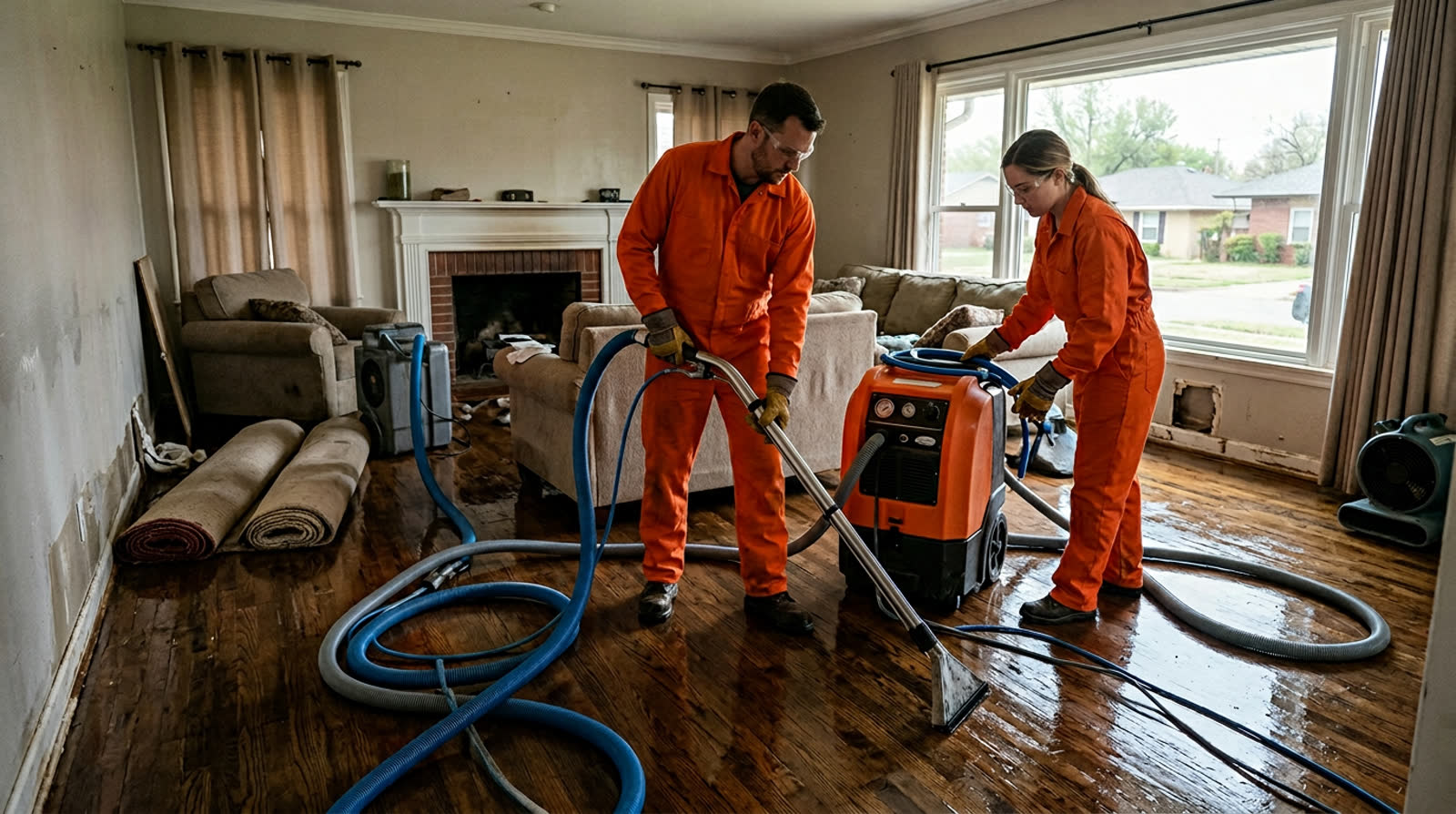
Contact a qualified plumber or water damage restoration team. We've worked hundreds of these cases across Norman, Moore, and surrounding areas. A plumber will handle tank replacement and code compliance. A restoration company extracts water, dries structure, and prevents mold growth.
Do not try to repair a leaking tank. Once the steel liner is compromised, no sealant or patch will hold under pressure. Replacement is the only safe option. We've seen homeowners attempt epoxy repairs that failed within hours, causing a second flood and doubling the restoration cost.
Choosing the Right Replacement Water Heater for Norman Conditions
Select a tank size based on household occupancy and peak demand. A two-person household typically needs a 40-gallon tank. Three to four people do well with 50 gallons. Larger families or homes with high-flow fixtures may require 75 or 80 gallons. Undersized tanks run constantly and wear out faster. Oversized units waste energy and take up unnecessary space.
Consider a tankless water heater if space is tight or you want to eliminate standby heat loss. Tankless units heat water on demand and never run out, but they require higher upfront investment and may need electrical or gas line upgrades. They also struggle during power outages unless paired with a generator. For most Norman homes, a quality tank-style heater remains the most cost-effective choice.
Look for models with longer warranties and enhanced anode rods. A 12-year warranty often correlates with thicker tank insulation, better quality steel, and more strong components. Some manufacturers offer powered anode rods that use a small electrical current to repel corrosion. These work especially well in homes with very hard water.
Verify that your plumber installs an expansion tank if local code or your municipal water provider requires one. Norman is served by the Norman Utilities Authority, which operates a closed water system. Closed systems prevent backflow into the municipal supply but trap thermal expansion inside your home. Without an expansion tank, that pressure hammers your water heater and can cause premature failure.
Discuss drain pan installation if the heater sits above finished living space. A metal or plastic pan with a drain line routed to the exterior or a floor drain can catch small leaks and route them safely away. Add a leak detection alarm for extra insurance. Battery-powered alarms cost under $20 and will alert you the moment water contacts the sensor.
Ask about installation height and access. Oklahoma building codes require adequate clearance for combustion air, venting, and service. If your heater is in a closet, the plumber must ensure proper ventilation. If it's in an attic, confirm that the platform can support the full weight of the tank when filled with water. We've responded to collapsed ceilings in Edmond and Norman where improper attic installations led to structural failure.
Common Mistakes Norman Homeowners Make With Water Heaters
Ignoring the temperature and pressure relief valve is the most common error. This valve is your primary safety device. If it fails and pressure builds unchecked, the tank can rupture with explosive force. Test it every year and replace it at the first sign of leakage or malfunction.
Skipping annual flushing allows sediment to accumulate. In Norman, where mineral content runs high, a single year without flushing can deposit a quarter-inch layer of scale on the tank floor. After five years, that buildup reduces efficiency by 20 percent or more and significantly shortens tank life.
Setting the thermostat too high accelerates corrosion and wastes energy. Homeowners often crank the dial to 140 degrees thinking it will provide endless hot water. In reality, it just cooks the tank from the inside and increases the risk of scalding injuries. Keep it at 120 degrees unless you have a medical or appliance-specific need for higher temperatures.
Delaying replacement on aging tanks is penny-wise and pound-foolish. We understand that a new water heater is an unexpected expense, but waiting for a catastrophic failure can cost you ten times more in water damage. A controlled replacement on your schedule beats an emergency call at midnight when water is pouring into your bedroom.
Installing the wrong size tank creates problems at both ends of the spectrum. Too small, and you'll run out of hot water constantly, forcing the unit to cycle more often and wear out faster. Too large, and you're heating 20 extra gallons of water every day for no reason. A qualified plumber can help you calculate the correct capacity based on fixture count and usage patterns.
Neglecting the expansion tank invites trouble. If your system needs one and doesn't have it, every time the water heats and expands, the relief valve weeps a little. Over months, that small drip corrodes the valve seat. Eventually, the valve fails completely and you have a much bigger problem.
How Water Heater Leaks Lead to Serious Property Damage
A standard 50-gallon tank can release its entire contents in under an hour if the tank bottom fails. That volume of water spreads fast. It seeps under baseboards, soaks carpet padding, and wicks up drywall. Within 24 hours, mold spores begin colonizing damp materials. After 48 hours, you're looking at significant microbial growth and potential structural damage.
Attic installations are especially destructive. Water flows downward through insulation, which acts like a sponge and holds moisture against ceiling joists. Drywall sags and eventually collapses. Electrical fixtures short out. HVAC ducts fill with contaminated water. We've worked attic water heater failures in Norman that required replacing entire ceilings, insulation, and ductwork across 1,500 square feet of living space.
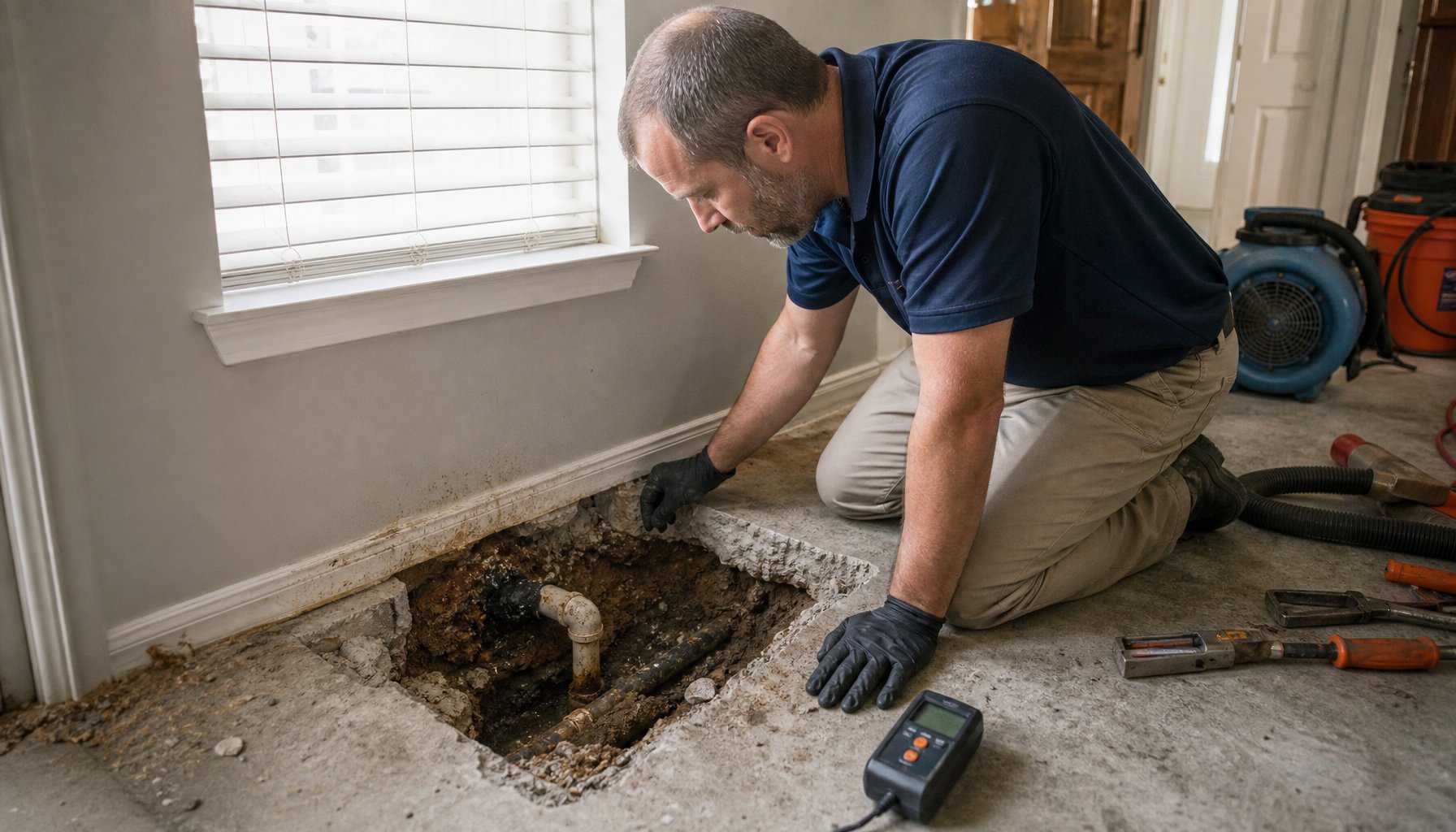
Garage leaks often go unnoticed longer because homeowners don't visit the space as frequently. By the time the problem is discovered, water has migrated under the slab foundation or into adjoining walls. Concrete absorbs moisture slowly but releases it even more slowly. If water reaches the slab edge, it can wick into interior walls and cause hidden damage far from the original leak site.
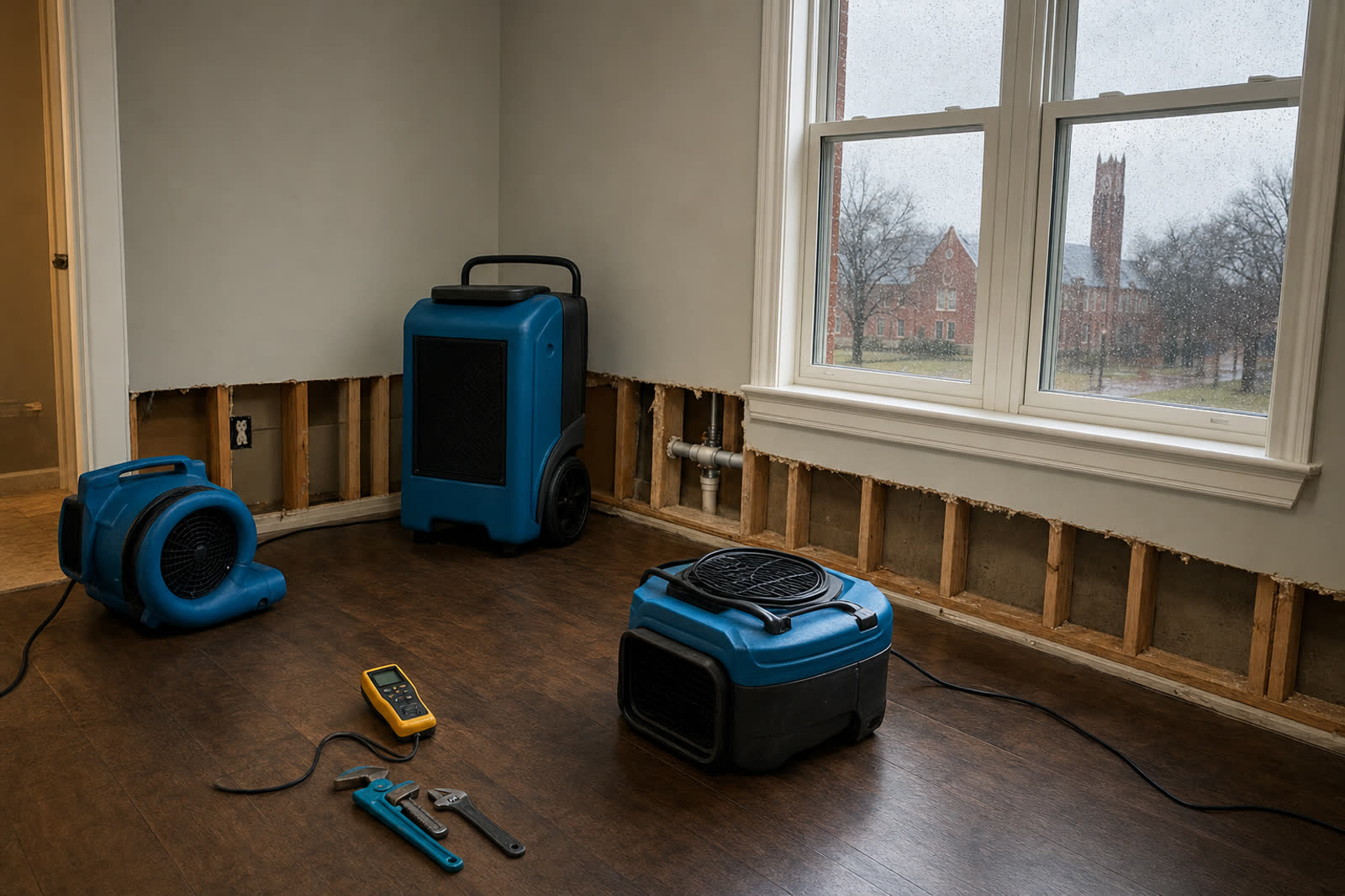
Secondary damage multiplies costs. Once framing lumber or subfloor gets wet, it must be dried to below 15 percent moisture content to prevent rot and mold. Drying can take several days with professional air movers and dehumidifiers. If materials stay wet too long, they must be removed and replaced. Insurance adjusters distinguish between sudden failures (usually covered) and long-term seepage (often denied as maintenance neglect).
Personal property losses add up quickly. Stored boxes, holiday decorations, tools, and keepsakes in garages or closets get soaked. Hardwood floors can cup or buckle. Carpets may need disposal rather than cleaning if contaminated by rust or sediment. Electronics and appliances exposed to moisture often fail weeks after the initial incident.
The good news is that most of this is preventable. A $30 drain pan, a $15 leak alarm, and an hour of annual maintenance can save you from a five-figure restoration bill. If you do experience a leak, fast response limits damage. The first 24 hours are critical. Call a professional water damage team as soon as you discover the problem.
Need help now? See our full Water Damage Restoration service page or browse all restoration services. Don't see your city above? The full Oklahoma service area covers 27 cities.
Local context for this article: see our Norman, OK restoration page and the Water Damage Restoration in Norman service page.
This guide also pairs with emergency water mitigation and mold remediation when drying is missed.
How often should I replace my water heater to avoid leaks?
Most tank water heaters last 8-12 years under normal conditions, but Oklahoma's hard water can shorten that lifespan. If your unit is over ten years old, schedule a professional inspection to assess the anode rod, check for corrosion, and evaluate whether replacement is prudent. Proactive replacement before failure prevents the costly water damage that often accompanies sudden tank ruptures. If you've maintained your heater well with annual flushing and anode replacement, you may extend its life to 15 years, but plan your budget accordingly once it passes the decade mark.
Authoritative resources referenced
Need restoration help in Oklahoma?
24/7 dispatch, IICRC standards, direct insurance billing.