What Does a Sewer Backup Endorsement Cover?
A sewer backup endorsement covers damage when water or sewage flows backward through your drains, toilets, sump pumps, or other plumbing fixtures. This reverse flow damages floors, walls, furniture, and personal belongings. The endorsement typically pays for cleanup, sanitization, and replacement of damaged items up to your policy limit.
Coverage applies to several scenarios. If the city sewer main becomes overwhelmed during heavy rain and pushes sewage into your basement, the endorsement covers it. When tree roots block your main line and cause toilets to overflow throughout your home, you're protected. A failed sump pump that allows groundwater to flood your finished basement also falls under this coverage in most policies.
The endorsement usually covers both the structure and contents. Structural coverage includes drywall, flooring, insulation, and baseboards. Contents coverage protects furniture, electronics, clothing, and other personal property. Many policies also cover additional living expenses if the damage makes your home temporarily uninhabitable.
We've seen Norman homeowners face significant out-of-pocket costs when they assumed their standard policy covered sewer backups. A two-bathroom home near Campus Corner experienced a main line blockage that flooded both bathrooms and a hallway. Without the endorsement, the homeowner paid over $8,000 for emergency extraction, antimicrobial treatment, and material replacement.
Most endorsements have sub-limits between $5,000 and $25,000. You can often purchase higher limits for an additional premium. Review your limit carefully. Sewage damage restoration costs add up quickly because contaminated materials require specialized handling and disposal.
Why Standard Homeowners Insurance Excludes Sewer Backups
Standard homeowners policies specifically exclude water damage from sewers and drains. Insurance companies classify this as a maintenance-related or predictable risk rather than a sudden, accidental event. Aging sewer systems and inadequate maintenance make backups foreseeable, so carriers separate this coverage.
The exclusion applies broadly. If a backup occurs due to any cause, your base policy won't respond. This includes municipal sewer failures, your private lateral line clogs, septic system overflows, and foundation drain problems. The exclusion language typically covers "water or waterborne material" that backs up through sewers, drains, or sump pumps.
This creates a significant gap for Norman homeowners. The city's sanitary sewer system serves thousands of properties, and sections of the infrastructure date back decades. Heavy rain events stress the system. Tree roots infiltrate older clay pipes. These conditions increase backup risk across the community.
Your homeowners policy does cover sudden pipe bursts. If a supply line ruptures and floods your kitchen, your standard coverage applies. The difference is direction. Fresh water flowing out from a broken pipe is covered. Contaminated water flowing back into your home through drains is excluded without the endorsement.
We regularly explain this distinction to surprised homeowners. Many people discover the exclusion only after experiencing a backup. The assumption that "water damage is water damage" leads to unpleasant surprises during claims. Adding the endorsement before a loss occurs is the only way to secure protection.
How Much Does Sewer Backup Coverage Cost in Norman?
Sewer backup endorsements typically cost between $40 and $250 annually in Norman. The premium depends on your coverage limit, home age, property location, and claims history. Most homeowners pay around $50 to $75 per year for $10,000 in coverage. This modest cost provides substantial financial protection against expensive cleanup scenarios.
Several factors influence your premium. Homes in flood-prone areas or locations with older municipal infrastructure may see higher rates. Properties with finished basements carry more risk because below-grade spaces are vulnerable to backups. Homes built before 1980 often have clay or cast iron sewer laterals that are more susceptible to root intrusion and collapse.
You can adjust your coverage limit to manage cost. A $5,000 limit costs less than a $25,000 limit. Consider your home's layout and contents value. Finished basements with extensive improvements justify higher limits. Homes on crawl spaces or slabs with minimal below-grade exposure might function well with lower coverage amounts.
Some carriers bundle sewer backup coverage with water backup endorsements that also cover sump pump failures and other drain issues. This full approach typically costs slightly more but eliminates coverage gaps. Ask your agent about bundled options.
The cost is minimal compared to out-of-pocket restoration expenses. In our experience, sewage cleanup for a typical Norman home runs $4,000 to $12,000. A basement backup affecting multiple rooms can easily exceed $20,000. Paying $75 annually to transfer that risk makes financial sense for most homeowners.
Common Causes of Sewer Backups in Norman Properties
Norman's clay soil and mature tree canopy create specific sewer backup risks. Tree roots seek moisture in sewer lines, infiltrating through joints and small cracks. Oak, elm, and cottonwood trees are particularly aggressive. Once roots enter the pipe, they expand and trap debris, eventually causing complete blockages.
Heavy rainfall overwhelms both private laterals and municipal mains. Norman receives intense thunderstorms during spring and early summer. When several inches fall in a short period, the system capacity gets exceeded. Water takes the path of least resistance, backing up through floor drains, toilets, and basement fixtures in lower-lying properties.
The city's combined age and expansion patterns contribute to backup risk. Older neighborhoods near downtown and the University of Oklahoma campus have infrastructure installed decades ago. Clay pipes deteriorate over time, developing bellies (sagging sections) where debris accumulates. Newer developments generally have PVC laterals with better longevity, but connection points to older mains can still fail.
Improper items flushed down drains cause many residential backups. Wet wipes marketed as "flushable" don't break down like toilet paper. Grease poured down kitchen sinks solidifies in pipes. Hair, soap buildup, and hygiene products gradually restrict flow until a complete blockage forms.
We recently handled a backup in a home near Moore where the city main collapsed under the street. The municipality accepted responsibility but homeowner insurance still needed to cover the interior damage. The sewer backup endorsement paid for the entire restoration while the homeowner pursued reimbursement from the city. Without that coverage, the family would have waited months for resolution while living with sewage damage.
What Sewer Backup Endorsements Don't Cover
Sewer backup endorsements contain exclusions you should understand before purchasing. Flood damage falls under a separate flood insurance policy, not your homeowners or sewer backup coverage. If groundwater rises and enters your home through the foundation rather than backing up through drains, the sewer endorsement doesn't apply.
Maintenance neglect can void coverage. If you knew about a chronic drain problem and failed to address it, your carrier might deny a claim. Regular drain cleaning and prompt repairs demonstrate responsible maintenance. Keep records of plumbing service calls. This documentation helps if you need to prove you maintained your system properly.
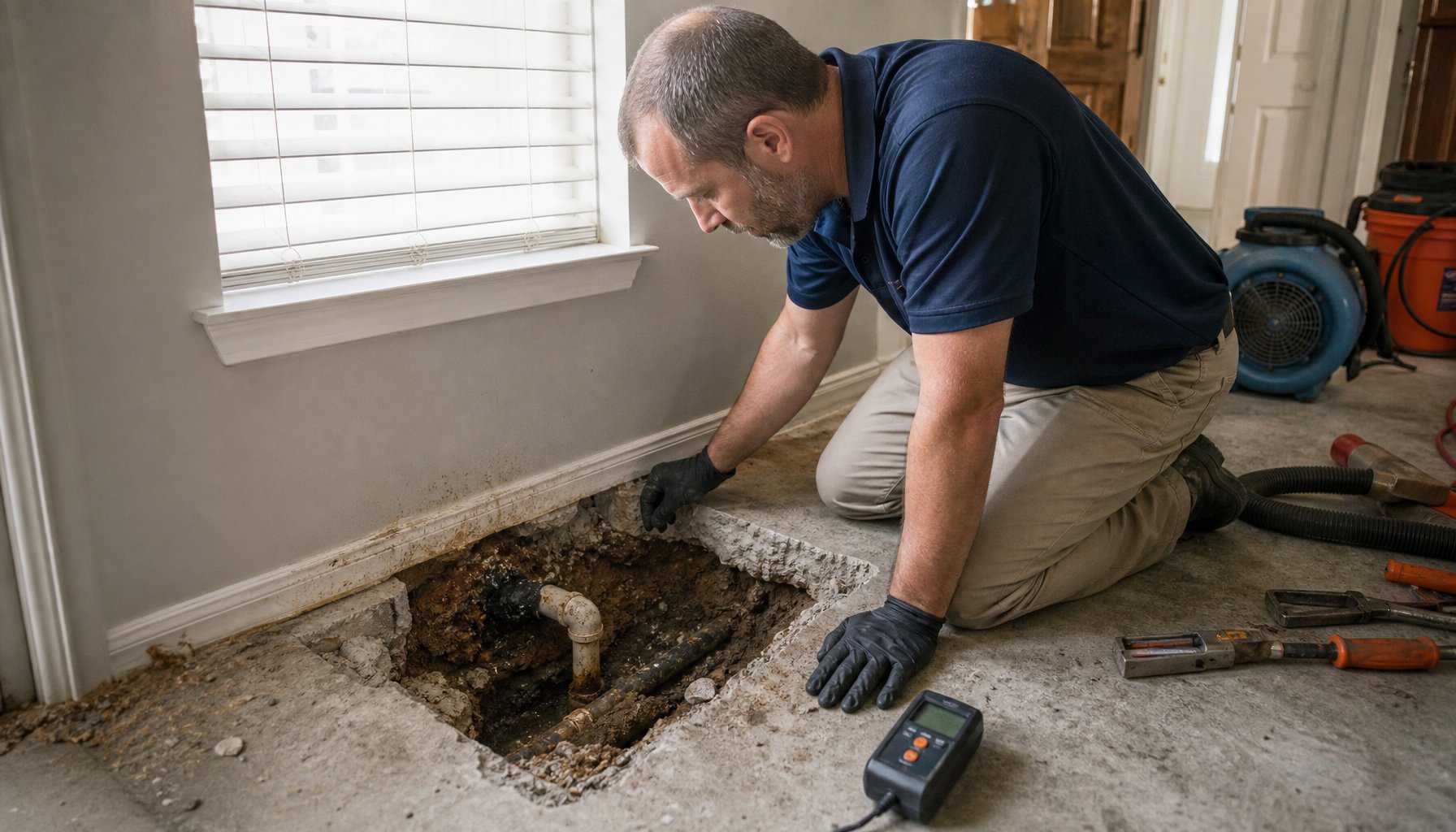
The endorsement doesn't cover your exterior sewer lateral repair or replacement. If roots crush your line or it collapses from age, you pay to excavate and install a new pipe. The endorsement only covers interior water damage that results from the failed line. Exterior sewer line insurance is a different product offered by some specialty carriers.
Gradual seepage isn't covered. The damage must occur suddenly, even if the underlying cause developed slowly. If your basement floor stays damp for weeks due to a minor backup, many policies won't respond. The endorsement covers acute overflow events rather than chronic moisture problems.
There are limitations we can't always overcome during restoration. If sewage contamination sits for more than 48 hours, porous materials like drywall and insulation require removal regardless of how clean they appear. We can't save everything, and some homeowners are disappointed to learn their endorsement limit doesn't cover full basement refinishing. Setting realistic expectations early helps avoid frustration during claims.
Steps to Take After a Sewer Backup in Your Norman Home
Stop using all water immediately. Every flush or drain adds more sewage to your home. Turn off water at the main if necessary. Contact a professional restoration company that handles water damage restoration with Category 3 contamination experience. Sewage contains bacteria, viruses, and other pathogens requiring specialized treatment.
Document everything before cleanup begins. Take photos and videos of all affected areas and damaged items. This documentation supports your insurance claim. List damaged personal property with approximate ages and values. The more detail you provide, the smoother your claims process.
Call your insurance company or agent to report the loss. Ask specifically about your sewer backup endorsement coverage and claim procedures. Some carriers require immediate notification. Others allow a few days. Follow their instructions exactly to avoid processing delays or coverage disputes.
Do not attempt cleanup yourself if the backup involves sewage. Category 3 water (black water) contains dangerous microorganisms. Professional technicians use personal protective equipment, antimicrobial chemicals, and specialized drying equipment. We see homeowners underestimate contamination risks and expose their families to health hazards.
Remove unaffected belongings from the area if you can do so safely. This prevents secondary damage and reduces restoration costs. Move furniture, electronics, and other valuables to dry areas. Your endorsement covers additional living expenses if the damage forces you to temporarily relocate, so ask your adjuster about hotel and meal reimbursement.
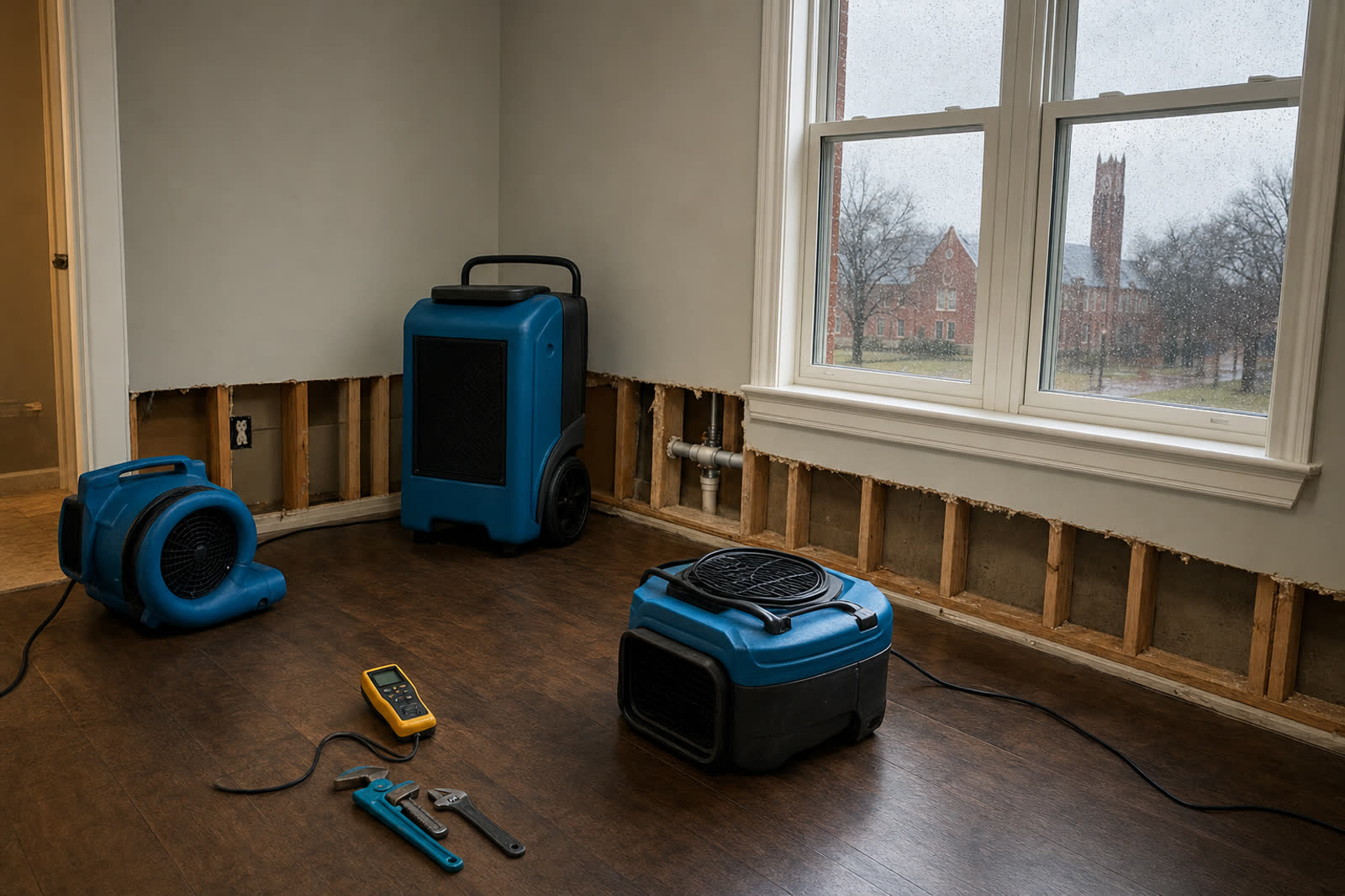
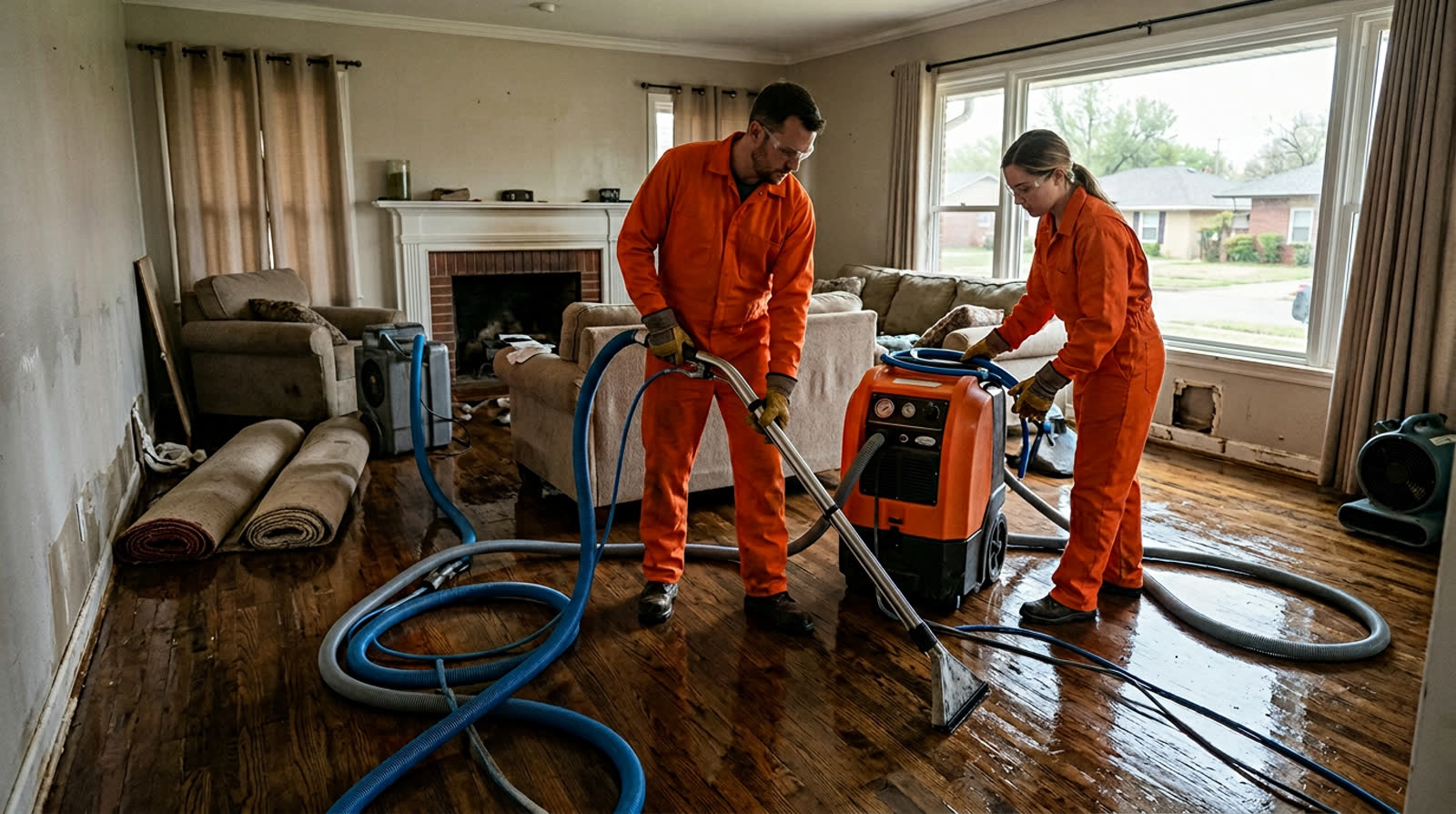
Professional restoration typically follows a specific sequence. We extract standing water first, then remove contaminated porous materials. Next comes thorough cleaning and antimicrobial application to all affected surfaces. Finally, we set commercial dehumidifiers and air movers to dry the structure completely. The process usually takes three to seven days depending on damage extent.
Our service area covers Norman and surrounding communities including Oklahoma City, Edmond, and Yukon. We coordinate directly with insurance adjusters to document damage, provide estimates, and streamline approval. This takes administrative burden off homeowners during an already stressful situation.
Professional restoration work on a sewage backup in Norman typically takes three to seven days for an average-sized affected area, though the timeline extends if sewage soaked into wall cavities or seeped under hardwood flooring. Drying time depends heavily on Oklahoma's humidity levels. During summer months when outdoor humidity hovers between seventy and eighty percent, we often run commercial dehumidifiers twenty-four hours a day to pull moisture from structural materials. Winter work moves faster in drier air, but frozen ground can complicate any outdoor sewer line repairs your plumber recommends.
Our crews remove all porous materials that contacted sewage. Carpet, padding, drywall up to at least twelve inches above the waterline, and baseboard trim cannot be saved. Some homeowners ask about cleaning carpet, but no amount of shampooing removes the pathogen load from sewage-soaked fibers. We bag and dispose of these materials according to Oklahoma Department of Environmental Quality guidelines. Non-porous surfaces like tile, sealed concrete, and metal can be disinfected and salvaged if structurally sound.
The antimicrobial application phase uses EPA-registered disinfectants effective against bacteria like E. coli and viruses found in human waste. We spray all hard surfaces, then allow proper dwell time before wiping down. Subfloors receive particular attention because sewage often pools in low spots and seeps between planks. If your home has a crawl space, we inspect for sewage intrusion there as well. Norman's expansive clay soils shift foundations, and those small cracks provide pathways for contaminated water to travel under your house.
Air scrubbers with HEPA filtration run continuously during the drying phase. These machines cycle the air in affected rooms through filters that capture airborne particles, including mold spores that start growing within forty-eight hours in wet conditions. We also set up negative air pressure in contaminated zones to prevent cross-contamination into clean areas of your home. This containment setup looks like plastic sheeting barriers with zippers, similar to what you see during asbestos abatement.
Restoration costs for sewer backups in Norman homes generally range from three thousand to twelve thousand dollars depending on the volume of sewage, square footage affected, and how long the water sat before discovery. A basement backup that ran for hours costs considerably more than a quick overflow caught early. Your sewer backup endorsement covers these restoration expenses after you pay your deductible. Standard policies without the endorsement leave you paying out of pocket.
Once structural drying finishes and moisture readings return to normal, reconstruction begins. That means new drywall, baseboards, flooring, and paint. We coordinate with your insurance adjuster throughout the process so you understand what your policy covers versus any upgrade costs you choose to pay separately. Some homeowners use the opportunity to install tile instead of replacing carpet, which requires paying the difference between the two materials.
Need help now? See our full Water Damage Restoration service page or browse all restoration services. Don't see your city above? The full Oklahoma service area covers 27 cities.
Local context for this article: see our Norman, OK restoration page and the Water Damage Restoration in Norman service page.
This guide also pairs with emergency water mitigation and mold remediation when drying is missed.
Does my sewer backup endorsement cover damage if tree roots block my lateral line?
Yes, sewer backup endorsements typically cover interior damage resulting from root blockages in your lateral line. The endorsement pays for water extraction, antimicrobial treatment, and damaged material replacement inside your home. However, it won't cover the cost to excavate and repair the blocked pipe itself. That exterior repair remains your responsibility. Maintaining your sewer lateral through periodic cleaning helps prevent root intrusions and keeps your system flowing properly. If you have mature trees on your property, consider camera inspections every few years to catch problems before they cause backups.
Authoritative resources referenced
Need restoration help in Oklahoma?
24/7 dispatch, IICRC standards, direct insurance billing.