What Causes Water Damage in Norman Retail Spaces?
Retail stores in Norman face unique water damage risks tied to commercial infrastructure and Oklahoma weather. HVAC failures rank high on the list. Rooftop units push condensate through drain lines that clog with dust and debris, especially during Norman's humid summers. We've seen water pour from ceiling tiles onto merchandise racks when a single drain pan overflows.
Plumbing failures happen differently in retail than in homes. Most Norman retail buildings were constructed between 1980 and 2010, and many use galvanized supply lines above drop ceilings. These corrode from the inside, rupturing without warning. A 1-inch supply line break can dump 400 gallons per hour across your sales floor before someone finds the main shutoff.
Roof leaks strike older strip centers hard. Flat or low-slope roofs common on Norman retail buildings collect water in ponding areas. Membrane seams split during freeze-thaw cycles, and water migrates horizontally under the roof deck before dripping inside, often far from the actual breach. Heavy spring rains overwhelm aging drainage systems.
Toilet and sink overflows in customer or employee restrooms cause surprising damage. Retail restrooms see heavy traffic, and flushed items clog drain lines. Water flows under tile, through wall cavities, and into adjacent stockrooms or offices. The damage spreads before anyone notices because restrooms sit away from high-traffic areas.
Sprinkler system malfunctions create instant catastrophes. Accidental sprinkler head activation from stocking accidents or temperature sensor failures releases 15-40 gallons per minute. Every minute counts because retail inventory absorbs water fast. We recently responded to a clothing store near the University of North Oklahoma campus where a bumped sprinkler head soaked an entire seasonal display before staff could find the system shutoff.
Exterior grading and foundation issues matter in Norman's expansive clay soils. Poor drainage slopes send stormwater against foundation walls, and hydrostatic pressure pushes moisture through cracks into ground-level stockrooms. Ice storms also cause backup problems when gutters fill with ice and water overflows behind brick facades.
How Does Commercial Water Extraction Differ From Residential?
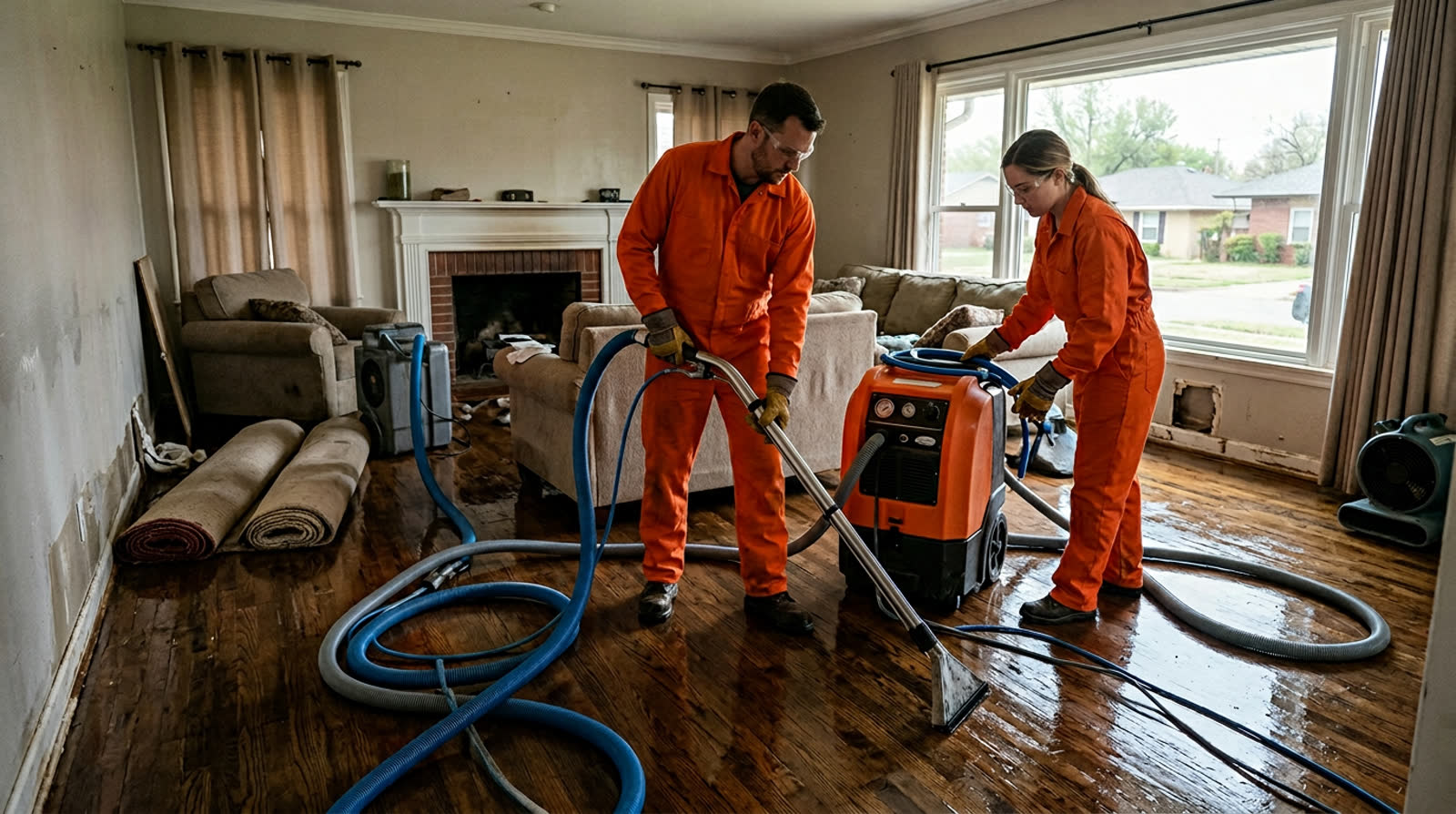
Commercial water extraction tackles larger volumes and different floor materials than residential jobs. The answer is simple: retail spaces need truck-mount extractors or large portable units capable of pulling 50-100 gallons per pass across open floor areas. Standard residential extractors can't keep pace with the square footage or water volume in most retail stores.
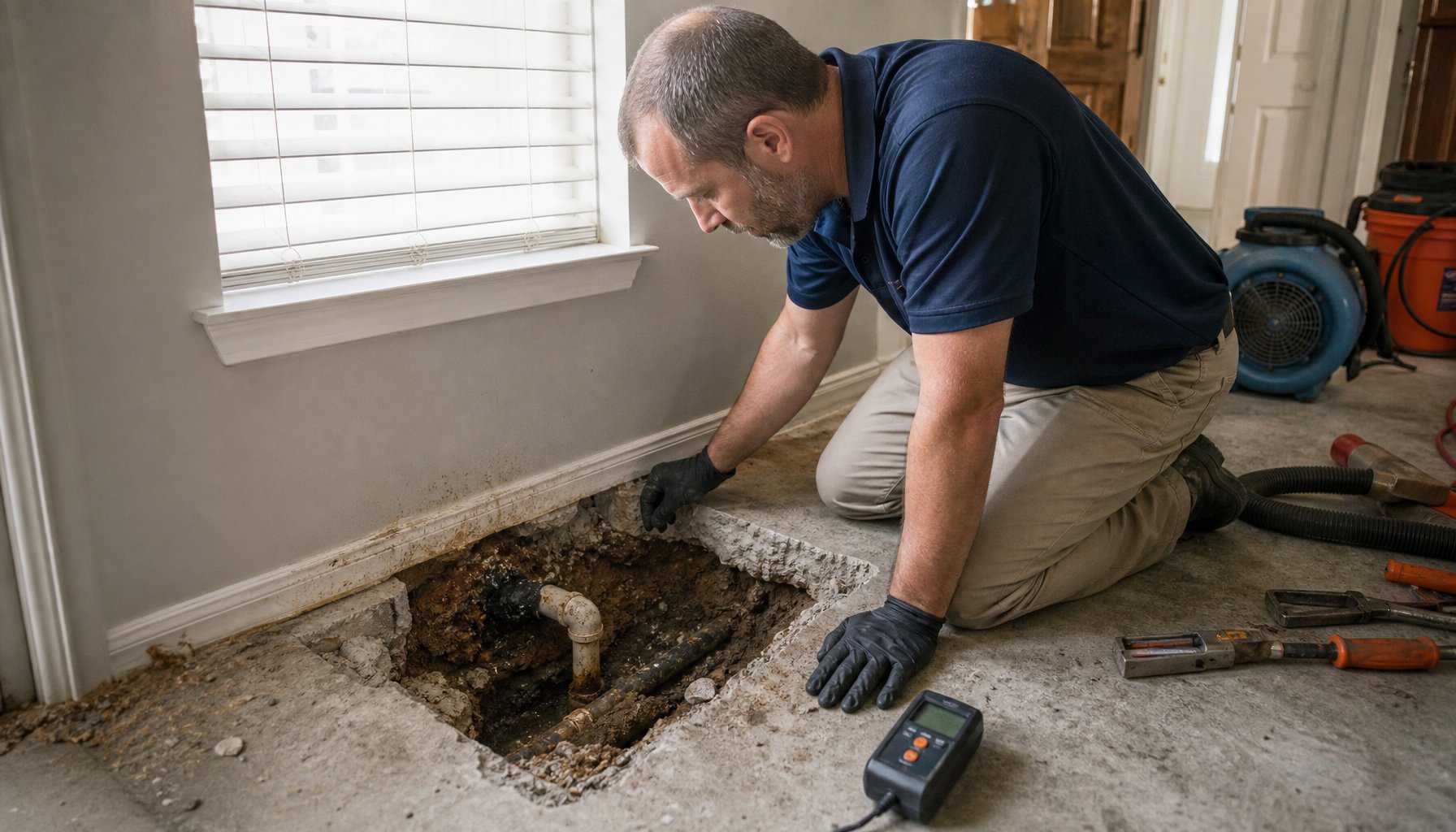
Sales floor surfaces require different approaches. Polished concrete, VCT tile, and commercial carpet tile drain differently than home carpet. Concrete appears dry on top while moisture sits in the slab, wicking into base trim and drywall. We use moisture meters to map the floor in a grid pattern, marking wet zones with tape so you know which aisles stay closed.
Shelving and fixtures complicate extraction. Freestanding gondolas, end caps, and display tables must be moved or worked around. Some fixtures bolt to the floor, trapping water underneath. We often need to coordinate with your staff to relocate merchandise before extraction begins. Moving inventory safely takes time, but it prevents secondary damage and speeds drying.
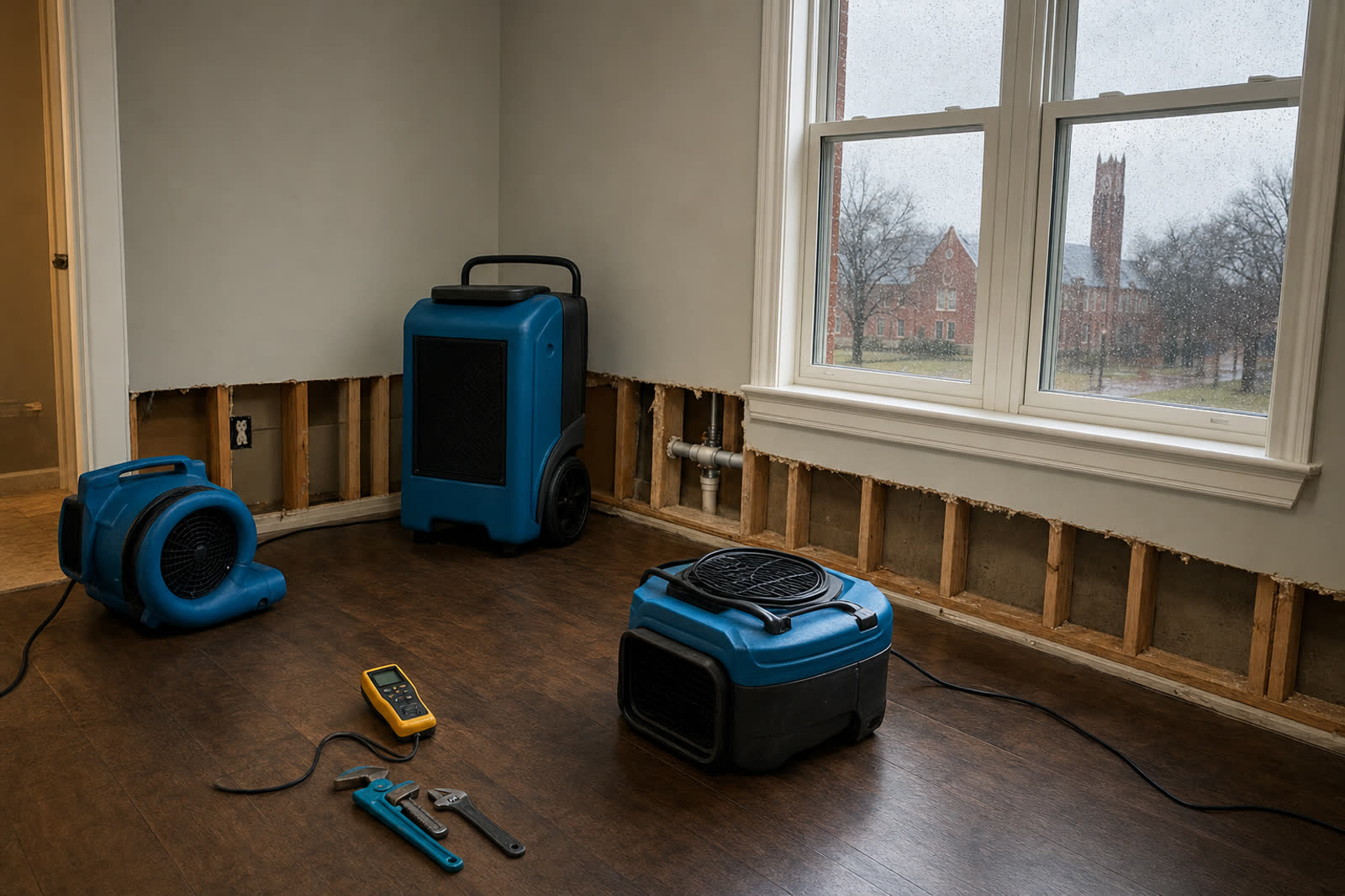
Air movement in retail spaces demands commercial equipment. A typical Norman retail store needs 15-30 air movers positioned to create circulation patterns across the entire floor. Residential fans won't cut it. We stage equipment at night when possible to reduce interruption, but drying a 3,000-square-foot sales floor properly requires noise and power loads that strain standard electrical circuits.
Dehumidification runs continuously for days. Water damage restoration in commercial spaces uses industrial dehumidifiers that pull 120-200 pints per day. These units need dedicated 20-amp circuits and drain lines to handle extracted moisture. We monitor humidity levels twice daily to track progress and adjust equipment placement as areas dry.
Documentation matters more in commercial claims. Insurance adjusters expect detailed photo logs, moisture readings, and equipment manifests. We photograph affected areas before extraction, during drying, and after equipment removal. This record protects you if questions arise later about the extent of damage or the need for specific repairs.
Inventory Assessment and Loss Documentation
Your inventory represents capital, and water damage turns sellable goods into write-offs quickly. Start by separating wet items by category: soft goods absorb water instantly, electronics fail when exposed to moisture, and packaged goods may survive if packaging stayed intact. Don't assume items are salvageable just because they look dry on the outside.
Soft goods like clothing, linens, and fabric items usually can't be saved once soaked. Water carries contaminants, especially if the source was a roof leak or plumbing overflow. Even clean water causes dye bleeding, shrinkage, and permanent staining. Document everything with photos before disposal. Your insurance adjuster needs to see the damage, not just a list of discarded items.
Electronics and water don't mix, even after drying. Moisture corrodes circuit boards and connectors within hours. We've seen store owners try to salvage tablets, point-of-sale systems, and charging stations by letting them air dry. This rarely works. Corrosion continues invisibly, and devices fail days or weeks later. Document serial numbers and model information for replacement claims.
Paper goods, books, and boxed items need individual assessment. Cardboard wicks water rapidly, weakening structural integrity even if contents seem dry. Check for water stains, warping, and mold growth starting within 48 hours. Items stored on bottom shelves or floors take the worst hit. Raise undamaged inventory immediately to prevent additional loss as humidity levels stay high during drying.
Food and consumable products face strict safety rules. Oklahoma health regulations prohibit selling food items exposed to contaminated water. Even sealed packages may be compromised if water infiltrated cartons or cases. When in doubt, discard it. The cost of replacing a few cases is nothing compared to liability if someone gets sick.
Create a detailed loss inventory as you sort. List each item type, quantity, purchase cost, and retail value. Include supplier information and purchase dates if available. This documentation supports your insurance claim and helps you reorder accurately once cleanup completes. Take photos of pile-up discarded items before removal for additional documentation.
Can You Stay Open During Retail Water Damage Cleanup?
Staying open depends on damage extent, affected areas, and safety conditions. Small, contained water incidents may allow partial operation if you can isolate the damaged zone from customer areas. Large-scale flooding that affects the entire sales floor requires full closure until extraction and initial drying complete.
Safety comes first. Wet floors create slip hazards that expose you to liability. Standing water also presents electrical shock risks if outlets or junction boxes sit near floor level. No sale is worth a customer injury lawsuit. If water reached your main sales floor, close until extraction finishes and floors are walk-safe.
Norman's retail market is competitive, and closing costs you revenue daily. We understand the pressure to reopen. Partial operations sometimes work if you can section off damaged areas with barriers and maintain safe customer access to unaffected sections. This depends on your store layout and whether critical areas like checkout lanes or restrooms stayed dry.
Air mover and dehumidifier noise makes normal business difficult. Commercial drying equipment runs loud, and customers won't shop comfortably in that environment. Overnight drying works well if you can secure the building and run equipment after hours. This extends the drying timeline but may be worthwhile if every closed day means significant revenue loss.
Health and odor concerns matter too. Water damage creates musty smells quickly, especially in carpeted areas. Customers notice. If the space smells moldy or damp, they'll leave. Air scrubbers with carbon filters help, but they add cost. You also risk exposing customers to airborne contaminants during the drying process.
Talk to your insurance agent and landlord before deciding. Some commercial leases require closure during major repairs. Insurance policies may limit coverage if you continue operations against professional advice and secondary damage occurs. We've seen stores lose claims because they stayed open and foot traffic spread water into previously dry areas or damaged subfloors.
Drying Commercial Carpet and Flooring Materials
Commercial carpet dries differently than residential because of construction and installation methods. Most Norman retail stores use carpet tile or glue-down broadloom over concrete slabs. These installations trap moisture between the carpet backing and concrete, creating perfect conditions for mold growth if not dried properly within 48-72 hours.
Carpet tile allows easier inspection and drying. Individual tiles lift out so we can check the concrete underneath and the tile backing. Wet tiles go into drying chambers or get replaced entirely. This modular approach limits replacement costs compared to broadloom, where damage to one area often means replacing an entire seam-to-seam section to avoid visible patching.
Glue-down carpet presents bigger challenges. Water breaks down adhesive bonds, causing carpet to bubble and delaminate. The pad underneath stays wet longer than the carpet face, and moisture trapped between layers feeds mold growth. We use weighted extraction tools to compress the carpet against the pad while pulling water out, then position air movers to create airflow across the surface.
Concrete slabs hold moisture for weeks if not addressed. Even after surface carpet dries, moisture in the concrete continues wicking upward. We drill small holes and insert drying tubes that blow air into the space between the carpet and slab. This specialized drying prevents the carpet from appearing dry while the slab stays wet underneath. Skipping this step leads to recurring dampness and mold.
VCT and LVT flooring survive water better than carpet but still require attention. Water seeps through seams into the adhesive layer and subfloor. Tiles may cup or curl as the substrate swells. We remove damaged tiles, dry the concrete, and replace them individually. Matching existing tile patterns can be tricky if your flooring is older or discontinued, so keep extra tiles in stock if possible.
Polished concrete is the most water-resistant retail flooring, but it's not foolproof. Water still penetrates through cracks and control joints, especially if sealers have worn away. Standing water can also stain polished concrete, leaving white mineral deposits or dark patches. We extract water quickly, then use fans to dry the surface and any moisture that penetrated joints. Resealing may be needed after drying completes.
Working With Landlords and Property Management on Commercial Claims
Retail water damage involves multiple parties with different responsibilities. As a tenant, you own the contents and typically the interior improvements you installed. Your landlord owns the building structure, roof, and base systems. Who pays for what depends on your lease terms and what caused the damage.
Read your lease's maintenance and repair section carefully. Most commercial leases make landlords responsible for roof, foundation, and plumbing system failures. Tenant-caused damage, like an overflowed sink due to negligence, typically falls on the tenant. If an HVAC unit the landlord maintains floods your space, that's usually their responsibility. Document the water source thoroughly because this determines who files the claim.
Notify your landlord immediately after water damage occurs. Most leases require written notice within 24-48 hours of any significant damage. Send an email or certified letter describing the incident, damage extent, and initial response steps you've taken. This creates a paper trail and starts the clock on the landlord's duty to make necessary repairs to the building structure.
Insurance coordination gets complicated fast. You carry business property insurance for inventory and tenant improvements. The landlord carries property insurance for the building. Sometimes both policies respond to the same event. We've worked jobs where three adjusters showed up: one for the tenant, one for the landlord, and one for the upstairs tenant whose pipe burst and caused the whole mess.
Get clear authorization before starting repairs that affect building structure. Replacing ceiling tiles, cutting drywall to check wall cavities, or pulling base trim may require landlord approval. We coordinate with property managers regularly in Norman's retail centers to ensure everyone agrees on the scope of work before we start. This prevents disputes later over who authorized which repairs.
Temporary closures and rent abatement may be negotiable. If water damage makes your space untenantable, you might qualify for reduced or suspended rent during repairs. This depends on your lease's casualty clause and the damage severity. Document everything that prevents normal business operations, and discuss rent adjustment with your landlord or their property manager while repairs proceed.
Need help now? See our full Water Damage Restoration service page or browse all restoration services. Don't see your city above? The full Oklahoma service area covers 27 cities.
Local context for this article: see our Norman, OK restoration page and the Water Damage Restoration in Norman service page.
This guide also pairs with emergency water mitigation and mold remediation when drying is missed.
How long does retail store water damage cleanup take in Norman?
Most retail water damage jobs in Norman require 3-7 days from initial extraction to final equipment removal. The first day covers water extraction and damage assessment. Days 2-5 involve continuous drying with air movers and dehumidifiers running 24 hours. Larger stores or severe flooding extend the timeline. Humidity levels and concrete moisture readings determine when equipment comes out. We've dried small boutiques in 72 hours and spent two weeks on flooded big-box spaces. The key variables are water volume, affected square footage, and how quickly extraction started after the incident. Delays increase drying time because water migrates deeper into building materials.
Authoritative resources referenced
Need restoration help in Oklahoma?
24/7 dispatch, IICRC standards, direct insurance billing.