What Are the First Steps After a Tornado Hits Your Home?
Secure your safety first. Exit the home if you smell gas, see exposed wiring, or notice major structural damage like sagging ceilings or cracked support beams. Call 911 if anyone is injured. Once the immediate threat passes, document everything before you move debris or begin tornado damage cleanup for Oklahoma City homes.
Take photos and videos of every damaged room from multiple angles. Capture close-ups of broken windows, roof punctures, water stains, and destroyed belongings. Your insurance adjuster will need this evidence. If it is safe, cover broken windows with tarps or plywood to prevent rain from entering. Oklahoma City can see follow-up rain cells hours or days after a tornado passes through.
Contact your insurance company as soon as possible. Most carriers have dedicated storm response teams during tornado season. Ask if they will send an adjuster or if you need to hire a public adjuster. Do not throw away damaged items until the adjuster gives you permission. Keep receipts for any emergency repairs or temporary lodging.
If standing water covers floors or ceilings are actively leaking, shut off electricity at the breaker box. Water and electricity create deadly hazards. We have responded to homes in Oklahoma City where families did not realize their walls were soaked until sparks started flying from outlets.
Notify your mortgage company if your home is uninhabitable. Some lenders require updates when a property suffers major damage. If you rent, contact your landlord immediately and document all communications. Tenant insurance policies often have narrow claim windows after a disaster.
Many Oklahoma City homes built before 1980 sit on post-tension slab foundations, and tornadoes can shift these slabs enough to crack the tensioned cables inside. You will not always see this damage from the surface. If doors suddenly stick in their frames or you notice new gaps between walls and baseboards after a tornado, the slab may have moved. A structural engineer should inspect the foundation before you begin any cosmetic repairs. Repairing a shifted slab typically costs between $3,000 and $12,000 depending on severity, and your homeowner's policy usually covers it under the windstorm peril if documented properly.
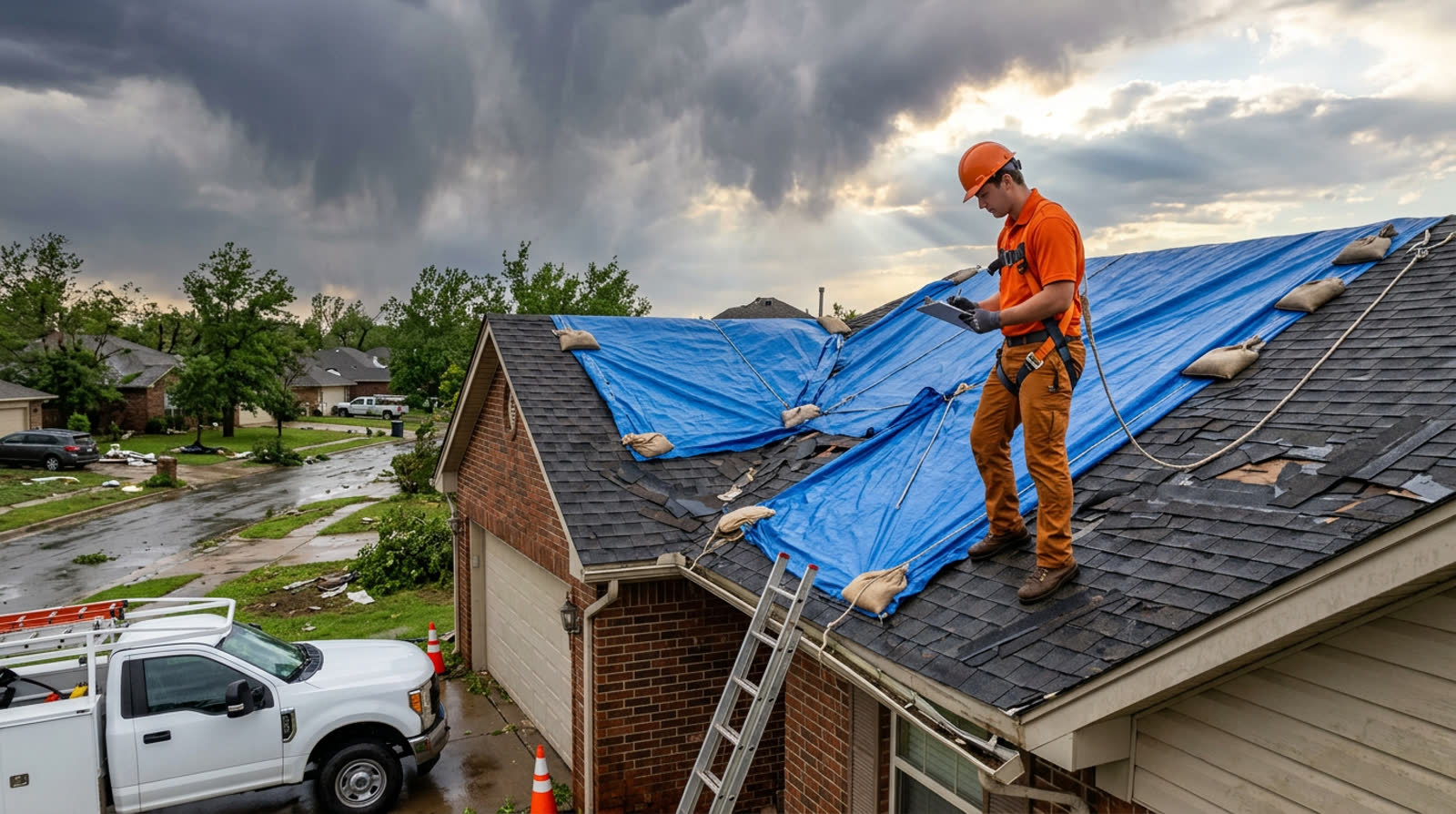
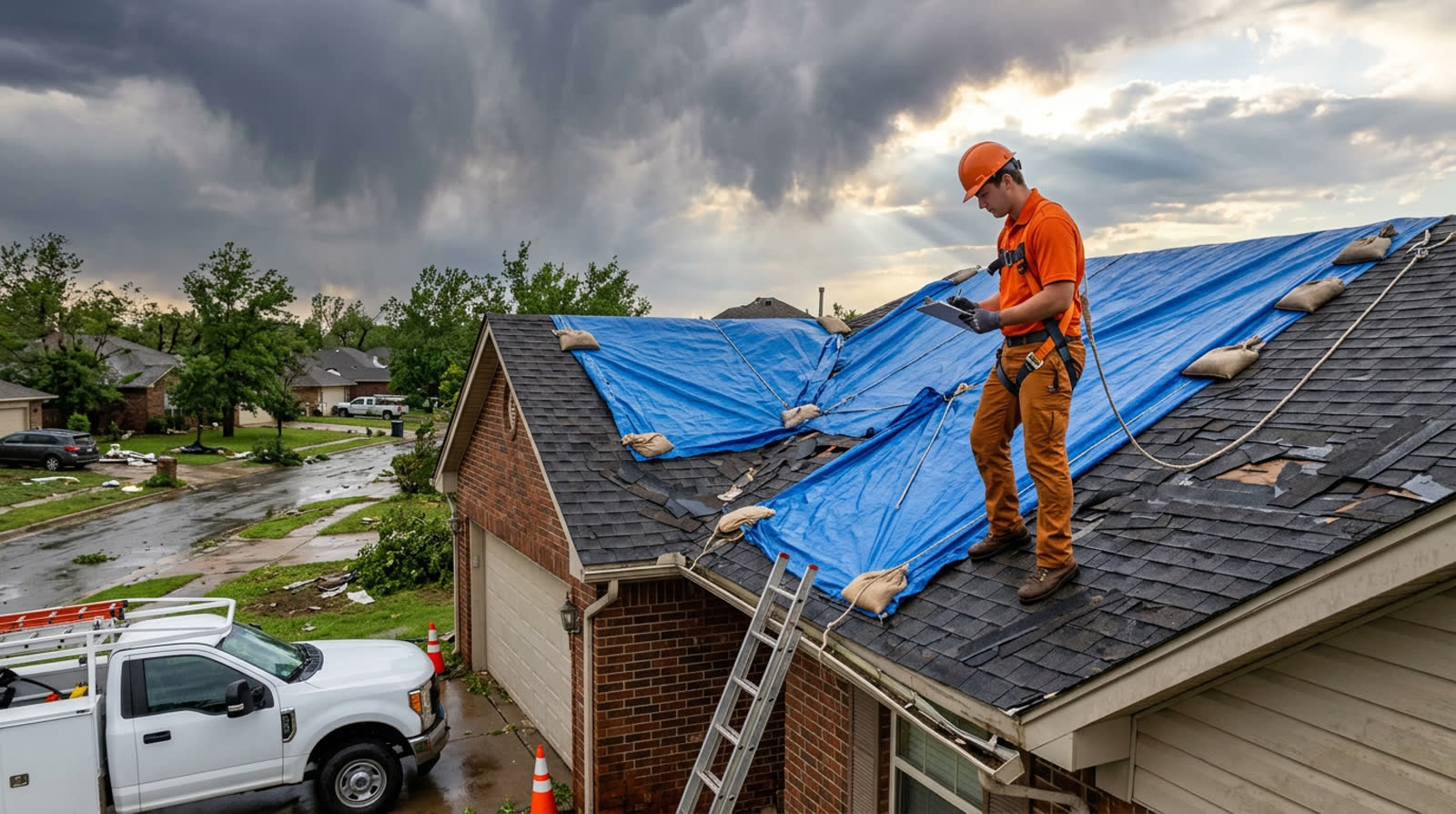
If your roof took debris impact or lost shingles, expect a temporary tarp installation to run $500 to $1,500 for an average-sized home. We secure tarps with wood battens screwed into roof decking, not just draped over the top. Oklahoma wind speeds during spring storm season can easily peel off an improperly fastened tarp and cause thousands more in secondary water damage. Tarping should happen within 24 hours of the tornado if possible. Insurance companies expect you to mitigate further loss, and a proper tarp meets that requirement.
Oklahoma City requires a building permit for any structural repair over $500 in value. That includes roof replacements, wall framing, and foundation work. The permit process through the city's Development Services Department usually takes three to five business days once plans are submitted. Some homeowners try to skip permits to save time, but your insurer can deny claims later if repairs were not permitted. We coordinate permit applications as part of the restoration process so you do not have to work through city offices while managing everything else.
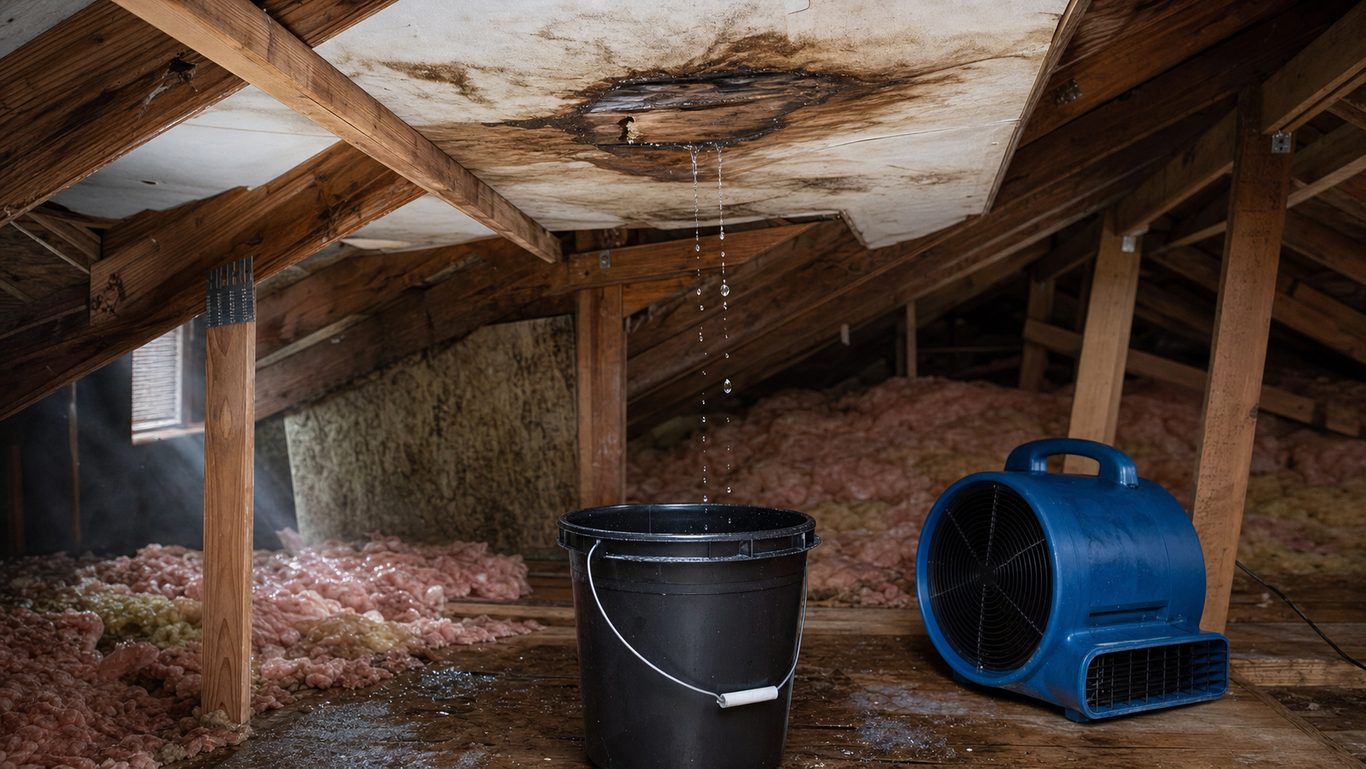
Check your attic for wind-driven rain even if the roof looks intact from the outside. Tornadoes create rapid pressure changes that force water through ridge vents, soffit vents, and tiny gaps you would never notice in normal rain. Wet insulation loses its R-value and grows mold within 48 hours in Oklahoma's humidity.
How Does Wind Damage Differ From Water Damage in Tornado Cleanup?
Wind damage is visible and dramatic. Water damage is hidden and progressive. Both require specialized remediation, but water damage accelerates every hour you delay. Tornado cleanup teams must address both simultaneously to prevent long-term structural failure and mold growth.
Wind tears off shingles, breaks windows, and sends debris through walls. The repair is straightforward once you remove rubble and tarp openings. Water intrusion from rain, broken pipes, or displaced HVAC systems saturates insulation, drywall, and framing. That moisture spreads through capillary action and evaporation, moving into areas that never saw direct water contact.
Oklahoma City sits in a humid subtropical climate zone. Relative humidity spikes after storms. Even if rain stops, wet building materials will not dry on their own in a closed structure. Mold colonies start growing within 24 to 48 hours on damp drywall, wood studs, and ceiling tiles. We have pulled apart walls in Edmond and Moore homes two weeks after tornadoes to find black mold covering entire stud bays.
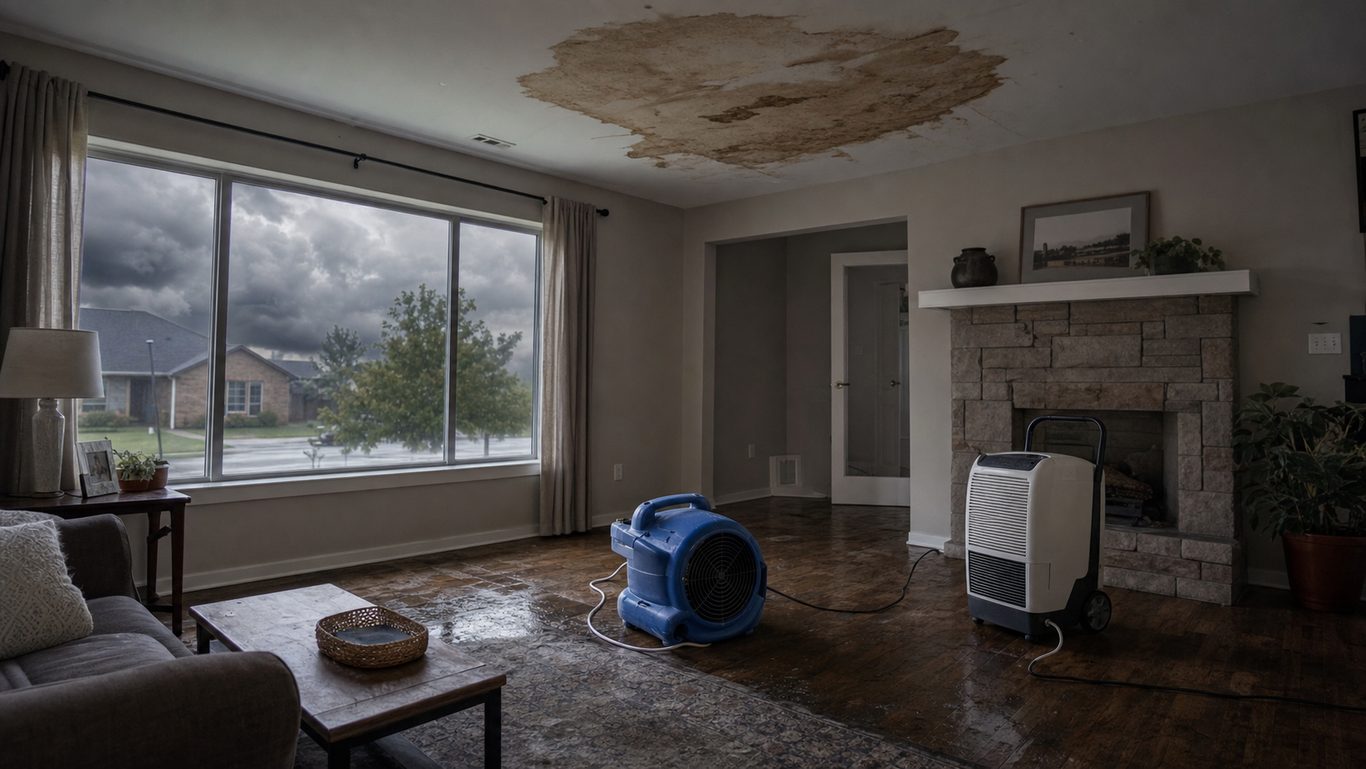
Professional storm damage crews use moisture meters to map hidden water. Thermal imaging cameras reveal cold spots where evaporation is happening behind intact walls. Air movers and dehumidifiers create negative air pressure to pull moisture out of building cavities. This equipment runs for three to seven days depending on the saturation level.
Do not assume that because you do not see standing water, your home is dry. Subfloor, insulation, and wall cavities hold water long after surface areas look normal. Skipping professional drying leads to rot, mold, and expensive structural repairs six months later.
What Does a Professional Tornado Damage Assessment Include?
A complete tornado damage assessment evaluates structural integrity, moisture intrusion, electrical and plumbing systems, HVAC function, and environmental hazards. Restoration professionals create a detailed scope of work that guides insurance claims and contractor bids.
The structural inspection identifies compromised load-bearing walls, roof trusses, and foundation cracks. Tornadoes create uneven pressure that can shift a house off its foundation or twist framing out of plumb. We check door frames, window headers, and ceiling joists for movement. Even small shifts can prevent doors from closing or create gaps that leak air and water.
Moisture mapping uses electronic meters and infrared cameras to locate water in floors, walls, and ceilings. Technicians drill small test holes to check insulation and measure humidity inside wall cavities. This data determines where to remove drywall and how many drying days the job will require.
Electrical and plumbing systems often suffer hidden damage during tornadoes. Shifting walls can pinch wires and crack pipes inside walls. A licensed electrician should inspect the panel and circuits before you restore power. A plumber should pressure-test water and sewer lines to confirm no breaks exist.
Environmental hazards include asbestos in older homes, lead paint, and contaminated insulation. Oklahoma City has thousands of homes built before 1980 that contain asbestos floor tiles, pipe wrap, and popcorn ceilings. If tornado debris damaged these materials, you need an asbestos inspection before cleanup begins. Statewide Restoration provides awareness and coordination but does not perform asbestos abatement. We connect you with licensed abatement contractors when necessary.
HVAC systems can be knocked off their mounts or filled with debris. Ductwork may be crushed or disconnected. Running a damaged HVAC system spreads mold spores and contaminants throughout the house. A full inspection ensures safe operation before you turn it back on.
Debris Removal and Structural Drying
Debris removal starts with safety. Crews wear cut-resistant gloves, steel-toed boots, hard hats, and respiratory protection. Tornado debris includes broken glass, nails, splintered wood, insulation fibers, and sometimes hazardous materials like paint cans or pesticides.
Large debris like tree branches, siding, and roofing material gets hauled to municipal storm debris collection points. Oklahoma City typically opens special drop-off sites after major tornado events. Smaller material goes into construction dumpsters. Sorting debris is critical because some items may be salvageable for insurance documentation or personal reasons.
We separate wet materials from dry materials. Soaked drywall, insulation, and carpeting cannot be saved and must be removed immediately to stop mold growth. Hardwood flooring and furniture may be salvageable if dried within 48 hours. Every project is different, but the general rule is that porous materials exposed to contaminated water get discarded.
Once debris is cleared, structural drying begins. Industrial air movers position strategically to create airflow across wet surfaces. Dehumidifiers pull moisture from the air and drain it outside or into sinks. The goal is to reduce relative humidity below 50 percent and material moisture content below 15 percent.
Drying typically takes three to seven days depending on the extent of water intrusion and the outdoor humidity. Oklahoma City summers are hot and humid, which slows drying. Spring storms often bring cooler, drier air that helps. Technicians monitor moisture levels daily and adjust equipment as needed.
Antimicrobial treatments are applied to framing and subfloors after drying. These products inhibit mold growth during the reconstruction phase. Some insurance policies cover antimicrobial application, others do not. Check your policy or ask your adjuster before authorizing this step.
How Do You Handle Insurance Claims for Tornado Damage?
Insurance claims for tornado damage require detailed documentation, clear communication, and patience. Policies vary widely in coverage, deductibles, and exclusions. Understanding your specific policy language prevents surprises during the claims process.
Read your declarations page to confirm your wind and hail deductible. Many Oklahoma homeowners have a separate percentage-based deductible for wind damage, often one to five percent of the dwelling coverage limit. On a 200,000 dollar policy with a two percent wind deductible, you pay the first 4,000 dollars out of pocket.
Document every instance of damage before cleanup begins. Create a written inventory of damaged belongings with descriptions, estimated ages, and replacement costs. Your carrier will ask for this list. If you have receipts or photos from before the tornado, include them. The more proof you provide, the faster the claim moves.
Your adjuster will schedule an inspection within days or weeks depending on the scale of the disaster. Large tornado outbreaks in Oklahoma can overwhelm adjusters. Be flexible with scheduling but keep detailed notes of all communications. Follow up in writing via email so you have a paper trail.
Get multiple contractor bids for repairs. Insurance companies base their estimates on software that sometimes underpays for local labor and material costs. A professional restoration company like Statewide Restoration can prepare a detailed scope and line-item estimate that matches the adjuster's format. This makes negotiations easier.
Understand the difference between actual cash value and replacement cost coverage. Actual cash value pays for damage minus depreciation. Replacement cost pays to rebuild or replace without depreciation. Most policies pay actual cash value upfront and the depreciation holdback after repairs are complete. Keep all invoices and receipts to recover that holdback.
If your claim is denied or underpaid, you can hire a public adjuster or an attorney who specializes in property insurance disputes. Oklahoma law allows policyholders to challenge claim decisions, but you must act within the time limits stated in your policy.
Reconstruction and Rebuilding After Tornado Damage
Reconstruction begins after all debris is removed, the structure is dry, and insurance approval is received. This phase includes framing repairs, roofing, window and door replacement, electrical and plumbing restoration, insulation, drywall, flooring, and finish work.
Hire contractors who are registered with the city or county where your home is located. Oklahoma does not issue a state general contractor license, but municipalities require registration and sometimes bonding. Verify credentials before signing contracts. Ask for references and check online reviews.
Roofing is usually the first trade on site. A new roof prevents additional water intrusion and protects the work happening inside. Oklahoma City has hundreds of roofing companies that appear after tornado events. Some are legitimate, many are storm chasers who disappear once they collect payment. Work with established local companies that carry proper insurance and have a physical office address.
Framing and structural repairs follow roofing. Carpenters replace damaged studs, joists, and roof trusses. Engineers may need to approve repairs if the damage compromised load-bearing elements. This step can delay projects, but skipping it risks future collapse or code violations.
Electrical and plumbing rough-in happens before insulation and drywall. Inspectors verify that all wiring and piping meet current codes. Oklahoma adopted the 2018 International Residential Code with state amendments. Your electrician and plumber should know these requirements.
Insulation and drywall installation follow inspections. Many homeowners upgrade insulation during reconstruction to improve energy efficiency. Spray foam and blown-in cellulose are popular in Norman and Broken Arrow for their superior air sealing properties.
Flooring, trim, paint, and finish work complete the project. Plan for this phase to take several weeks depending on the size of your home and the availability of materials. Supply chain delays remain common for specialty items like custom cabinets and windows.
A final walkthrough with your contractor ensures all work matches the scope and meets your expectations. Do not make final payment until you are satisfied and have received lien waivers from all subcontractors. These documents protect you from mechanic's liens if a subcontractor was not paid by the general contractor.
Need help now? See our full Storm Damage Restoration service page or browse all restoration services. Don't see your city above? The full Oklahoma service area covers 27 cities.
Local context for this article: see our Oklahoma City, OK restoration page and the Storm Damage Restoration in Oklahoma City service page.
This guide also pairs with water damage restoration for any rain intrusion and water mitigation for active leaks after the storm.
How long does tornado damage cleanup take for a typical Oklahoma City home?
Tornado damage cleanup duration depends on the extent of wind and water damage. Debris removal and initial drying take three to seven days. Structural repairs and reconstruction range from four weeks for minor damage to six months for homes requiring extensive framing, roofing, and systems work. Insurance approval timelines and contractor availability also affect the schedule. Homes with mold growth or asbestos issues take longer because remediation must happen before reconstruction begins.
Authoritative resources referenced
Need restoration help in Oklahoma?
24/7 dispatch, IICRC standards, direct insurance billing.