What Is Emergency Roof Tarping After Storm Damage?
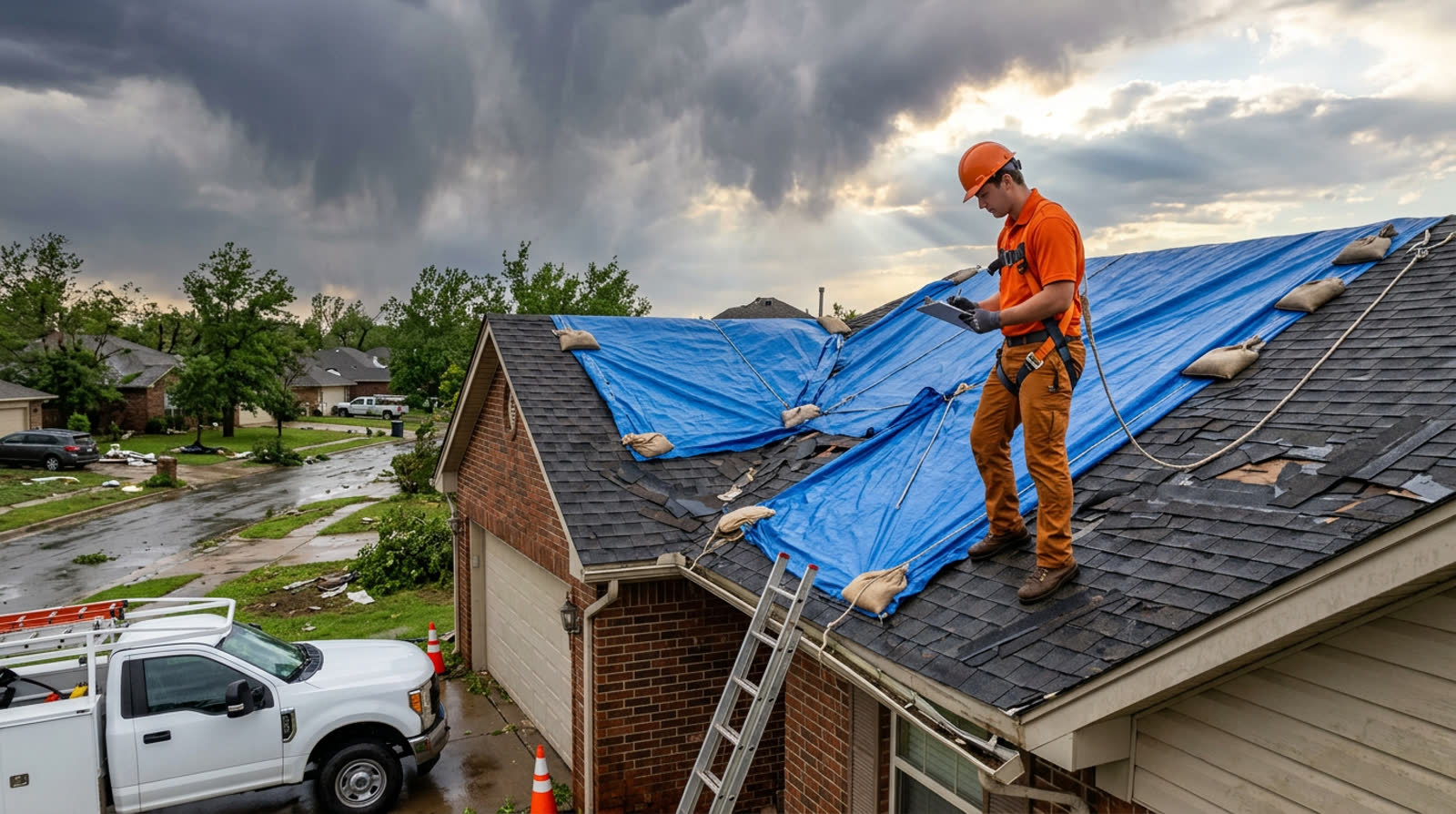
Emergency roof tarping creates a temporary weatherproof barrier over damaged sections of your roof after severe weather strikes. A professional crew installs heavy-duty polyethylene sheeting (typically 6-mil or thicker) over holes, missing shingles, or compromised areas. The tarp extends beyond the damaged zone and gets anchored with wooden boards screwed into solid roof decking, both laid over the surface.
Broken Arrow sits in the heart of tornado alley, and spring storms regularly bring hail, high winds, and flying debris. We've seen entire neighborhoods lose shingles during a single severe thunderstorm. The damage might look manageable from the ground and even a small penetration allows gallons of water into your attic during the next rain.
Tarping stops that intrusion immediately. It's not a repair, it's emergency first aid for your roof. The goal is keeping your home dry while you document damage for insurance, get estimates, and wait for contractors to become available. After a major storm event, roofing companies in Broken Arrow can be booked for weeks or months. A quality tarp installation buys you that time without compounding the damage.
Professional tarping differs dramatically from a homeowner tossing a blue tarp over a hole. Proper installation requires walking on damaged roofing safely, identifying the full extent of compromise (often larger than visible from below), and securing the material against Oklahoma wind speeds that regularly hit 40-50 mph during storms.
When Does a Broken Arrow Roof Need Emergency Tarping?
You need emergency roof tarping when storm damage creates an opening that exposes your home's interior to weather. This happens after tornadoes, severe thunderstorms, hail events, ice storms, and high wind episodes. Broken Arrow experiences all of these, sometimes multiple times per year.
Specific situations that require immediate tarping include:
- Missing shingles exposing underlayment or decking
- Fallen tree branches puncturing the roof surface
- Hail damage creating holes through multiple roof layers
- Lifted or torn sections of roofing membrane
- Tornado debris impact creating visible openings
- Ice dam damage that compromised roof integrity
- Wind-blown objects penetrating the roof structure
- Chimney or vent flashing torn away by wind
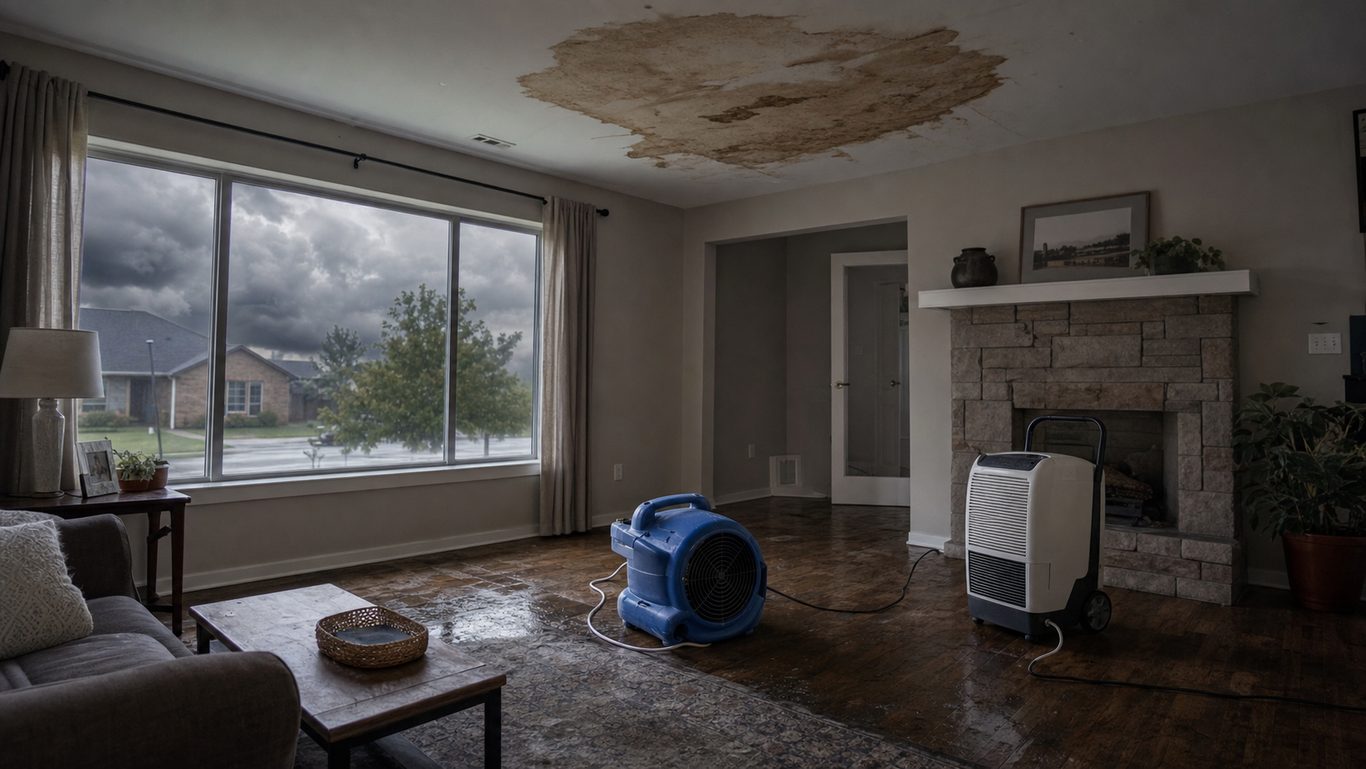
Timing matters. Every hour your roof remains open, moisture enters your attic space. We recently tarped a home near the Rose District where the owner waited three days after losing shingles. By the time we arrived, water had already stained the master bedroom ceiling and soaked insulation. The tarping prevented additional damage, but those first 72 hours cost thousands in interior repairs that could have been avoided.
Not every roof issue requires tarping. Small areas of granule loss from hail or a few curled shingles don't typically need emergency coverage. But if you can see daylight through your attic ceiling, water is pooling inside after rain, or you notice wet spots on ceilings, tarping becomes urgent. Our storm damage team can assess whether tarping is necessary or if the damage can wait for regular repairs.
Insurance companies expect homeowners to mitigate damage. Failing to tarp when needed can result in claim disputes over what was storm damage versus neglect. Most policies cover reasonable tarping costs as part of the claim.
The Professional Roof Tarping Process
Professional roof tarping follows a systematic approach to ensure the temporary protection actually works. The process starts with a roof inspection to identify all compromised areas. Storm damage rarely affects just one spot. Wind lifts shingles in patterns, and hail impacts create fields of damage across exposure zones.
Our crew first secures the area below for safety. Damaged roofs drop debris, and work above creates fall risks. We inspect from the attic when possible to mark penetration points and check for existing water intrusion. This inside view often reveals damage not visible from above, especially around valleys and flashing.
The tarp itself must be large enough to cover the damaged section plus at least four feet of intact roofing in all directions. This overlap ensures water running down the roof surface stays on top of the tarp rather than finding its way underneath. We use commercial-grade polyethylene tarps, typically 12x16 feet or larger depending on the damage footprint.
Anchoring methods separate professional work from amateur attempts. We use 2x4 or 2x6 boards placed along the tarp edges, then screw through the boards and tarp into solid roof decking. The boards distribute pressure and resist wind uplift far better than sandbags or loose weights. Each board gets fasteners every 12-18 inches. On steep pitches common in Broken Arrow neighborhoods, we may add intermediate anchor points to prevent billowing.
The tarp extends over the roof ridge when necessary, getting anchored on both sides. This prevents wind from getting underneath and lifting the entire installation. We avoid placing fasteners directly through good shingles when possible, but securing the tarp properly takes priority. A few extra holes filled during permanent repair are better than a tarp blowing off during the next storm.
Finally, we inspect edges and seams. Any gap or loose section becomes a water entry point. The goal is creating a continuous barrier that sheds water like the original roof surface. A well-installed tarp on a Broken Arrow home should survive multiple rain events and moderate wind without shifting or leaking.
How Long Can a Roof Tarp Stay in Place?
Roof tarps function as short-term protection, typically lasting 30 to 90 days under Oklahoma weather conditions. The actual lifespan depends on tarp quality, installation method, weather exposure, and roof pitch. A properly installed commercial-grade tarp can protect your Broken Arrow home through several storms, but it's not a substitute for real repairs.
UV exposure degrades polyethylene. Oklahoma's intense summer sun breaks down tarp material, causing it to become brittle and tear. A tarp installed in May might fail by August from sun damage alone, even without additional storms. Blue tarps fade to white as the material oxidizes and weakens.
Wind stress accelerates deterioration. Every storm that hits Broken Arrow tests the tarp installation. Even properly secured tarps experience flutter and movement during high winds. This constant flexing loosens fasteners over time and creates small tears that expand. After severe wind events, tarps should be inspected and re-secured if needed.
We tell customers to plan for permanent repairs within 60 days. That's a realistic window for getting insurance adjustments completed, selecting a contractor, and scheduling work in Broken Arrow. If repairs will take longer (common after widespread storm events), plan for tarp replacement or reinforcement before the original installation fails.
Some situations require longer tarping. If your roof needs full replacement and contractors are booked months out, you may need a second tarp installation. We've maintained tarp protection for clients through entire insurance claim disputes, sometimes four to six months. But each month increases the risk of tarp failure and secondary damage.
Insurance companies typically accept tarping costs for reasonable periods. Extended tarping because you delayed getting estimates or didn't pursue repairs promptly can create coverage disputes. Document why repairs are delayed and keep communication records with contractors and adjusters.
Cost Factors for Emergency Roof Tarping in Broken Arrow
Emergency roof tarping costs in Broken Arrow typically range from $300 to $1,500 depending on damage extent, roof accessibility, and timing. Most residential tarping jobs for storm damage fall in the $500 to $800 range for damage affecting one to two roof sections.
Several factors influence the final cost:
- Damaged area size requiring coverage
- Roof pitch and height accessibility challenges
- Number of roof penetrations or complexity
- Emergency timing during active weather
- Tarp material quality and size needed
- Distance traveled for emergency response
- Extent of debris removal required first
A simple tarp over missing shingles on a single-story ranch costs considerably less than tarping tornado damage across multiple roof planes on a two-story home. Steep pitches common on Broken Arrow's newer construction require additional safety equipment and slower work, increasing labor costs.
After major storm events affecting large areas, emergency tarping costs can spike due to high demand and crews traveling from other regions. Industry estimates suggest emergency tarping during peak demand periods can run $200 to $400 more than typical pricing. This isn't price gouging, it reflects overtime labor, travel costs, and supply chain pressure when every restoration company needs tarps simultaneously.
Most homeowners insurance policies cover reasonable tarping costs as part of emergency mitigation. You typically don't need pre-approval for tarping if you have obvious storm damage. Keep all receipts and documentation. Some policies have specific allowances for emergency services (often $500 to $2,500) before the deductible applies.
Be cautious of door-to-door contractors offering free tarping. These operations often use the tarp installation to gain roof access, then pressure homeowners into expensive repairs or insurance claim signing. Legitimate restoration companies like Statewide Restoration charge for tarping services but work transparently with your insurance claim process.
Getting multiple quotes during an emergency is often impractical, but understanding typical ranges helps you identify unreasonable pricing. If a quote seems high, ask for a breakdown of material and labor costs. For our storm damage services, we provide clear estimates before starting work unless the situation is truly urgent and requires immediate action to prevent ongoing damage.
Preventing Water Damage While Waiting for Permanent Roof Repairs
The tarp protects from outside, but additional steps inside your Broken Arrow home prevent damage while you wait for permanent repairs. Even the best tarp installation can develop small leaks, and existing water intrusion may continue causing problems if not addressed.
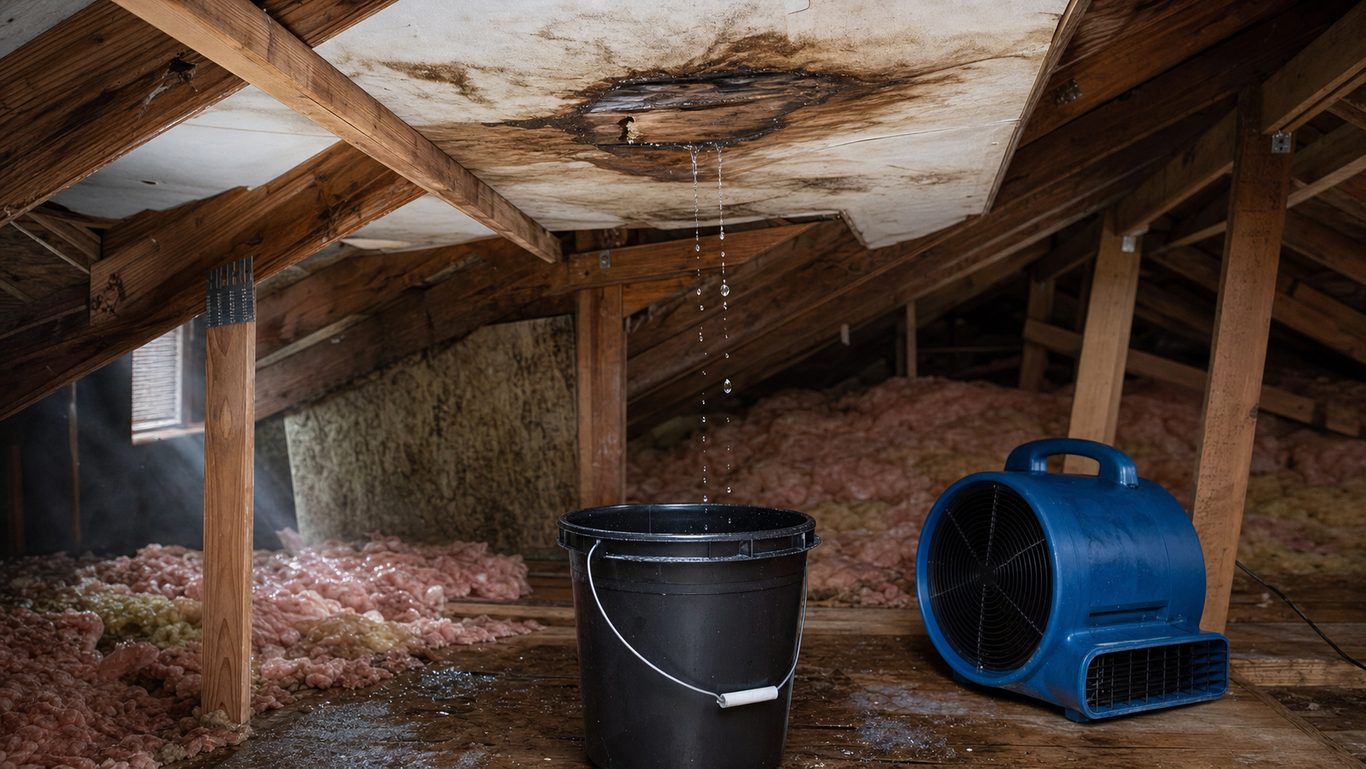
Check your attic regularly after the tarp goes up. Look for signs of new moisture, which indicates the tarp isn't performing or damage was more extensive than initially visible. Wet insulation should be removed. Soaked fiberglass or cellulose insulation loses R-value and promotes mold growth. Removing it improves airflow and allows structural wood to dry.
Set up fans to maintain air circulation in affected attic spaces. Oklahoma's humidity, especially during spring and summer, slows natural drying. We've seen attic moisture levels stay higher for weeks after a single intrusion event. Continuous airflow helps. If the damage affected living spaces, running dehumidifiers prevents secondary mold issues while waiting for repairs.
Document everything with photos and notes. Photograph the tarp installation from multiple angles. Take pictures of interior damage before and after tarping. Note dates when you notice changes. This documentation supports your insurance claim and helps if disputes arise about what damage occurred when.
Don't delay scheduling permanent repairs. The tarp buys time, but that time isn't unlimited. Contact roofing contractors immediately after tarping. Get on their schedule even if they're weeks or months out. Waiting to start the contractor selection process often results in even longer delays.
Inspect the tarp after each storm. A quick visual check from the ground can catch obvious problems like loosened sections or torn areas. If you see issues, contact the tarping company for repairs. Most professional installers will reinforce or adjust tarps if problems develop within the expected service period.
Consider interior protection for valuable items below the damaged area. Even with tarping, we recommend moving furniture, electronics, and valuables from rooms directly beneath roof damage. Tarps can fail unexpectedly during severe weather, and replacing your belongings adds to your losses.
If you need water damage restoration services for interior damage that occurred before or during tarping, address it promptly. Water damage worsens quickly in Oklahoma's climate. Ceiling materials, drywall, and framing can develop mold within 48 to 72 hours of becoming wet.
Need help now? See our full Storm Damage Restoration service page or browse all restoration services. Don't see your city above? The full Oklahoma service area covers 27 cities.
Local context for this article: see our Broken Arrow, OK restoration page and the Storm Damage Restoration in Broken Arrow service page.
This guide also pairs with water damage restoration for any rain intrusion and water mitigation for active leaks after the storm.
Can I install a roof tarp myself or should I hire professionals?
You can install a tarp yourself if the damage is minimal, the roof is accessible and safe, and you have proper equipment. However, professional installation is recommended for most situations. Storm-damaged roofs are unstable and dangerous to walk on. Professionals have safety equipment, know how to identify hidden damage, and install tarps that actually withstand Oklahoma wind and rain. Poor tarp installation often fails during the next storm, allowing extensive water damage that costs far more than professional tarping. Insurance companies expect reasonable mitigation, and a properly installed tarp demonstrates you took appropriate action to protect your property.
Authoritative resources referenced
Need restoration help in Oklahoma?
24/7 dispatch, IICRC standards, direct insurance billing.