What Happens During a Professional Mold Inspection?
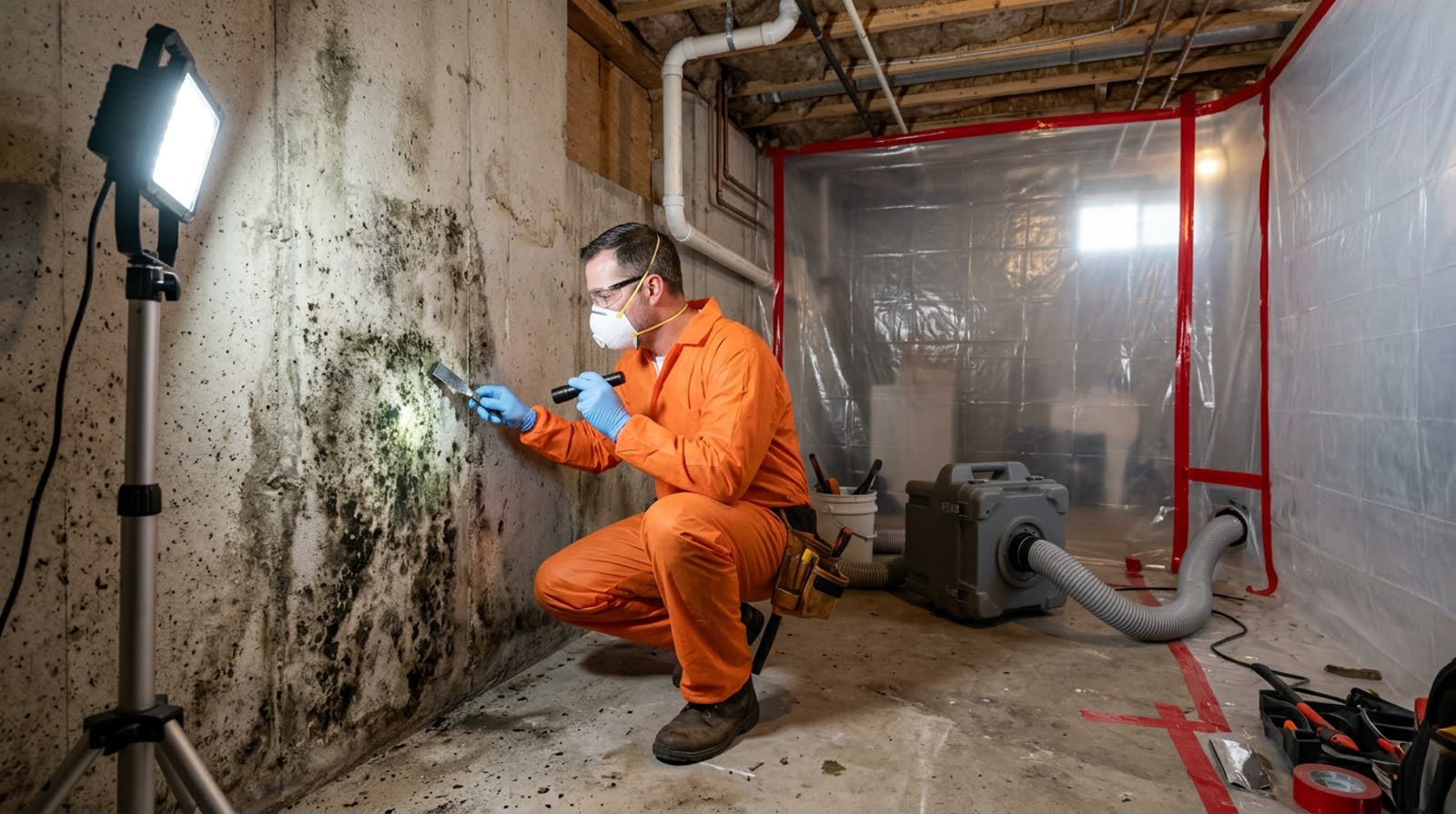
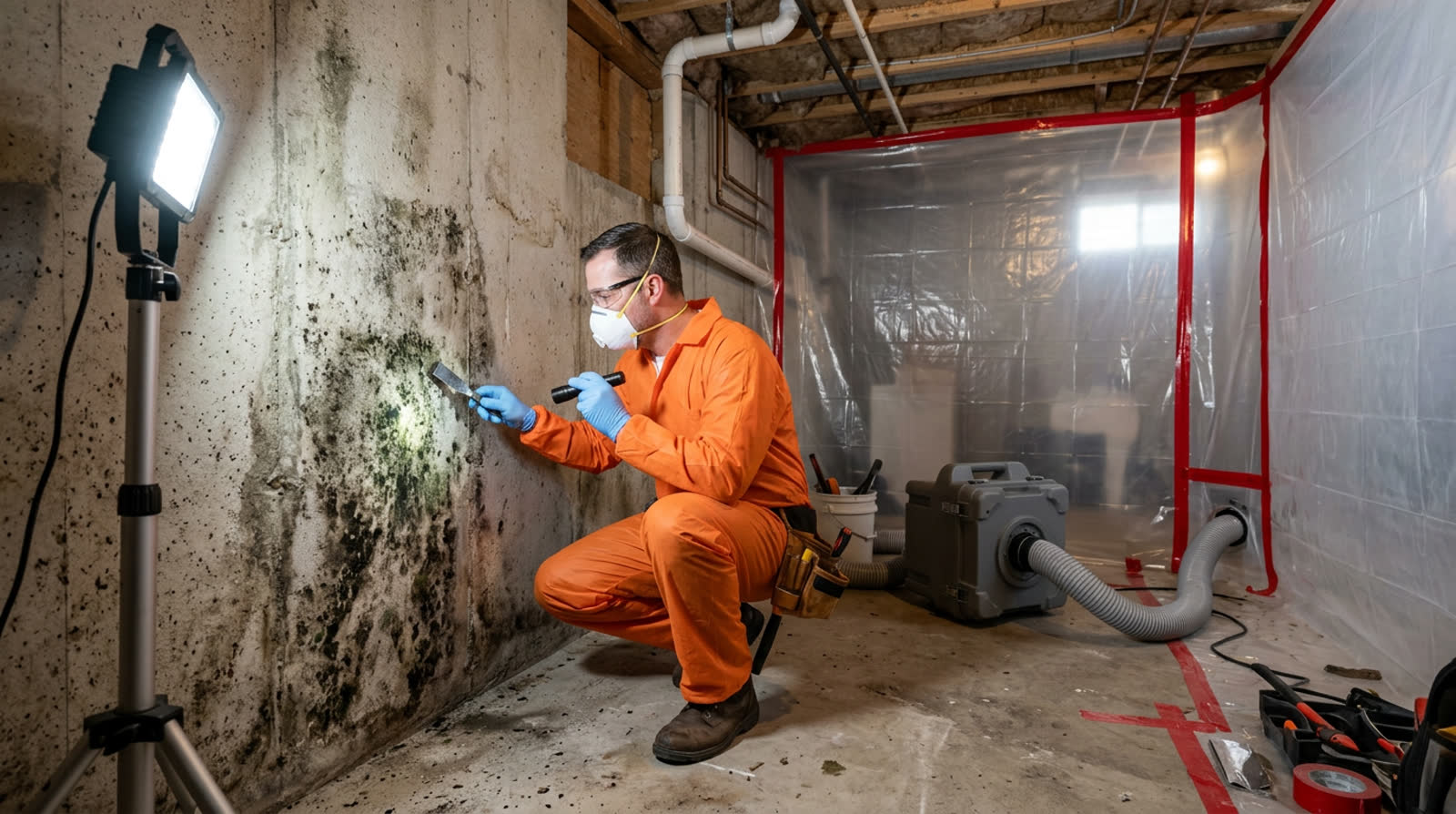
A mold inspection begins with a detailed visual examination of your entire home, focusing on areas prone to moisture accumulation. The inspector checks basements, crawl spaces, attics, bathrooms, kitchens, and any locations where you've noticed musty odors or visible growth. They document findings with photographs and notes.
The inspection includes moisture mapping using specialized equipment. Infrared cameras detect temperature differences that indicate hidden water intrusion behind walls or under floors. Pin-type and non-invasive moisture meters measure moisture content in building materials like drywall, wood framing, and subflooring.
Air quality testing follows the visual assessment. The inspector collects air samples from affected rooms and an outdoor control sample. These samples capture airborne mold spores that laboratory analysis identifies by type and concentration. Surface samples may be taken from visible growth or suspicious stains using swabs or tape lifts.
The entire process typically takes two to four hours depending on your home's size and the extent of suspected contamination. The inspector documents all findings, measurements, and sample locations for the final report.
In Edmond, we frequently inspect homes built on slab foundations where plumbing leaks beneath concrete can create hidden mold problems. Our inspectors pay special attention to these areas during assessments.
In Edmond homes, inspectors pay close attention to HVAC systems because Oklahoma's hot, humid summers create perfect conditions for mold growth inside ductwork and around cooling coils. The inspector will often remove air handler panels to examine condensate drains and drip pans, which frequently clog in this climate and overflow into wall cavities. We see this scenario repeatedly in homes built during Edmond's rapid growth periods in the 1980s and 1990s, where original ductwork may lack proper insulation or has developed leaks over decades of temperature cycling.
The inspector evaluates your home's grading and drainage patterns as well. Edmond sits on expansive clay soils that shift with moisture changes, often creating foundation cracks and grout separation that allow water intrusion. An exterior walk-around identifies improper slopes, clogged gutters, and downspouts discharging too close to the foundation. These observations explain moisture problems discovered inside and help prioritize remediation steps.
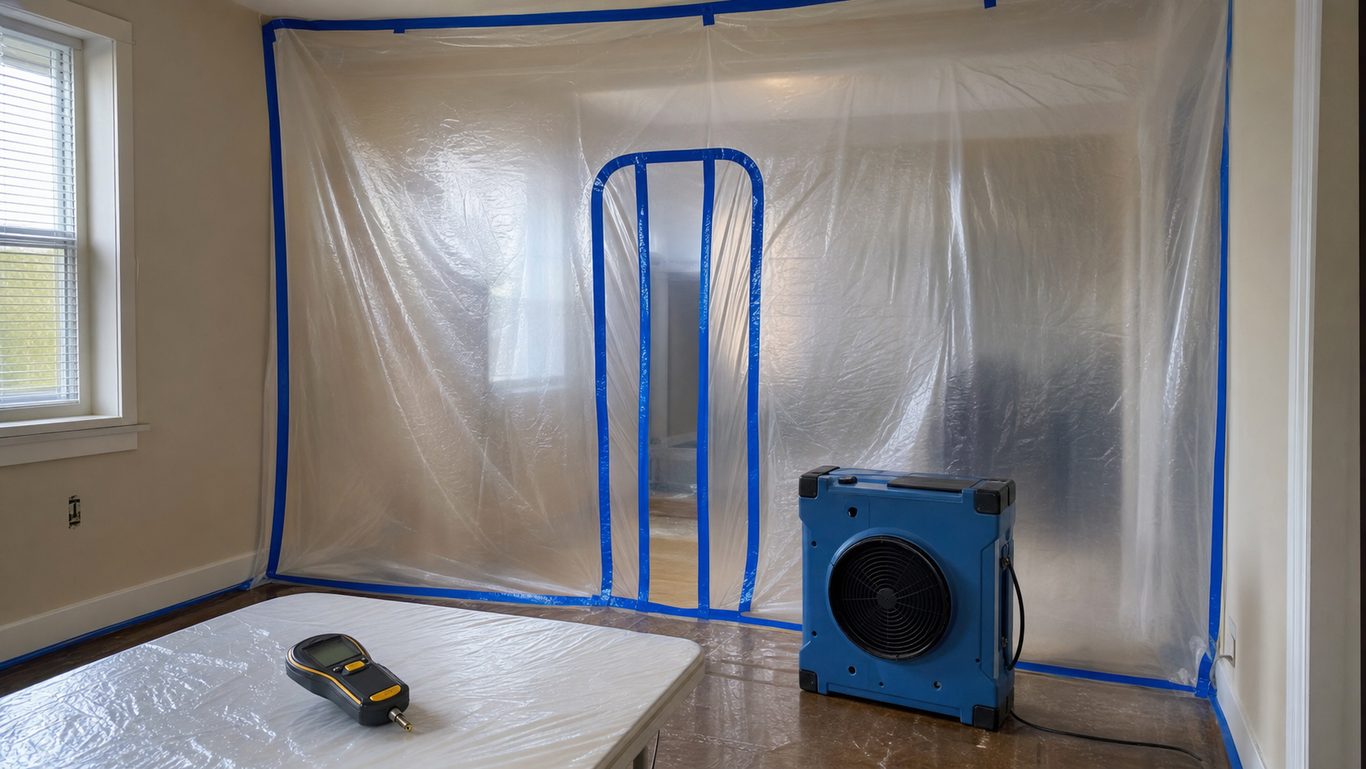
After the on-site work concludes, you will receive a detailed written report within three to five business days once laboratory analysis is complete. This report includes spore counts measured in spores per cubic meter of air, identified species, comparison between indoor and outdoor concentrations, and moisture readings from each tested location. The report also contains a scope of work outlining recommended remediation steps, estimated timelines, and whether the situation requires containment and negative air pressure during cleanup.
Most professional mold inspections in Edmond cost between $300 and $600 for a typical single-family home. Larger homes or properties with multiple buildings may run higher. This fee covers the inspector's time, laboratory analysis, and the written report. Some restoration companies offer free or discounted inspections if you proceed with their remediation services, though an independent third-party inspection often provides the most unbiased assessment. Ask whether the inspector is certified through organizations like the Indoor Air Quality Association or has specific training in moisture diagnostics, which ensures they follow recognized protocols during testing.
Why Visual Assessment Matters More Than Testing Alone
Visual inspection remains the foundation of any quality mold assessment. An experienced inspector identifies conditions that promote mold growth, active colonies, water damage patterns, and building defects that testing alone cannot reveal. They look for discoloration, staining, texture changes, peeling paint, warped materials, and condensation patterns.
Testing provides valuable data about spore counts and species identification, but it represents only a snapshot in time. Mold releases spores intermittently, not continuously. A test might miss active growth if spores aren't airborne during sampling. Visual evidence never lies.
Inspectors examine building materials up close. They check behind furniture, inside closets, under sinks, around windows, and in mechanical rooms. They identify whether stains are active mold, old water damage, or something else entirely. This distinction guides whether remediation is necessary.
The visual component also identifies the moisture source, which is critical. Finding mold without addressing the underlying water problem guarantees recurrence. Inspectors trace moisture to its origin, whether from roof leaks, plumbing failures, foundation cracks, or condensation issues.
We've inspected hundreds of Edmond homes where homeowners requested testing but didn't need it. The visual assessment clearly showed either no mold problem or obvious growth requiring immediate remediation without laboratory confirmation.
Understanding Moisture Detection Equipment and Methods
Moisture meters are the inspector's primary diagnostic tool. Pin-type meters use two probes that penetrate the material surface to measure electrical resistance. Higher moisture content reduces resistance, giving a percentage reading. These meters work well on wood, drywall, and other porous materials.
Non-invasive meters use electromagnetic waves to detect moisture without damaging surfaces. They scan larger areas quickly to identify problem zones. Inspectors then use pin meters for precise measurements in suspected locations. Both meter types complement each other during thorough assessments.
Infrared thermal cameras visualize temperature differences across surfaces. Wet materials appear cooler than dry ones because moisture conducts heat differently. These cameras reveal hidden water intrusion behind walls, under flooring, or in ceiling cavities without destructive investigation.
Relative humidity meters measure ambient moisture in the air. Readings above 60 percent create conditions where mold can colonize materials. Inspectors document humidity levels in different rooms to identify areas requiring better ventilation or dehumidification.
Hygrometers with data logging capability track humidity fluctuations over time. Some inspections benefit from 24 to 48 hours of monitoring to capture patterns that explain intermittent mold growth. This extended monitoring identifies issues like nighttime condensation or HVAC cycling problems.
Professional-grade equipment costs thousands of dollars and requires training to interpret correctly. The inspector's experience matters as much as the tools. In Edmond's climate, where humidity can spike during spring and summer storms, accurate moisture readings are necessary for proper diagnosis.
Air Sampling Methods and What They Reveal
Air sampling collects mold spores from your indoor environment for laboratory analysis. The most common method uses a spore trap device that pulls a measured volume of air through a collection cassette. Spores impact a sticky surface inside the cassette that preserves them for microscopic examination.
The laboratory counts and identifies spore types, providing data on concentration (spores per cubic meter of air) and species present. The lab compares indoor samples to the outdoor control sample. Higher indoor levels of certain species indicate an indoor source requiring attention.
Some situations call for viable sampling using culture plates. These collect living spores that grow into colonies the lab can identify to species level. Viable sampling takes longer (up to two weeks for results) but provides more detailed species information for health-related concerns.
Inspectors collect samples from multiple locations. They sample rooms with visible growth, areas with musty odors, rooms directly above or below moisture sources, and unaffected spaces for comparison. Sample placement follows industry protocols to ensure representative results.
Air sampling has limitations. It captures only spores airborne during the brief sampling period (typically five to ten minutes per location). Dormant mold that isn't actively releasing spores may go undetected. Heavy surface growth might not show higher air counts if conditions don't favor spore release.
Results typically arrive within three to five business days. The inspector or laboratory provides interpretation explaining whether counts are raised, what species are present, and whether they indicate a problem requiring remediation.
Surface Sampling Techniques for Visible Growth
Surface sampling collects mold growth directly from affected materials. Tape lifts are the simplest method. The inspector presses clear adhesive tape against the surface, lifts off mold colonies, and places the tape on a microscope slide. The lab examines it to identify species and growth characteristics.
Swab samples use sterile cotton applicators moistened with sterile water. The inspector rubs the swab across a defined area of growth, places it in a sterile tube, and sends it to the lab for culture or direct examination. Swabs work well on irregular surfaces where tape won't adhere properly.
Bulk sampling removes a piece of the affected material itself. The inspector cuts a small section of drywall, carpet, insulation, or other material and seals it in a clean bag. Labs can perform multiple tests on bulk samples including culture, direct microscopy, and molecular analysis.
Surface sampling confirms whether discoloration is actually mold and identifies the species present. Some mold types raise more concern than others. Knowing the species helps assess potential health risks and guides remediation protocols.
We use surface sampling in Edmond homes when homeowners need confirmation before proceeding with remediation, when insurance documentation requires it, or when unusual growth patterns need identification. In our experience, most visible mold requires removal regardless of species, making extensive sampling unnecessary in straightforward cases.
Surface samples complement air testing but serve different purposes. Air samples assess overall environmental quality while surface samples identify what's growing in specific locations.
Reading and Understanding Your Inspection Report
Your inspection report documents all findings in a written format with photographs, measurements, and laboratory results. The executive summary at the beginning states whether mold problems were found and the recommended next steps. Read this section first for the overall conclusion.
The body of the report describes each area inspected. It notes moisture readings, visible growth, water damage, building defects, and conditions conducive to mold. Photographs illustrate problems with captions explaining what each image shows. Floor plans may mark affected locations.
Laboratory results appear in a separate section or appendix. Air sample reports list spore counts by species for each location sampled, including the outdoor control. The report highlights higher counts and species of concern. Surface sample results identify what was collected from each location.
The recommendations section outlines necessary actions. It may suggest additional investigation, moisture source repair, remediation of affected materials, and prevention measures. The report should clearly state whether remediation is needed and approximately what scope of work it entails.
Some reports include cost estimates or remediation protocols. Others simply identify problems and leave remediation planning to the contractor. Under Oklahoma law (15 O.S. §765.4), if the combined cost of inspection and remediation exceeds $200, the inspector cannot also perform the remediation work. These are separate services.
Keep your report for insurance claims, real estate transactions, and future reference. If you're selling a home in Edmond and disclosed a previous mold issue, the inspection report demonstrates that you addressed it properly. The documentation protects all parties.
Questions about your report are normal. Contact the inspector for clarification. A good inspector explains findings in plain language and helps you understand what the data means for your specific situation.
Choosing a Qualified Mold Inspector in Edmond
Oklahoma does not have a state-issued mold inspector license or certification. Anyone can legally call themselves a mold inspector. This makes choosing a qualified professional more challenging but not impossible. Look for training, experience, and professional credentials rather than state licensing.
Reputable inspectors hold certifications from recognized organizations. The Indoor Air Quality Association (IAQA) offers the Certified Mold Inspector (CMI) credential. The American Council for Accredited Certification (ACAC) provides the Council-certified Microbial Consultant (CMC) designation. These demonstrate formal training and continuing education.
Ask about the inspector's experience. How many inspections have they performed? How long have they worked in the field? Do they specialize in residential properties? Experience matters because mold inspection requires judgment that only develops through repeated fieldwork.
Inquire about their equipment. Professional inspectors own calibrated moisture meters, thermal imaging cameras, and air sampling pumps. They use accredited laboratories for sample analysis, not cheap online services. Equipment quality directly affects accuracy.
Verify that the inspector carries errors and omissions insurance. This professional liability coverage protects you if they miss something significant or provide incorrect information. Request proof of insurance before hiring.
The inspector should provide a written agreement detailing what the inspection includes, what it costs, and when you'll receive the report. Avoid inspectors who refuse to put terms in writing or who pressure you to use their remediation services.
We perform mold remediation at Statewide Restoration but cannot inspect the same property we remediate when the combined cost exceeds $200. This legal requirement protects homeowners from conflicts of interest. We refer inspection work to independent qualified inspectors and focus on remediation, water damage restoration, and related services.
Check references and online reviews. A qualified inspector has satisfied customers willing to vouch for their work. Be wary of inspectors with no verifiable track record or those who seem more interested in selling remediation than providing objective assessment.
Need help now? See our full Mold Remediation service page or browse all restoration services. Don't see your city above? The full Oklahoma service area covers 27 cities.
Local context for this article: see our Edmond, OK restoration page and the Mold Remediation in Edmond service page.
This guide also pairs with water damage restoration that prevents mold from forming and water mitigation inside the 72-hour window.
How much does a professional mold inspection cost in Edmond?
Mold inspection costs in Edmond typically range from $300 to $700 depending on home size, scope of testing, and number of samples collected. A basic visual inspection with limited air sampling costs less than a full assessment with multiple air and surface samples sent to the laboratory. Larger homes or those with suspected extensive contamination require more time and testing, increasing the cost. Most inspectors provide a quote after discussing your specific situation and concerns. The investment provides valuable information that guides remediation decisions and potentially saves money by identifying exactly what needs attention rather than guessing at the problem's extent.
Authoritative resources referenced
Need restoration help in Oklahoma?
24/7 dispatch, IICRC standards, direct insurance billing.