Why Do Edmond Bathrooms Develop Mold So Frequently?
Bathrooms in Edmond homes experience constant moisture from showers, tubs, and sinks. The combination creates perfect conditions for mold growth. Poor ventilation traps humidity inside the room. Most Edmond bathrooms lack adequate exhaust fans or have fans that vent into attics instead of outside.
Oklahoma's humid summers add another layer of difficulty. The red clay soil around Edmond foundations can channel groundwater toward basement bathrooms. We've seen countless cases where a small roof leak drips into a second-floor bathroom wall for months before anyone notices the black stains appearing.
Tile grout is porous and absorbs water over time. Once moisture penetrates behind tile, it sits against drywall or cement board. The dark, damp space between the tile and wall becomes a mold farm. Caulking around tubs and showers breaks down after a few years, letting water seep into gaps.
Older homes in downtown Edmond often have cast iron plumbing that corrodes and develops pinhole leaks inside walls. The slow drip might go unnoticed until mold appears on the adjacent wall surface. Bathroom exhaust fans that run for only a minute or two after a shower don't remove enough moisture to prevent condensation buildup.
What Does the Initial Mold Inspection Reveal?
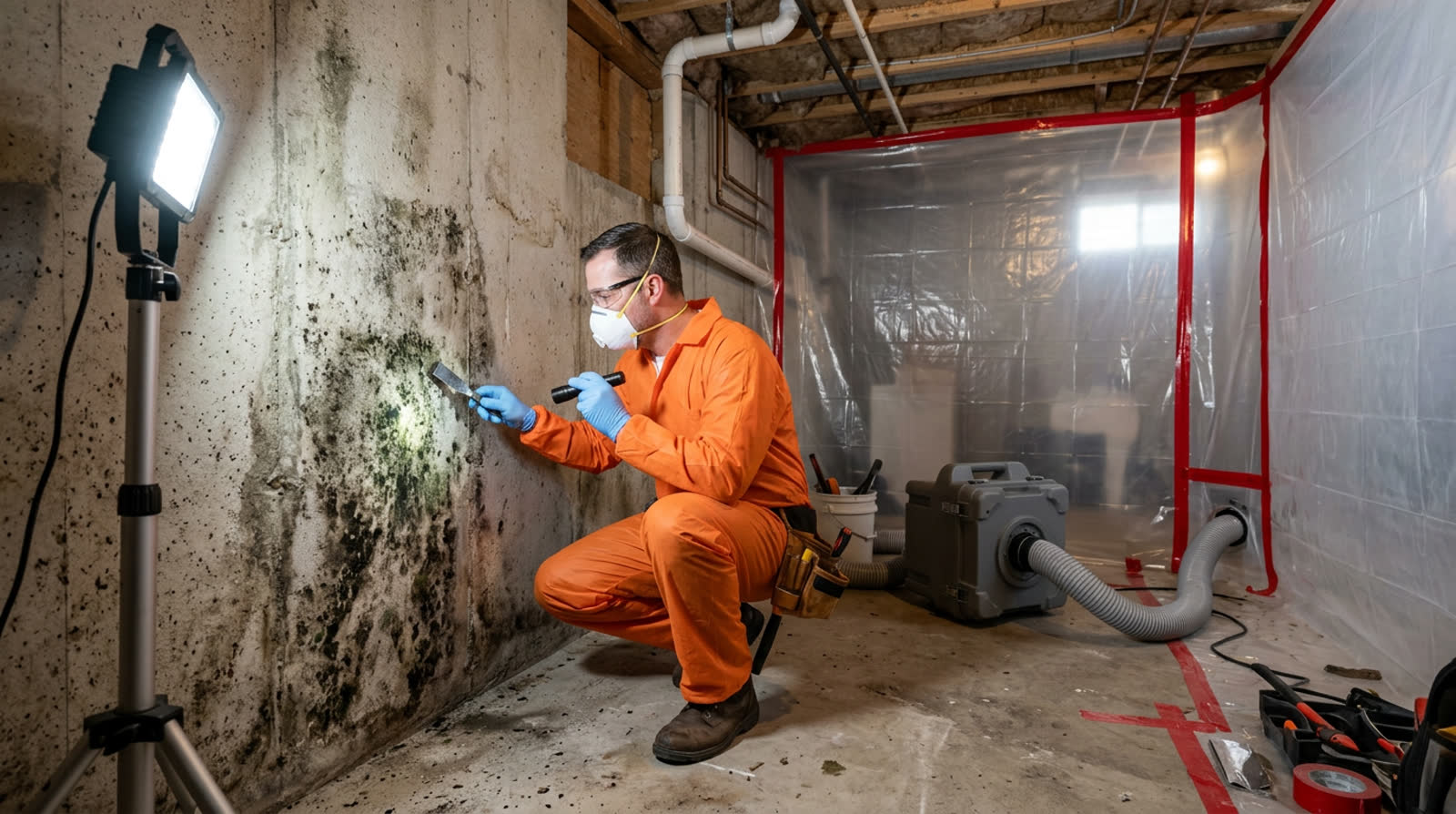
The inspection identifies mold type, extent of growth, and moisture sources. We look behind accessible panels, under sinks, and around plumbing penetrations. A moisture meter measures water content in walls, floors, and ceilings. High readings indicate active leaks or persistent humidity problems.
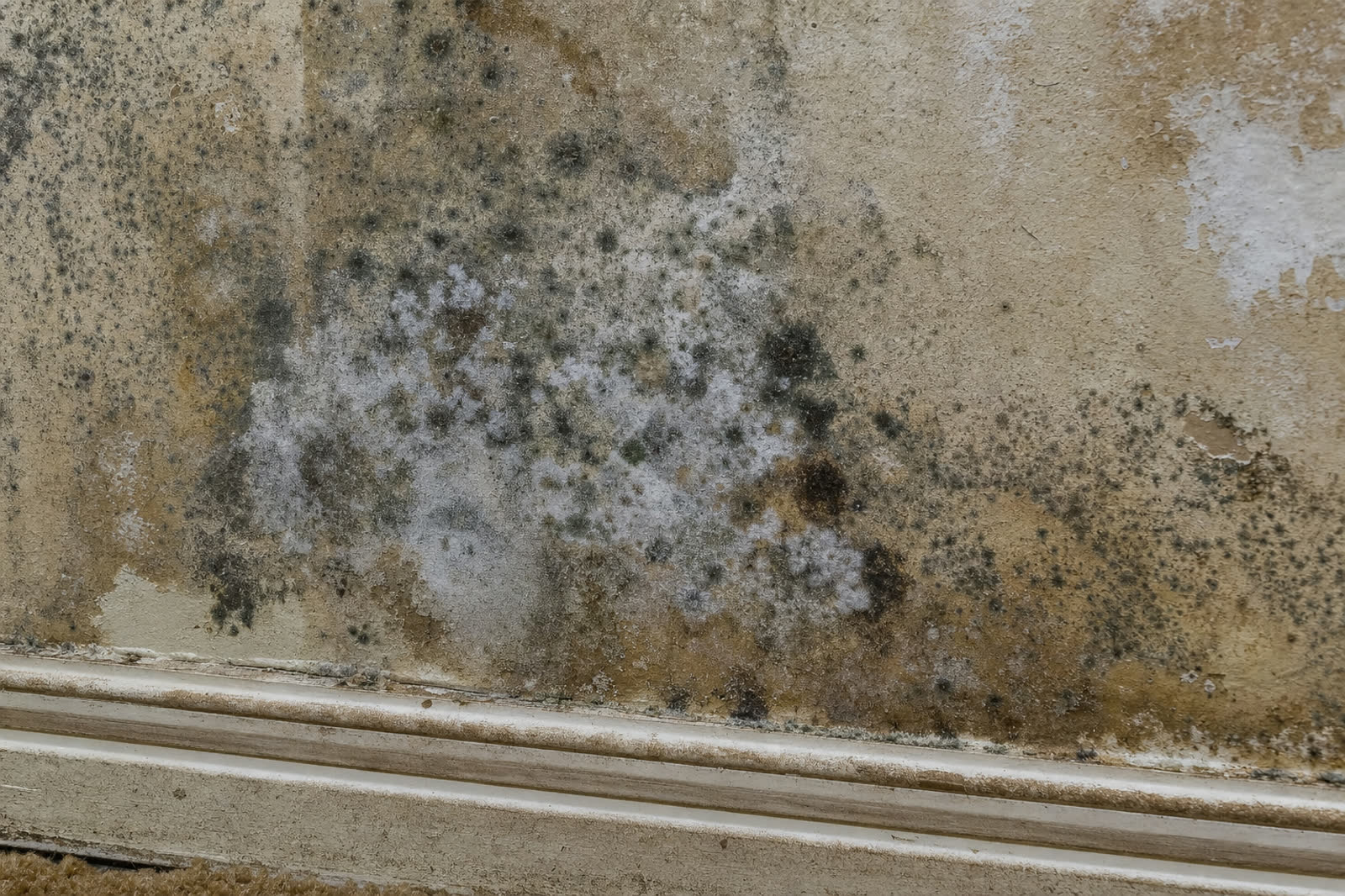
Visible mold on surfaces tells only part of the story. The real problem often hides behind tile, inside vanity cabinets, or under flooring. We check for soft spots in subflooring that suggest long-term water damage. Discolored grout lines and caulk joints point to water intrusion paths.
In our experience, bathroom mold in Edmond homes most commonly grows on drywall behind showers, on ceiling drywall near exhaust fans, and inside vanity cabinets under leaking sink traps. We recently inspected a master bathroom where mold covered the entire back wall of a walk-in shower. The homeowner had ignored a small stain for six months, assuming it was soap residue.
Testing determines whether the mold is common surface mold or a more concerning species. Under Oklahoma law (15 O.S. §765.4), if the combined cost of inspection and remediation exceeds $200, these must be separate engagements. We perform visual inspections, and if testing is needed, we coordinate with independent labs to maintain compliance.
The inspection report documents all findings with photos and moisture readings. This creates a roadmap for the mold remediation process. It also helps identify whether the problem is limited to surface growth or requires more extensive material removal.
How Do Professionals Contain the Mold Work Area?
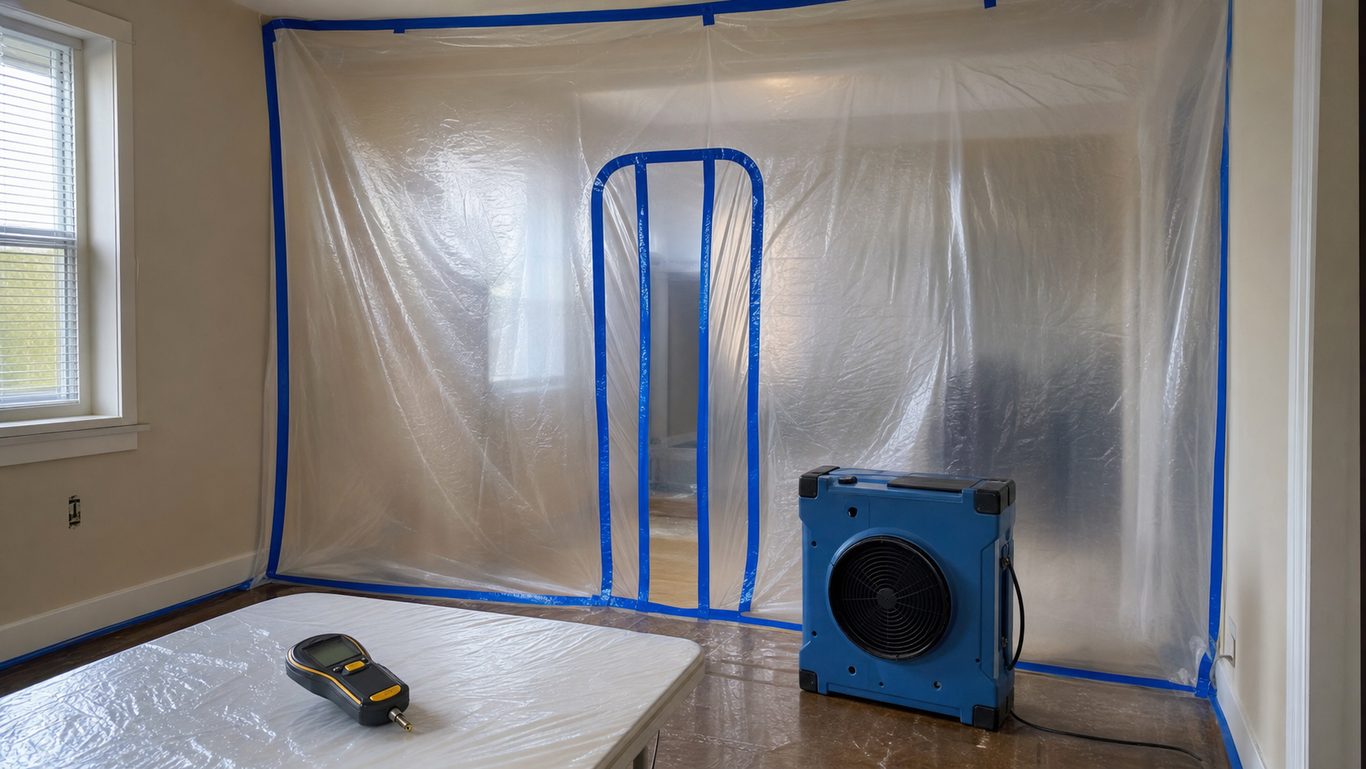
Containment prevents mold spores from spreading to clean areas during removal. We seal the bathroom doorway with heavy plastic sheeting and zipper doors. All HVAC vents get covered and sealed to prevent spores from entering ductwork.
A negative air machine sits inside the contained bathroom, pulling air through HEPA filters and exhausting it outside through a window or door. This creates negative pressure, so air flows into the bathroom but not out into the hallway. The machine runs continuously throughout the entire remediation process.
We remove shower curtains, rugs, towels, and toiletries before containment. These items either get cleaned or discarded depending on their condition and material. Personal items that can be salvaged go into sealed bags for cleaning outside the containment zone.
The containment protects the rest of your Edmond home from cross-contamination. Disturbing mold during removal releases millions of microscopic spores into the air. Without proper containment, those spores settle throughout your house and can start new colonies wherever they find moisture.
For bathrooms connected to bedrooms, we often extend containment into the bedroom to create an airlock entry system. This double-barrier approach provides extra protection for living spaces. Floor surfaces outside the containment get covered with protective sheeting to catch any debris tracked during material removal.
What Materials Need Removal During Bathroom Mold Remediation?
Any porous material with mold growth requires removal and disposal. Drywall absorbs water and mold roots penetrate deep into the paper facing and gypsum core. Cleaning surface mold off drywall doesn't kill the growth inside the material. We cut out affected drywall at least two feet beyond visible mold to ensure complete removal.
Ceiling tiles, insulation, and subflooring often need replacement if mold has spread into these areas. Carpet and padding in bathrooms (which we rarely see but occasionally encounter in older Edmond homes) must be removed if mold is present. Wood studs and framing typically get cleaned rather than removed unless the wood shows structural damage from rot.
Tile and grout present a judgment call. Surface mold on tile can usually be cleaned. If mold has grown behind the tile or if the tile is loose from water damage, we remove it to access the substrate. We've found that trying to save deteriorated tile often costs more in time and effort than replacing it.
Vanity cabinets with particle board construction absorb water and swell. Once water-damaged, these cabinets don't return to their original shape. Solid wood cabinets can often be saved with thorough cleaning and drying. Medicine cabinets recessed into walls sometimes have mold growth in the wall cavity around them.
All removed materials go directly into heavy-duty disposal bags. We seal the bags inside the containment area before carrying them out of your home. This prevents spore release during the disposal process. Bagged materials go straight to an approved landfill that accepts construction debris.
What Cleaning and Treatment Steps Follow Material Removal?
After removing contaminated materials, we HEPA-vacuum all remaining surfaces. The vacuum captures microscopic spores that settled during demolition. We vacuum studs, joists, subfloors, and any salvageable materials twice to ensure thorough spore removal.
Next comes physical cleaning with wire brushes and abrasive pads on any remaining mold stains. This mechanical action removes mold that has etched into wood grain or concrete surfaces. We clean structural lumber with antimicrobial solutions designed for porous building materials.
An EPA-registered antimicrobial solution gets applied to all surfaces within the remediation area. This treatment kills remaining mold spores and provides short-term protection against regrowth. The solution needs proper dwell time to work effectively, so we let it sit for the manufacturer's recommended duration before wiping or rinsing.
HEPA air scrubbing continues for at least 24 hours after cleaning. The negative air machines cycle the bathroom air through filters repeatedly, capturing airborne spores released during cleaning. We monitor particle counts with air quality meters to verify that spore levels have dropped to acceptable ranges.
A final HEPA vacuuming removes any dust or residue from the antimicrobial application. We wipe down all hard surfaces with clean microfiber cloths. At this point, the bathroom structure is clean and ready for reconstruction. The space looks stripped down to studs and subfloor, but it's mold-free and dry.
We document the entire process with photos at each stage. This record shows what was found, what was removed, and the final clean condition. Insurance adjusters often require this documentation for claims related to water damage and mold.
How Long Does the Drying Process Take in Oklahoma?
Proper drying is critical before reconstruction begins. We place commercial dehumidifiers and air movers in the bathroom to remove moisture from framing and subflooring. Oklahoma's humidity makes this step necessary. In summer months with high outdoor humidity, drying can take longer.
Wood framing should reach 15 percent moisture content or below before we close up walls. We measure moisture levels daily with pin and pinless meters. Concrete subflooring needs to dry to appropriate levels based on the planned flooring type. Tile can handle slightly higher moisture than vinyl or laminate.
Typical drying time runs two to four days for bathroom framing in Edmond homes. Bathrooms with concrete slab foundations sometimes dry faster because there's no crawlspace moisture wicking up through the structure. Bathrooms above basements or crawlspaces may need vapor barriers installed before reconstruction to prevent future moisture problems.
We can't rush this phase. Installing new drywall and tile over damp framing traps moisture inside walls. That trapped moisture will cause mold to return within months. We've seen other companies skip proper drying to finish jobs faster, only to have the homeowner call us back six months later with the same mold problem.
The drying equipment runs continuously, and we check the bathroom daily. Once moisture readings are acceptable throughout the affected area, we remove the drying equipment and prepare for reconstruction. The bathroom remains under containment during drying to maintain controlled conditions and prevent dust migration.
Edmond's expansive clay soil directly affects how quickly bathroom moisture problems develop and how long drying takes after remediation. The soil contracts during dry periods and swells when wet, creating foundation movement that can crack slab floors and shift walls. These small cracks become moisture entry points. When we dry out a bathroom after mold removal, we need to account for any foundation cracks or gaps where ground moisture might enter. Sealing these openings before we begin drying prevents outside humidity from working against the dehumidifiers. A bathroom that should dry in three days might take six if foundation cracks are pulling humid air from beneath the slab.
Temperature plays a major role in drying speed. We often see bathroom projects in Edmond during spring and fall when temperatures swing twenty or thirty degrees between day and night. Cooler overnight temperatures slow evaporation. Running dehumidifiers generates heat, which actually helps during cooler months. In a bathroom that drops to sixty degrees overnight, the drying equipment warms the space to seventy or seventy-five degrees, speeding moisture removal. Summer projects face the opposite challenge. When outdoor humidity sits at seventy or eighty percent, dehumidifiers work harder to pull moisture from materials. We sometimes need to add extra equipment or extend the drying timeline by a day or two during July and August.
The type of bathroom construction changes drying requirements considerably. Many Edmond homes built before 1990 have cast iron or galvanized plumbing that corrodes over time. When we remove mold-damaged walls, we often find small leaks that have been wetting framing for years. That long-term moisture exposure means the wood has absorbed water deep into the grain. Surface drying happens quickly, but interior moisture takes longer to release. We've measured studs that read eighteen percent on the surface but twenty-two percent an inch deep. Those studs need another full day or two of drying even after surface readings look acceptable.
Homeowners sometimes ask about costs for the drying phase alone. Equipment rental, labor for daily monitoring, and electricity to run commercial dehumidifiers typically adds $400 to $900 to a bathroom mold project in Edmond. Larger master bathrooms or jobs requiring extra drying days because of weather conditions fall on the higher end. That cost covers professional-grade equipment that moves far more air and removes much more moisture than homeowner units.
What Reconstruction Steps Complete the Bathroom Restoration?
Reconstruction starts with addressing the original moisture source. If a plumbing leak caused the mold, we coordinate with licensed plumbers to repair pipes, drains, or fixtures. Roof leaks need repair before we close up ceilings. Inadequate ventilation requires upgrading the exhaust fan to one that moves sufficient CFM for the bathroom size.
New drywall goes up using mold-resistant or paperless types when appropriate. We use cement board or fiber-cement backer in shower areas rather than standard drywall. These products resist moisture better than paper-faced gypsum. Proper fastening and taping create smooth surfaces ready for finish work.
Insulation gets replaced in exterior walls and ceilings. We use closed-cell foam in some applications where moisture control is critical. Fiberglass batts work fine in interior walls where moisture shouldn't be an issue after the source problem is fixed.
Tile installation, painting, fixture reinstallation, and trim work bring the bathroom back to finished condition. We coordinate with tile contractors, painters, and plumbers as needed. Some homeowners use the restoration as an opportunity to upgrade fixtures and finishes. Others prefer we match the existing bathroom style.
The final step is confirming that all moisture sources are truly resolved. We check that the exhaust fan vents properly to the outside, not into the attic. We verify that shower doors and curtains contain water appropriately. Caulking and grout get sealed properly to prevent future water intrusion behind tile.
For homeowners in Edmond, Oklahoma City, or anywhere in our service area, the reconstruction phase can take one to three weeks depending on bathroom size and finish complexity. We work efficiently but won't compromise quality to meet arbitrary deadlines.
Need help now? See our full Mold Remediation service page or browse all restoration services. Don't see your city above? The full Oklahoma service area covers 27 cities.
Local context for this article: see our Edmond, OK restoration page and the Mold Remediation in Edmond service page.
This guide also pairs with water damage restoration that prevents mold from forming and water mitigation inside the 72-hour window.
Can I clean bathroom mold myself instead of hiring professionals?
Small surface mold areas under ten square feet can often be cleaned by homeowners using proper safety equipment and EPA-registered cleaners. Once mold covers larger areas, grows inside walls, or returns repeatedly after cleaning, professional remediation becomes necessary. DIY cleaning can spread spores throughout your home without proper containment. You also risk missing hidden mold growth behind surfaces that looks clean but continues growing. If you have health conditions, respiratory issues, or immune system concerns, professionals should handle even small mold problems to minimize exposure risks.
Authoritative resources referenced
Need restoration help in Oklahoma?
24/7 dispatch, IICRC standards, direct insurance billing.