Why Norman Basements Develop Mold Problems
Norman sits on heavy red clay soil that does not drain well. Water pools around foundations during spring rains and summer thunderstorms. That water seeps through porous concrete or finds cracks in block walls. Once inside, basements stay damp because Oklahoma humidity hovers between 60 and 80 percent from May through September.
We've seen countless Norman basements where sump pumps failed during a storm, leaving three inches of standing water for days. Others had no sump at all, just slow seepage that homeowners didn't notice until the carpet smelled musty. Finished basements are especially vulnerable because drywall and insulation hide the problem until mold has spread behind walls.
Older homes in the east and central Norman neighborhoods often have stone foundations or unfinished crawlspaces that connect to basements. These spaces trap moisture and become mold factories. Even newer construction in west Norman can develop problems if gutters overflow or grading slopes toward the house instead of away.
Temperature swings make it worse. Norman winters bring occasional freezing, then rapid thaws. Spring arrives with heavy rain. Basements stay cool while upstairs heats up, creating condensation on cold surfaces. That condensation feeds mold on wood joists, cardboard boxes, and any organic material stored below grade.
How Professional Mold Remediation Works
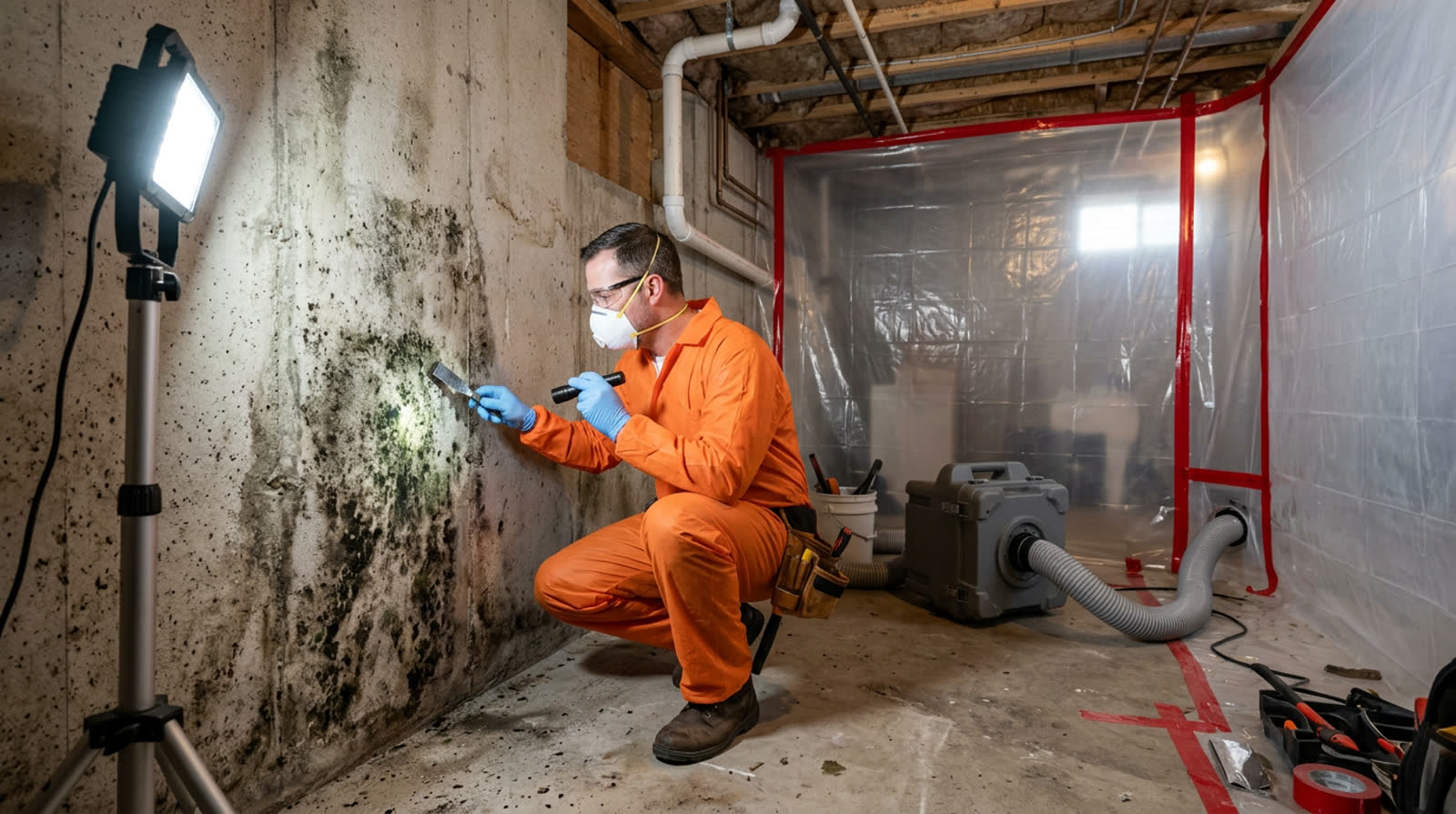
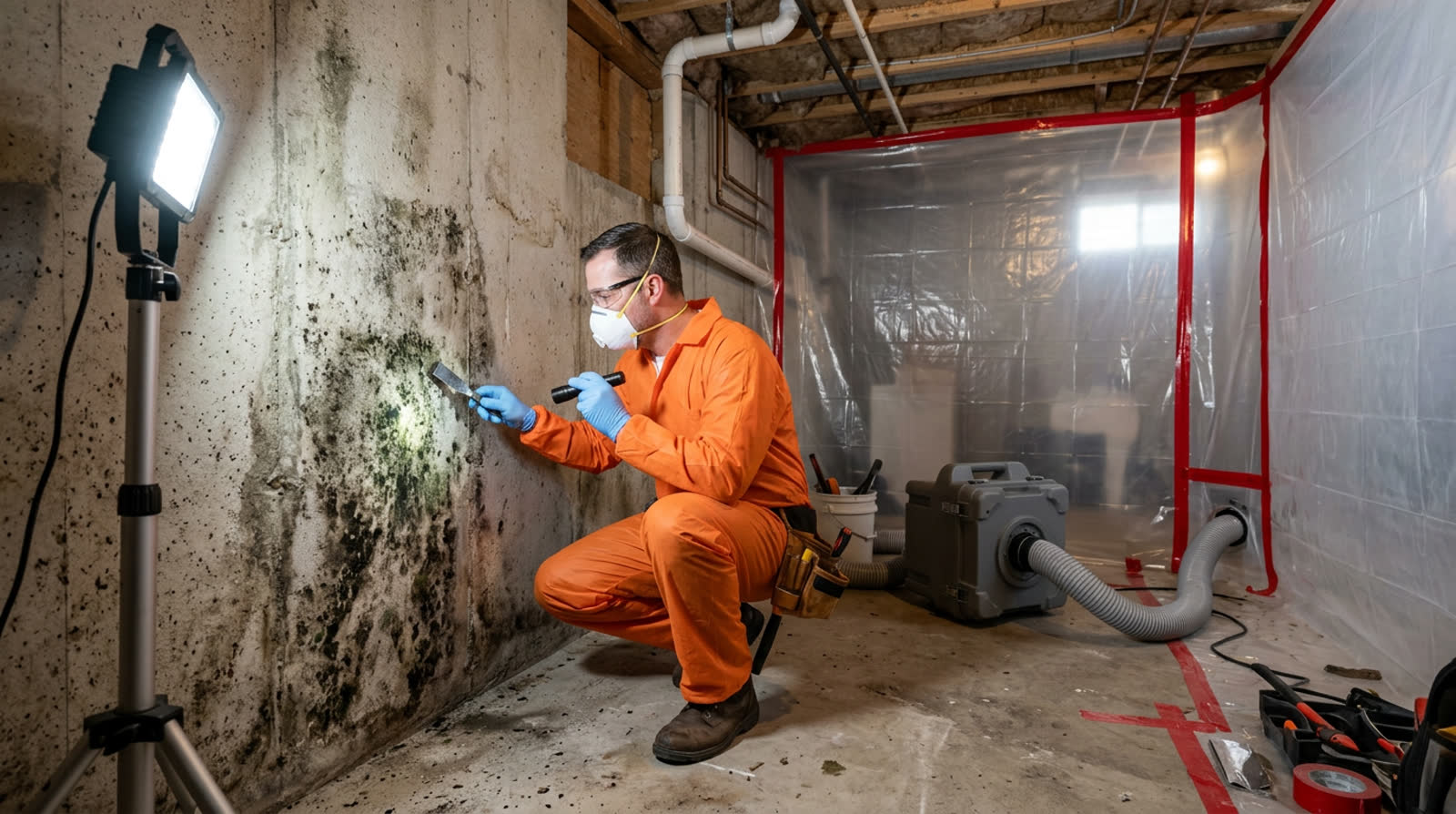
Professional mold remediation follows a structured process. First, we assess the extent of contamination and identify moisture sources. Then we set up containment barriers using polyethylene sheeting and negative air pressure to prevent spores from spreading upstairs.
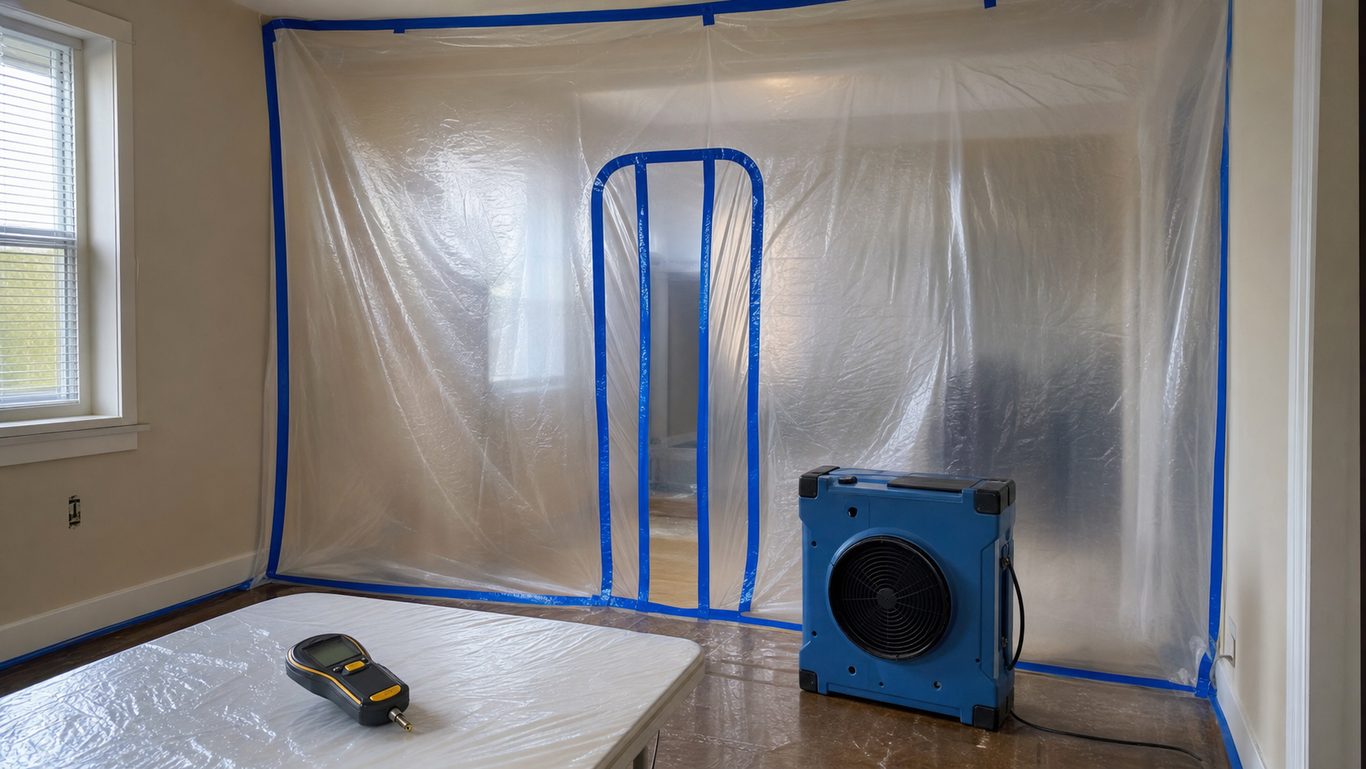
Containment is critical. We seal doorways and HVAC vents with plastic and tape. HEPA-filtered air scrubbers pull air from the contaminated zone and exhaust it outside or through filters. This creates negative pressure so air flows into the basement, not out into living areas.
Next comes physical removal. Non-porous materials like metal shelving or plastic bins get wiped down with antimicrobial cleaner. Porous materials that are heavily contaminated usually get removed entirely. Drywall that shows visible growth gets cut out at least 12 inches beyond the visible edge. Carpet padding almost always goes. The carpet itself might be salvageable if caught early, but padding absorbs water and grows mold quickly.
We use HEPA vacuums to capture surface mold on wood framing before treating it. Then we apply antimicrobial solutions to kill remaining spores and inhibit regrowth. After treatment, everything gets wiped or vacuumed again. Finally, we dry the space using commercial dehumidifiers and air movers until moisture readings return to normal.
Post-remediation verification is a separate step. In our experience, homeowners often hire an independent inspector to test air quality after we finish. That inspector was not involved in the remediation, which keeps the process impartial and meets Oklahoma legal requirements.
What Oklahoma Law Says About Mold Inspection and Remediation
Oklahoma statute 15 O.S. §765.4 requires that mold inspection and mold remediation be performed by separate entities when the combined cost exceeds $200. This law prevents conflicts of interest. An inspector who finds mold should not also profit from cleaning it up.
Here's how it works in practice. You call an independent mold inspector to test your basement. That inspector collects air samples and surface samples, then sends them to a lab. The lab report tells you what species are present and at what concentrations. The inspector writes a protocol explaining what needs remediation.
Then you hire a remediation company like Statewide Restoration to follow that protocol. We perform the cleanup as specified. After we finish, the same independent inspector returns to verify that air quality has improved and surfaces are clean. The inspector issues a clearance letter if the work passes.
This separation protects you. The inspector has no financial incentive to exaggerate the problem, and the remediation company has no incentive to skip steps because an independent party will verify the results. The $200 threshold is low enough that nearly all basement jobs trigger this requirement.
Oklahoma does not have a state mold remediation license. Instead, remediation companies rely on industry training and certifications. We follow guidelines from the Institute of Inspection, Cleaning and Restoration Certification and the Environmental Protection Agency. These standards guide containment, removal, and clearance criteria.
Common Mold Species in Norman Basements
Several mold species thrive in Norman basements. Cladosporium grows on damp wood and drywall. It appears olive-green or black and spreads quickly in humid conditions. Penicillium colonizes water-damaged materials and often appears blue or green. It releases spores that aggravate allergies and asthma.
Aspergillus comes in many varieties. Some strains are harmless, while others produce allergens or toxins. Aspergillus often grows on dust, insulation, and stored fabrics. It can appear black, green, yellow, or white depending on the species.
Stachybotrys chartarum, often called black mold, grows on materials with high cellulose content like drywall paper and wood. It requires sustained moisture and appears dark greenish-black with a slimy texture. Stachybotrys produces mycotoxins that some studies link to respiratory issues, though the health debate continues.
Chaetomium grows on wet drywall, wallpaper, and baseboards. It starts white and turns gray or brown as it matures. It smells musty and indicates long-term water intrusion. Aureobasidium appears pink, brown, or black and colonizes caulking, grout, and painted surfaces.
Lab testing identifies which species are present and at what levels. Not all mold requires aggressive remediation. Low levels of common outdoor molds like Cladosporium are normal. Higher levels or the presence of moisture-dependent species like Stachybotrys or Chaetomium indicate a remediation need.
Costs and Timeline for Basement Mold Remediation
Basement mold remediation costs vary widely based on contamination extent and materials involved. Industry data suggests small projects involving one wall or a corner might range from $500 to $2,000. Mid-size projects covering multiple walls or large sections of framing often fall between $2,000 and $6,000. Extensive contamination requiring removal of most finishes and structural drying can reach $10,000 or more.
Inspection fees are separate. Independent mold inspectors typically charge $300 to $700 for sampling and lab analysis. Post-remediation clearance testing adds another $200 to $500. These costs are necessary to comply with Oklahoma law and ensure the job is done right.
Timeline depends on size and complexity. A small containment area might take two to three days: one day for setup and removal, one day for treatment and drying, and a final day for verification and cleanup. Larger basements can take a week or longer, especially if structural drying is needed.
Drying is often the longest phase. If water intrusion saturated concrete or block walls, dehumidifiers might run for five to ten days. We monitor moisture readings daily and won't close containment until readings drop below 15 percent in wood and below acceptable thresholds in concrete.
We've worked on projects in Edmond and Moore where timelines stretched because homeowners continued using the basement during remediation. That's not safe or effective. Containment only works if people and pets stay out. Plan to avoid the basement entirely until clearance testing confirms it's safe.
Oklahoma's expansive clay soil plays a direct role in basement moisture problems throughout Norman. As the soil absorbs water during spring storms or extended wet periods, it expands and presses against foundation walls. When dry conditions return, the clay shrinks and pulls away, creating gaps and cracks. This cycle repeats year after year, opening pathways for water and humidity to enter basements. Older homes in Norman often show horizontal cracks along mortar joints or vertical fractures in poured concrete. These openings allow groundwater and vapor to migrate indoors, raising relative humidity and feeding mold colonies on organic materials like drywall paper, wood studs, and stored cardboard boxes.
Homeowners insurance policies vary in mold coverage, and understanding your policy before remediation begins can prevent costly surprises. Many carriers in Oklahoma limit mold claims to specific dollar caps, often between five thousand and ten thousand dollars, and only cover mold that results from a sudden, accidental water event like a burst pipe. Gradual seepage from poor grading or a slow foundation leak typically falls outside coverage. Before signing a remediation contract, contact your insurance agent to confirm what your policy will pay. If you need to file a claim, document the damage with photos and save all receipts. Some adjusters request proof that the water source has been corrected before approving payment for remediation work.
During active remediation, containment barriers and negative air machines create noticeable noise and restrict basement access. We seal doorways with heavy polyethylene sheeting and run HEPA-filtered air scrubbers that sound similar to a household box fan on high. The machines exhaust air outside through flexible ducts, maintaining negative pressure so spores do not migrate upstairs. You may notice a slight draft near basement doors or a faint chemical odor from antimicrobial agents. These are normal. We ask that you avoid entering containment zones while work is underway. Interrupting barriers or turning off equipment can spread contamination and extend the timeline. Most families continue normal routines on upper floors without issue, but noise-sensitive individuals may prefer to schedule daytime errands during the heaviest tearout and vacuuming phases.
Preventing Mold After Remediation
Remediation removes existing mold, but prevention keeps it from returning. Norman basements need active moisture management year-round. Start with grading. Soil should slope away from the foundation at least six inches over ten feet. Gutters and downspouts must direct water at least five feet from the house.
Install or repair a sump pump if your basement is below the water table. Test the pump every few months by pouring water into the pit. Battery backup systems are worth the investment because power outages often coincide with storms. We've seen too many Norman homes flood because the sump pump lost power during a spring deluge.
Seal foundation cracks and gaps around utility penetrations. Hydraulic cement works for active leaks, but epoxy or polyurethane injections provide long-term repairs. If hydrostatic pressure is high, exterior waterproofing or a French drain system might be necessary. These are significant investments, but they prevent repeated flooding.
Control indoor humidity with a dehumidifier rated for your basement size. Keep humidity below 50 percent, ideally between 30 and 40 percent. Empty the reservoir daily or run a drain line to a sump or floor drain. Clean the coils and filter monthly so the unit runs efficiently.
Insulate cold water pipes to prevent condensation. Dripping pipes create moisture that feeds mold. Ventilate bathrooms and laundry areas if your basement has them. Exhaust fans should vent outside, not into the basement or crawlspace.
Store items properly. Keep boxes off the floor using shelves or pallets. Avoid cardboard for long-term storage. Plastic bins with tight lids resist moisture and mold better. Don't store fabric, paper, or leather in damp basements. These materials absorb moisture and mold quickly.
Check your basement monthly. Look for water stains, musty odors, or condensation on walls and windows. Early detection saves money. A small leak caught early might need only a water damage restoration call, not full remediation.
When to Call a Professional vs. DIY Cleanup
Small mold spots under ten square feet on non-porous surfaces can sometimes be handled by homeowners. The EPA suggests this threshold for DIY cleanup. Use detergent and water, wear gloves and an N95 mask, and ventilate the area. Bag contaminated materials in plastic before carrying them through the house.
Call a professional when mold covers more than ten square feet, when it's growing on porous materials like drywall or insulation, or when it returns quickly after cleaning. If you smell mold but can't find it, it's likely hidden behind walls or under flooring. That requires professional investigation.
Don't attempt DIY cleanup if the water source was contaminated. Sewage backups or flooding from rivers and streams introduce bacteria and pathogens. That's a sewage cleanup situation requiring professional equipment and safety protocols.
We won't recommend DIY if you have health issues. Asthma, allergies, or compromised immune systems increase your risk from mold exposure. Professional remediation keeps you out of the contaminated zone entirely. Pregnant women and young children should also avoid mold cleanup work.
Be honest about your limitations. Remediation is physically demanding. Containment setup, removal, and cleaning require heavy lifting, crawling in tight spaces, and working in uncomfortable conditions. If that's not feasible for you, hiring professionals is the safer choice.
One thing we can't always do is predict hidden damage. Sometimes mold spreads further than visible inspection reveals. We've opened walls in Oklahoma City homes expecting minor contamination and found extensive growth on the back of drywall and inside stud bays. That's why inspection and testing guide the scope of work. Honest contractors will adjust estimates when conditions differ from expectations.
Need help now? See our full Mold Remediation service page or browse all restoration services. Don't see your city above? The full Oklahoma service area covers 27 cities.
Local context for this article: see our Norman, OK restoration page and the Mold Remediation in Norman service page.
This guide also pairs with water damage restoration that prevents mold from forming and water mitigation inside the 72-hour window.
How long does basement mold remediation take in Norman?
Most Norman basement mold remediation projects take three to seven days depending on contamination extent and drying requirements. Small areas with limited mold might be completed in two to three days: containment and removal on day one, treatment and initial drying on day two, and final verification on day three. Larger projects requiring extensive material removal and structural drying can extend to ten days or more. The drying phase is often the longest because Oklahoma humidity slows moisture evaporation. We monitor moisture levels daily and won't close containment until readings confirm materials are dry. Post-remediation clearance testing adds another day or two before you can safely use the space again.
Authoritative resources referenced
Need restoration help in Oklahoma?
24/7 dispatch, IICRC standards, direct insurance billing.