What Makes Soot So Dangerous After a Fire?
Soot is acidic and corrosive. The black residue left after a fire contains carbon particles, chemicals, and ash that eat into surfaces within hours. Painted walls yellow and peel. Metal fixtures corrode. Fabrics disintegrate. The longer soot sits, the deeper it bonds with porous materials like drywall and wood.
We've seen homes in Broken Arrow where homeowners waited a week to start cleaning. The soot had already etched into the paint on kitchen cabinets. What could have been a cleaning job turned into a full cabinet replacement. Time matters after fire damage.
Soot also carries health risks. Combustion byproducts include formaldehyde, benzene, and other volatile organic compounds. Breathing soot particles irritates lungs and airways. Children and anyone with asthma or respiratory conditions face higher risks. Even touching soot-covered surfaces can cause skin irritation.
Oklahoma's humidity makes the problem worse. Broken Arrow sits in a humid subtropical climate. Moisture in the air reacts with soot's acidic compounds to accelerate corrosion. Summer humidity above 70% speeds up the chemical reactions that cause permanent staining and material breakdown.
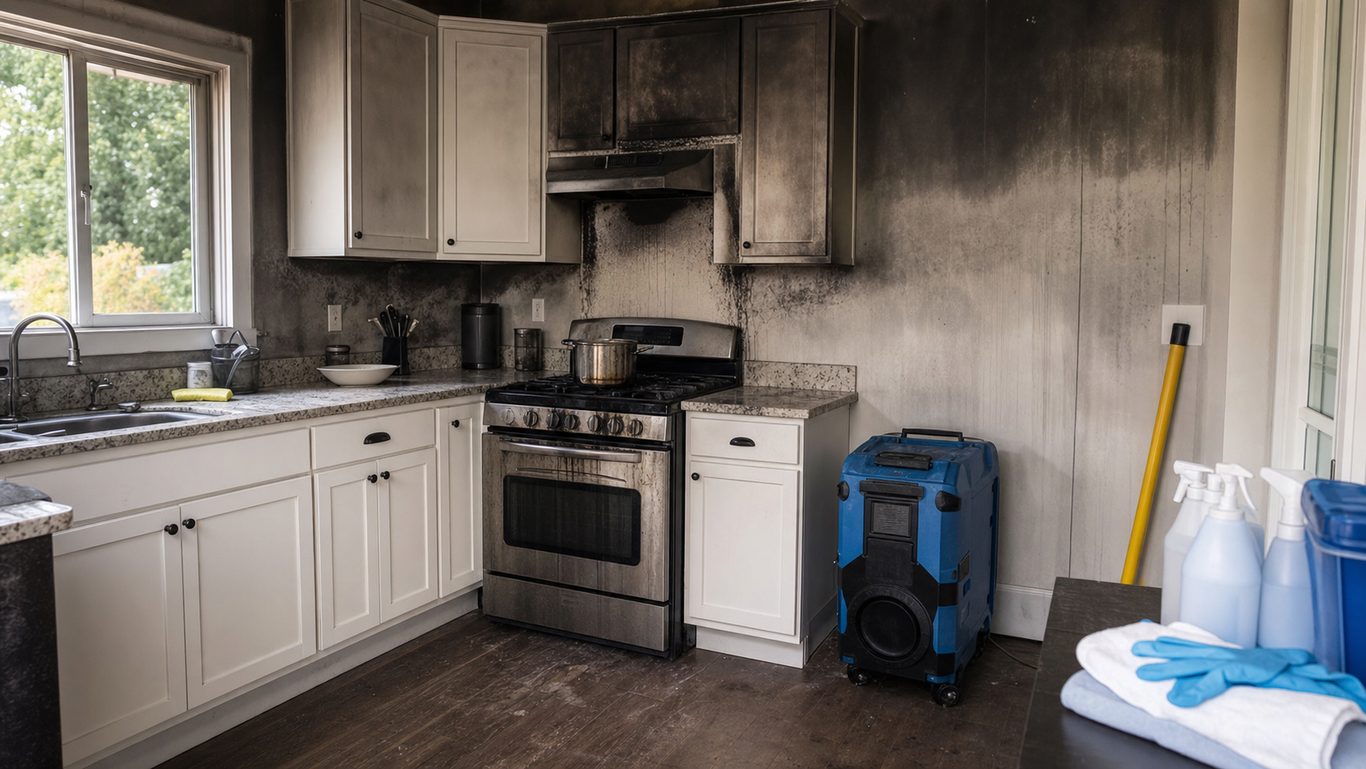
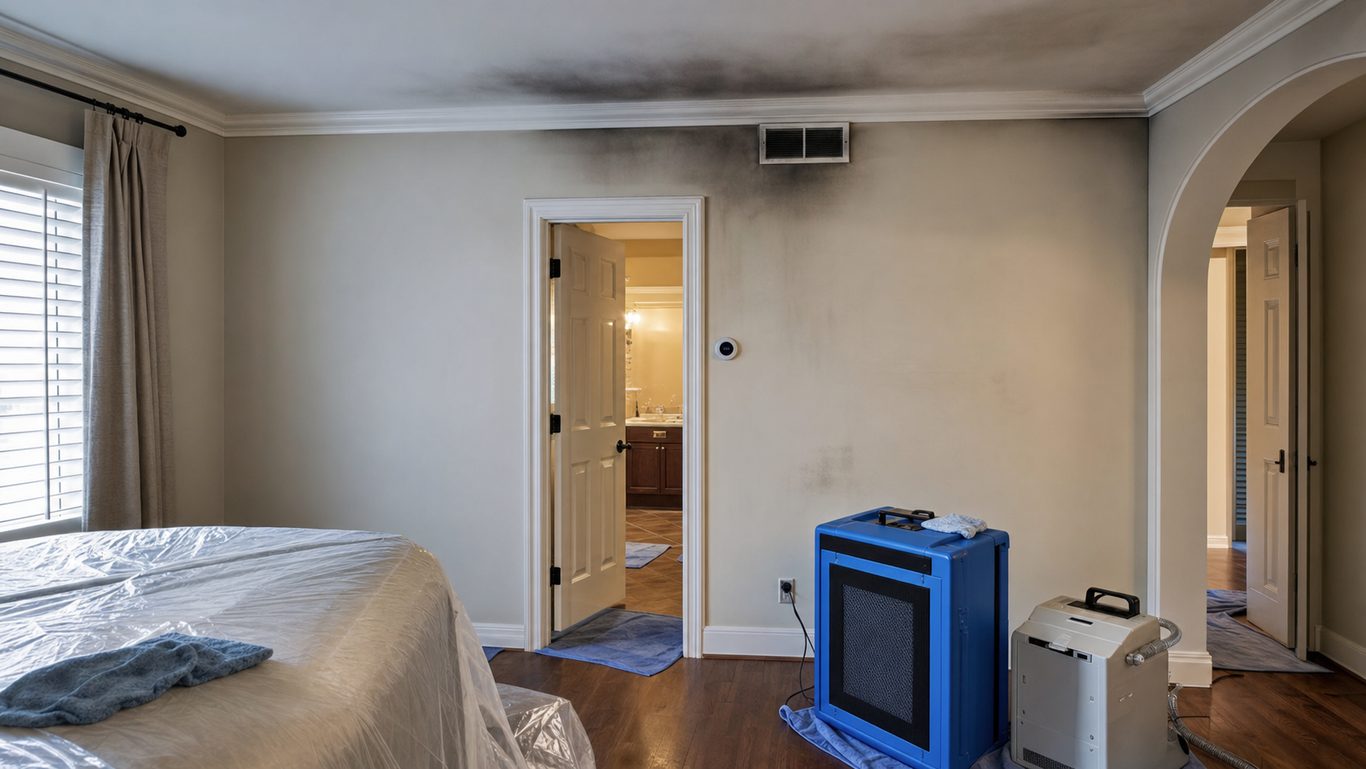
Smoke and soot travel through HVAC systems, spreading contamination to rooms that never saw flames. A kitchen fire can deposit soot in every bedroom through the ductwork. That's why professional assessment checks the entire home, not just the fire area.
How Does Professional Soot Cleaning Work?
Professional soot removal follows a specific sequence. You can't just wipe surfaces with household cleaners. Different soot types require different methods. Protein residue from a kitchen fire needs different chemicals than synthetic soot from burned plastics.
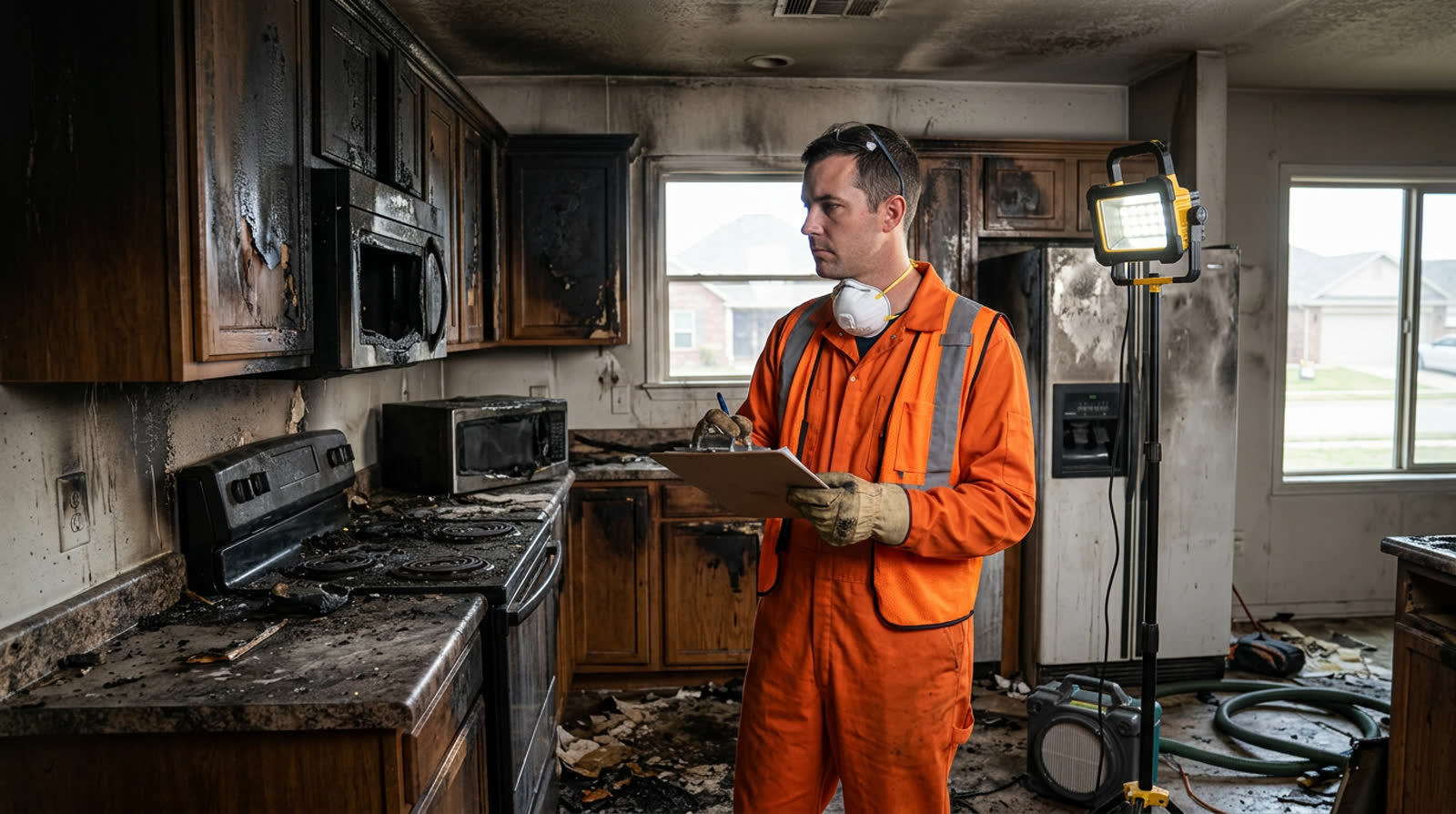
The process starts with assessment. Technicians identify soot type, affected areas, and material types. We test cleaning methods on small sections to avoid making stains worse. Some amateur cleaning attempts actually set the stain permanently by using the wrong product.
Dry cleaning comes first. Technicians use chemical sponges (dry sponges) to lift loose soot without smearing. These specialized sponges contain vulcanized rubber that attracts soot particles. We work from top to bottom, ceiling to floor, replacing sponges frequently as they load up with residue.
HEPA vacuuming follows dry sponging. Standard vacuums blow soot particles back into the air. True HEPA filters capture 99.97% of particles down to 0.3 microns. We vacuum all surfaces, including walls, ceilings, furniture, and ductwork openings before any wet cleaning begins.
Wet cleaning uses pH-specific detergents matched to the soot type. Alkaline cleaners work on greasy kitchen soot. Acidic cleaners handle protein residue. Technicians test each area and adjust solutions to avoid damaging paint, wallpaper, or finishes. Multiple passes often needed for heavy deposits.
Deodorization addresses smoke odor trapped in porous materials. Thermal fogging, hydroxyl generators, and ozone treatment (when the home is unoccupied) neutralize odor molecules. Simple air fresheners just mask smells. Professional deodorization eliminates them at the molecular level.
Air scrubbers run throughout the process. These machines filter the air continuously, capturing airborne soot particles stirred up during cleaning. We typically run air scrubbers for several days during and after cleaning to ensure indoor air quality returns to safe levels.
Can You Clean Soot Yourself Safely?
Limited DIY soot cleaning is possible for very minor smoke exposure. If a small pan fire sent light smoke through one room and you caught it immediately, you might handle cleanup yourself. Anything beyond that needs professional help.
Safety gear is necessary for any DIY attempt. You need an N95 or P100 respirator, not a dust mask. Wear disposable gloves, eye protection, and clothing you can throw away. Soot contains toxins you shouldn't breathe or absorb through skin contact.
Start with dry methods only. Buy chemical dry sponges from a restoration supply store or hardware store. Wipe gently in one direction. Don't scrub back and forth or you'll smear soot deeper into surfaces. Fold the sponge to a clean section frequently. Dispose of loaded sponges in sealed bags.
Never use water or household cleaners first. Wet soot becomes a sticky paste that's nearly impossible to remove. TSP (trisodium phosphate) and other strong cleaners can set stains permanently if used incorrectly. Oil-based soot needs degreasing agents. Protein soot needs enzymatic cleaners. Using the wrong product makes things worse.
Know your limits. If soot covers more than one small room, if it's on porous surfaces like carpet or upholstery, or if the odor persists after your initial cleaning, call professionals. We recently helped a Broken Arrow homeowner who spent two days trying to clean soot themselves. They spread it to three additional rooms and set stains in their hallway paint.
HVAC systems always need professional attention. Soot in ductwork requires specialized equipment and training to clean properly. Running your furnace or AC before ducts are cleaned circulates soot throughout your home every time the system runs.
What Does Soot Cleaning Cost in Broken Arrow?
Soot cleaning costs in Broken Arrow typically range from $2,000 to $15,000 for most residential fires. The wide range reflects differences in fire size, soot type, and affected square footage. Industry data shows average costs between $3 and $8 per square foot for professional soot removal and cleaning.
Several factors drive the final cost. Soot type matters significantly. Wet soot from smoldering fires with poor oxygen is harder to clean than dry soot from fast, hot fires. Protein residue from kitchen fires requires more specialized cleaning than wood smoke. Synthetic soot from burned plastics needs aggressive methods and often costs more.
The affected area determines scope. A contained kitchen fire might only need cleaning in 300 square feet of space. A furnace puffback can spread soot through 2,000 square feet or more via ductwork. The more rooms involved, the higher the cost. Contents cleaning (furniture, clothing, belongings) adds to the total.
Material types impact pricing. Smooth, non-porous surfaces like glass and metal clean easier than porous materials. Textured walls, popcorn ceilings, and rough wood require more time and specialized methods. Some materials can't be cleaned and need replacement, adding to overall costs.
Additional services increase the bill. HVAC duct cleaning typically adds $500 to $2,000. Carpet and upholstery cleaning runs $150 to $400 per room. Ozone treatment or hydroxyl deodorization costs $500 to $1,500. Content pack-out and storage (moving belongings offsite for cleaning) can add several thousand dollars.
Insurance usually covers soot cleaning under fire damage policies. Most homeowners policies include smoke and soot damage in their fire coverage. Deductibles apply, typically $500 to $2,500. We work directly with insurance adjusters in our service area to document damage and costs.
How Long Does Complete Soot Removal Take?
Complete soot removal typically takes three to ten days for most Broken Arrow homes. A minor fire affecting one or two rooms might be cleaned in three to five days. Larger fires impacting multiple rooms or entire floors can take two weeks or longer to fully remediate and restore.
The timeline breaks into phases. Initial assessment and documentation take a few hours on day one. Emergency services like board-up, water extraction (from firefighting), and air scrubber placement happen immediately. These protective measures prevent additional damage while planning the full scope.
Actual cleaning occupies the bulk of time. Dry sponging and HEPA vacuuming might take one to three days depending on square footage. Wet cleaning and deodorization add another two to four days. Multiple cleaning passes are often needed for heavy soot deposits. Each pass requires drying time before the next application.
Contents cleaning extends the timeline. If belongings need pack-out for offsite cleaning, add several days for inventory, packing, transport, cleaning, and return. Items stay in climate-controlled storage until the structure is fully cleaned and deodorized. Reuniting contents with a clean home prevents re-contamination.
HVAC duct cleaning typically happens mid-process. Technicians clean ducts after structural surfaces are done but before final air quality testing. Running the system during structural cleaning would just re-deposit soot. Duct cleaning alone takes one to two days for most homes.
Final details include post-cleaning inspection, air quality testing, and odor verification. We don't consider a job complete until smoke odor is eliminated and surfaces pass visual inspection. If any areas need additional attention, we address them before closing out the project.
Occupancy timing depends on severity. Minor soot damage might allow same-day or next-day occupancy. Heavy contamination often requires vacating for the full cleaning period. Air scrubbers and deodorization equipment work best in unoccupied spaces.
Oklahoma's red clay soil and frequent dust storms create a unique challenge during fire soot cleanup in Broken Arrow. Even with doors and windows closed during restoration, fine dust infiltrates the work area. Crews seal off the work zone with heavy polyethylene sheeting and create negative air pressure using air scrubbers with HEPA filters. These machines exhaust air outside through temporary ductwork, preventing soot particles from migrating to unaffected rooms. The scrubbers run continuously throughout the cleaning process, cycling the air fifteen to twenty times per hour. This setup alone can take two to four hours to establish properly before any cleaning begins.
Structural materials common in Broken Arrow homes affect the timeline. Older homes built in the 1970s and 1980s often have textured "popcorn" ceilings. These surfaces trap soot deep in their crevices. Standard dry sponging does not pull particles from textured surfaces. Technicians use specialized vacuum attachments with soft bristle brushes, working in slow, overlapping passes. This process takes considerably longer than flat drywall. A single bedroom ceiling might require three to four hours of careful HEPA vacuuming. If the texture is too heavily contaminated, the only option is removal and replacement, which adds another week to the timeline for contractor scheduling, removal, disposal, re-texture, and paint.
Inspection and clearance testing add time at the end of the project. After all visible soot is removed, technicians perform a white-glove test, wiping clean cloths across walls, ceilings, and surfaces in multiple rooms. Any gray residue on the cloth means additional cleaning is required. Some insurance policies or lenders require third-party air quality testing before the home is considered habitable. An independent hygienist collects air samples and sends them to a lab. Results typically return in three to five business days. If particulate counts exceed safe thresholds, additional HEPA filtration and surface cleaning occurs, followed by retesting. This can extend the project by a full week.
Weather also plays a role. Summer humidity in Oklahoma slows drying times between cleaning passes. High humidity prevents cleaning solutions and rinse water from evaporating quickly. Dehumidifiers run alongside air scrubbers, but drying still takes longer in July and August compared to drier months. Expect an extra day or two during peak humidity. Winter cold can delay exterior work like replacing siding or repainting trim damaged by fire, though interior soot cleaning proceeds on schedule.
Broken Arrow Fire Patterns and Soot Issues
Broken Arrow experiences distinct fire patterns tied to housing stock and local conditions. The city's mix of newer suburban developments and older homes from the 1960s-80s creates varied fire and soot scenarios. Older homes often have more porous materials and outdated wiring that increase fire risk.
Kitchen fires dominate residential fire calls in Broken Arrow. Cooking equipment causes about 49% of home fires nationally, and local patterns match that trend. Grease fires and unattended cooking create protein-based soot that's particularly greasy and difficult to clean. These fires often stay contained but produce heavy smoke and soot throughout the home.
HVAC puffbacks occur more frequently in Broken Arrow's older neighborhoods. When oil furnaces misfire or gas furnaces backdraft, soot explodes through ductwork into every room. These events create extensive but often cleanable damage. We've handled several puffback cases in homes near downtown Broken Arrow where furnace maintenance was deferred too long.
Oklahoma's severe weather contributes to fire scenarios. Tornado season brings lightning strikes that can ignite attics or exterior structures. Ice storms cause power outages, leading to space heater and generator use. Improper space heater placement or generator operation creates fire and carbon monoxide risks.
The city's rapid growth means many homes have newer synthetic materials. Modern furniture, carpeting, and finishes contain more plastics and synthetic fibers than older furnishings. These materials create toxic soot when burned, with more chemical residue and stronger odors. Cleaning synthetic soot requires more aggressive methods.
Broken Arrow sits in Tulsa County's humid climate zone. Summer humidity regularly exceeds 70%, accelerating soot's acidic reactions with building materials. We always recommend immediate professional cleaning after any fire, but the local climate makes speed even more critical here than in drier regions.
Need help now? See our full Fire Damage Restoration service page or browse all restoration services. Don't see your city above? The full Oklahoma service area covers 27 cities.
Local context for this article: see our Broken Arrow, OK restoration page and the Fire Damage Restoration in Broken Arrow service page.
This guide also pairs with water damage restoration for suppression-water cleanup and storm-driven structure fires after lightning.
Should I clean soot before or after the insurance adjuster visits?
Wait for the adjuster before doing any cleaning beyond emergency safety measures. The adjuster needs to see and document the full extent of soot damage for your claim. Take your own photos and videos immediately after the fire, but leave soot in place until the adjuster completes the inspection. Most adjusters in Broken Arrow can schedule within 24-48 hours. Emergency services like securing the home and stopping water intrusion can proceed immediately, but full soot cleaning should wait for adjuster approval to avoid claim complications.
Authoritative resources referenced
Need restoration help in Oklahoma?
24/7 dispatch, IICRC standards, direct insurance billing.