What Makes Smoke Damage Different from Fire Damage?
Smoke damage spreads far beyond the burn area. While fire consumes materials in one location, smoke travels through your entire home, depositing acidic residue on walls, ceilings, furniture, and inside ductwork. This residue continues damaging surfaces long after flames are extinguished.
Smoke particles are microscopic and penetrate porous materials like drywall, insulation, and wood framing. The longer smoke residue sits, the deeper it etches into surfaces. Walls that look clean may still harbor embedded particles that cause persistent odors months later. We've seen Tulsa homeowners try scrubbing walls themselves, only to find the yellow-brown staining returns within days as residue wicks back through paint.
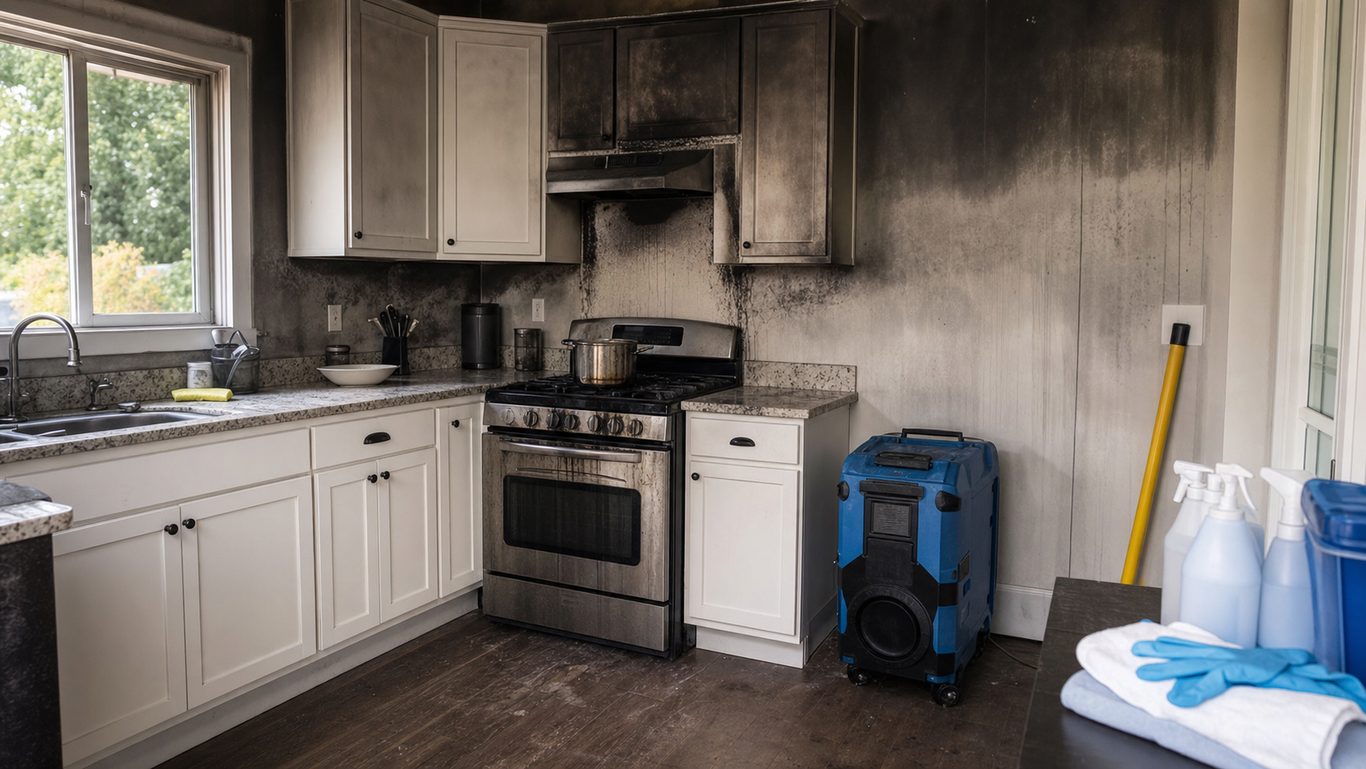
Different materials produce different smoke types. Protein fires from kitchen accidents leave nearly invisible residue with strong odors. Synthetic materials like carpet and upholstery create thick black soot that coats everything. Wood fires produce dry, powdery ash. Each requires specific cleaning chemistry and technique.
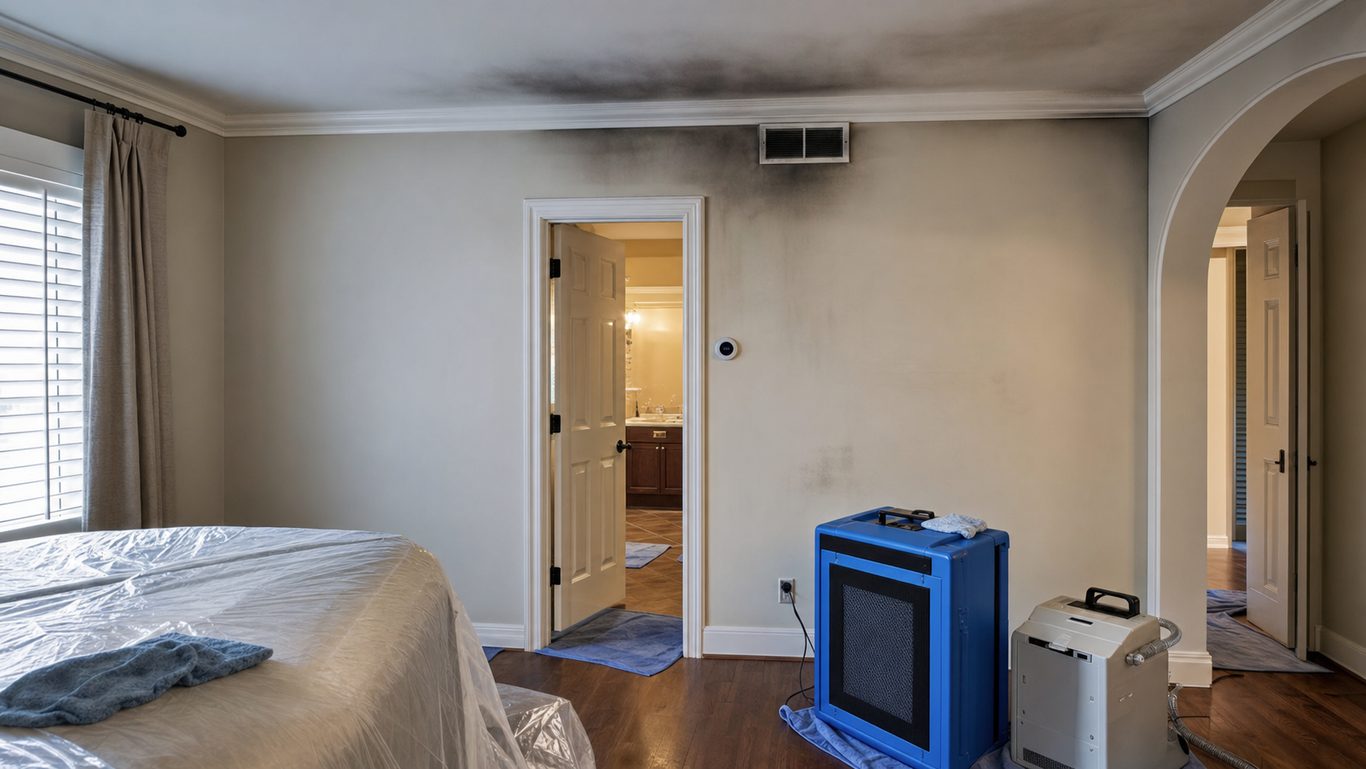
Temperature also matters. Hot smoke rises and penetrates deeper into attic spaces and upper floors. Cool smoke is denser and settles on lower surfaces. After a fire, you might find heavy soot on baseboards but lighter damage near ceilings, or the reverse pattern depending on ventilation and burn temperature.
How Does Smoke Residue Damage Your Tulsa Home Over Time?
Smoke residue is acidic and corrosive. It actively etches metal fixtures, discolors grout, and degrades painted surfaces within hours of exposure. The process accelerates in humid conditions, which Tulsa experiences regularly from spring through fall.
We recently worked on a home near Brookside where a small kitchen fire was quickly extinguished. The homeowner waited five days before calling for fire mitigation services. In that time, chrome faucets developed permanent pitting, cabinet hardware tarnished beyond polishing, and the refrigerator's white enamel yellowed. What could have been a straightforward cleaning became a replacement project.
Textiles and upholstery absorb smoke particles like sponges. Curtains, bedding, and furniture cushions trap odor molecules deep in their fibers. Standard washing rarely removes all residue. Professional ozone treatment or thermal fogging becomes necessary, and some items cannot be salvaged at all.
HVAC systems circulate smoke throughout your home. Residue coats ductwork, collects on the blower fan, and embeds in the air handler. Every time you run heating or cooling, you re-contaminate cleaned spaces. Duct cleaning and filter replacement are necessary steps many homeowners overlook.
Wood surfaces present particular challenges. Smoke penetrates wood grain and cannot be surface-wiped away. Hardwood floors, exposed beams, and wood trim often require sanding or sealing. In severe cases, replacement is the only option that truly eliminates odor.
Steps Professional Restoration Teams Take to Remove Smoke Damage
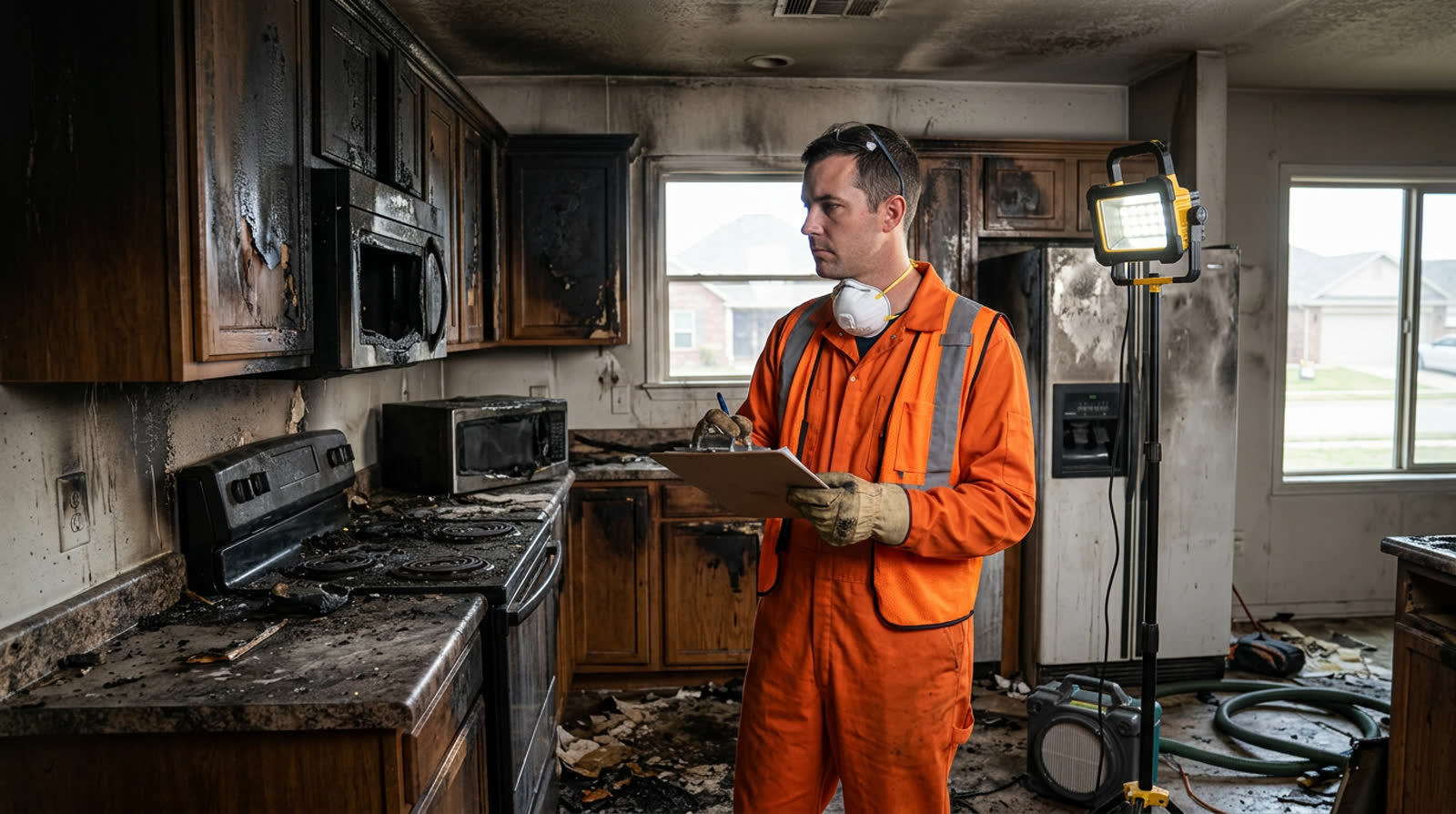
Restoration begins with a detailed assessment. Technicians inspect every room, including spaces far from the fire origin, to map smoke migration patterns. We use moisture meters and thermal imaging to identify hidden damage inside walls and ceilings.
Next comes air filtration. Industrial air scrubbers with HEXA filters run continuously to capture airborne particles. This prevents cross-contamination as crews work and protects workers from inhaling fine particulates. Negative air pressure keeps contaminated air from spreading to unaffected areas.
Surface cleaning follows a specific sequence. Ceilings come first since gravity pulls loosened soot downward. Crews use dry sponges to lift loose residue before applying chemical cleaners. Wall washing uses pH-balanced solutions matched to the smoke type. Floors are cleaned last after all overhead work is complete.
Contents cleaning happens simultaneously. Salvageable furniture, electronics, and personal items move to a contained area for specialized treatment. Some items go off-site to climate-controlled facilities. In our experience, hard surfaces like glass and metal clean more successfully than porous materials like particle board or unsealed wood.
Odor treatment is the final critical step. Thermal fogging releases a fine mist that penetrates the same spaces smoke reached. Ozone generators oxidize odor molecules but require the home to be vacant during treatment. Hydroxyl generators offer a safer alternative for occupied spaces but take longer to achieve results.
Restoration also addresses structural elements. We inspect attic insulation for smoke saturation. Contaminated insulation gets removed and replaced. Ductwork receives thorough cleaning or replacement if heavily damaged. These steps are non-negotiable for complete odor elimination.
Can You Clean Smoke Damage Yourself or Do You Need Professionals?
Minor surface soot from a small contained fire can sometimes be cleaned by homeowners. If smoke damage is limited to one room with no ductwork involvement, DIY cleaning may work. You need proper equipment though: dry sponges, TSP substitute cleaner, rubber gloves, and eye protection.
The reality is most homeowners underestimate smoke spread. You might clean visible soot but miss residue in wall cavities, above ceilings, or inside HVAC systems. These hidden deposits continue releasing odors. We've been called to homes where owners spent weeks scrubbing only to have smells return.
Insurance coverage is another consideration. Most homeowner policies cover professional fire damage restoration. If you clean yourself and the odor persists, proving the extent of damage to your insurer becomes difficult. Professional documentation protects your claim and ensures complete remediation.
Some smoke residues are chemically dangerous. Burned plastics release toxins that require respiratory protection beyond a dust mask. Protein fires create biohazard conditions. We can't perform biohazard cleanup directly but can coordinate with certified contractors who specialize in that work.
Professional equipment makes a measurable difference. Our hydroxyl generators, thermal foggers, and commercial air scrubbers achieve results that consumer-grade tools cannot match. Restoration teams also carry liability insurance, protecting you if cleaning damages a surface.
What Smoke Damage Challenges Are Unique to Tulsa Homes?
Tulsa's housing stock includes many mid-century homes with original ductwork and insulation. Older fiberglass duct insulation absorbs smoke like a sponge and often requires complete removal. We've opened 1960s-era duct systems and found insulation so saturated that cleaning was impossible.
Oklahoma's clay soil and foundation settling create gaps around utility penetrations. After a fire, smoke travels through these unsealed openings into crawl spaces and attics. Homes without proper vapor barriers allow smoke to penetrate deeper into structural cavities. Sealing these pathways is part of complete restoration.
Humidity affects smoke damage severity. Tulsa's spring and summer humidity levels above sixty percent accelerate the chemical reaction between smoke residue and metal surfaces. Chrome fixtures, appliances, and electrical components corrode faster here than in drier climates. Quick response prevents permanent damage.
Older homes in areas like Maple Ridge or Owen Park often have plaster walls instead of drywall. Plaster is more porous and absorbs smoke deeper than modern drywall. Cleaning requires different techniques and more time. Some plaster walls need skim-coating or replacement if damage is severe.
Tulsa's tornado season also creates unique situations. We've responded to homes where fire damage occurred, and then storms brought rain through broken windows or damaged roofs before restoration could begin. Water combines with smoke residue to create stubborn staining that requires aggressive treatment. Quick board-up and tarping after fire prevents this compounding damage.
How Long Does Complete Smoke Damage Restoration Take?
Timeline depends on fire severity and home size. A single-room fire with limited smoke spread might take three to five days for complete cleaning and odor treatment. Whole-home smoke damage typically requires two to three weeks from initial assessment through final clearance testing.
The assessment and planning phase takes one to two days. Technicians document damage, develop a scope of work, and order specialized equipment. Insurance adjusters often visit during this window to verify coverage. Clear communication with your insurer speeds the entire process.
Active cleaning and content restoration run simultaneously. A crew of three to five technicians can clean a 2,000-square-foot home in four to six days, working through all surfaces, contents, and systems. Larger homes or severe damage extend this timeframe. We schedule work to minimize interruption, though you typically cannot occupy the home during active restoration.
Odor treatment adds two to four days. Thermal fogging works quickly but requires a 24-hour vacancy period. Hydroxyl treatment takes longer, sometimes running for 48 to 72 hours, but allows limited access. We test air quality before declaring a space habitable.
Reconstruction follows if structural elements need replacement. Drywall replacement, painting, and flooring installation add one to three weeks depending on scope. Coordinating with your insurance adjuster on coverage details is critical before reconstruction begins. Oklahoma requires contractor registration at the city level for this work.
Honest assessment: if a fire is severe enough to require roof or structural framing replacement, you're looking at six to eight weeks minimum. We've seen homeowners frustrated by these timelines, but shortcuts lead to recurring problems. Complete restoration takes the time it takes.
Reconstruction and repainting phases can add another one to three weeks depending on structural damage. If fire compromised drywall, ceiling joists, or flooring, those repairs happen after smoke cleaning is complete. Tulsa's building permit process usually takes three to five business days for minor fire repairs, though larger structural work may require plan review that extends timelines by a week or more. Your restoration team coordinates with city inspectors to schedule required visits without creating unnecessary delays. Electrical and HVAC systems often need inspection sign-off before walls close up again.
Oklahoma's humidity patterns directly affect drying and deodorization schedules. Spring and early summer bring higher moisture levels that slow evaporation of cleaning agents and extend the time hydroxyl generators need to neutralize odors embedded in porous materials. A home treated in May might need an extra day or two of air treatment compared to the same job in October. We monitor relative humidity throughout the process and adjust equipment run times accordingly. Dehumidifiers often run alongside air scrubbers to maintain ideal conditions for odor elimination.
Content pack-out and storage influence overall project length. If technicians remove furniture, clothing, and personal items for off-site cleaning, expect to add five to seven days for transport, treatment, and return delivery. Items go to a climate-controlled facility where ultrasonic cleaning, ozone chambers, and specialized soot removal happen in controlled conditions. This approach often produces better results than attempting to clean everything on-site, especially for textiles and electronics. Storage fees typically run between two hundred and four hundred dollars per month, though most smoke jobs wrap up before a second month begins.
Older Tulsa homes built before 1980 sometimes present complications that stretch timelines. Many feature plaster walls instead of drywall, and smoke penetrates lime plaster differently than modern gypsum board. Cleaning requires gentler chemical applications and longer dwell times to avoid damaging original materials. Wood lath behind plaster can trap odors that require injection treatments or specialized sealers. Homes with original hardwood floors may need multiple rounds of cleaning and refinishing if smoke residue has settled into grain and gaps. A 1920s bungalow in Maple Ridge or a midcentury ranch in Lortondale might take 20 to 30 percent longer than a comparable-sized newer home.
Insurance claim approval can become the longest variable in the entire process. Some carriers authorize work within 48 hours of the adjuster's visit. Others require additional documentation, multiple estimates, or home office review that adds a week or more before restoration begins. We provide detailed scope documents with photo evidence to help move claims forward, but ultimately the insurer controls that clock. Starting emergency stabilization work such as board-up, tarping, and initial soot vacuuming often happens before full claim approval to prevent secondary damage.
Final air quality testing takes four to six hours and must show particulate counts and VOC levels within safe ranges before we return your home. Labs in Oklahoma City or Tulsa process samples within 24 to 48 hours. If a home fails clearance testing, we run additional hydroxyl or ozone treatments and retest. Most properties pass on the first test when proper cleaning protocols are followed, but a second round adds three to five days. You receive written documentation of air quality results for your records and for any future property disclosures.
Need help now? See our full Fire Damage Restoration service page or browse all restoration services. Don't see your city above? The full Oklahoma service area covers 27 cities.
Local context for this article: see our Tulsa, OK restoration page and the Fire Damage Restoration in Tulsa service page.
This guide also pairs with water damage restoration for suppression-water cleanup and storm-driven structure fires after lightning.
Will my homeowner's insurance cover smoke damage restoration in Tulsa?
Most standard homeowner policies in Oklahoma cover smoke damage resulting from a covered fire loss. This typically includes professional cleaning, odor removal, content restoration, and temporary housing if your home is uninhabitable. Your policy may have a deductible, and coverage limits apply to personal property and dwelling repairs. Contact your insurance agent immediately after a fire to start the claims process. Professional restoration companies work directly with adjusters and document all damage to support your claim. Keep receipts for temporary housing and meals, as additional living expenses are often covered during restoration.
Authoritative resources referenced
Need restoration help in Oklahoma?
24/7 dispatch, IICRC standards, direct insurance billing.