Why Restaurant Water Damage Requires Immediate Response
Every hour a restaurant stays closed after water damage costs thousands in lost revenue, spoiled inventory, and reputation damage. Customers go elsewhere. Staff lose shifts. Online reviews mention closures. The financial clock starts ticking the moment water hits your floor.
Restaurant water damage recovery in Tulsa, OK involves unique challenges commercial properties don't face. Health department regulations control every step. Food safety rules determine what inventory you can salvage. Equipment worth tens of thousands sits in standing water. Your point-of-sale system and walk-in coolers can't just air-dry like office furniture.
We've seen Tulsa restaurants lose entire weeks of business because they treated water damage like a simple cleanup instead of a coordinated recovery operation. The difference between a three-day closure and a three-week shutdown often comes down to the first four hours of response.
Water spreads fast in restaurant environments. It flows under kitchen equipment, seeps into wall cavities behind dish stations, and saturates the subfloor beneath tile. Grease buildup in kitchens creates additional contamination concerns. Even clean supply line breaks become category 2 gray water once they mix with kitchen residues.
Insurance companies want documentation immediately. Your water damage restoration team needs to photograph everything before moving equipment or disposing of inventory. Health inspectors will review your recovery process before issuing clearance to reopen.
Common Causes of Restaurant Water Damage in Tulsa
Tulsa restaurants face water damage from multiple sources. Aging plumbing in older downtown buildings fails without warning. New construction in areas like Brookside or Cherry Street isn't immune either. Supply lines under constant pressure eventually give out.
Plumbing Failures
Commercial kitchen plumbing handles extreme demands. Hot water lines to dishwashers run constantly during service. Ice machine supply lines stay under pressure 24/7. Grease traps and floor drains clog from years of buildup. We recently worked a Thai restaurant in Tulsa where a corroded hot water line behind the three-compartment sink failed during dinner service. Two inches of water covered 1,200 square feet of dining and kitchen space before staff could shut off the valve.
Equipment Malfunctions
Restaurant equipment contains water lines that age faster than residential plumbing. Ice machines, dishwashers, steamers, and coffee makers all connect to supply lines hidden behind or underneath units. A failed connection floods the space in minutes. Walk-in cooler condensate drains back up and overflow. Water heaters serving high-volume operations corrode faster than residential units.
Roof Leaks and Storm Damage
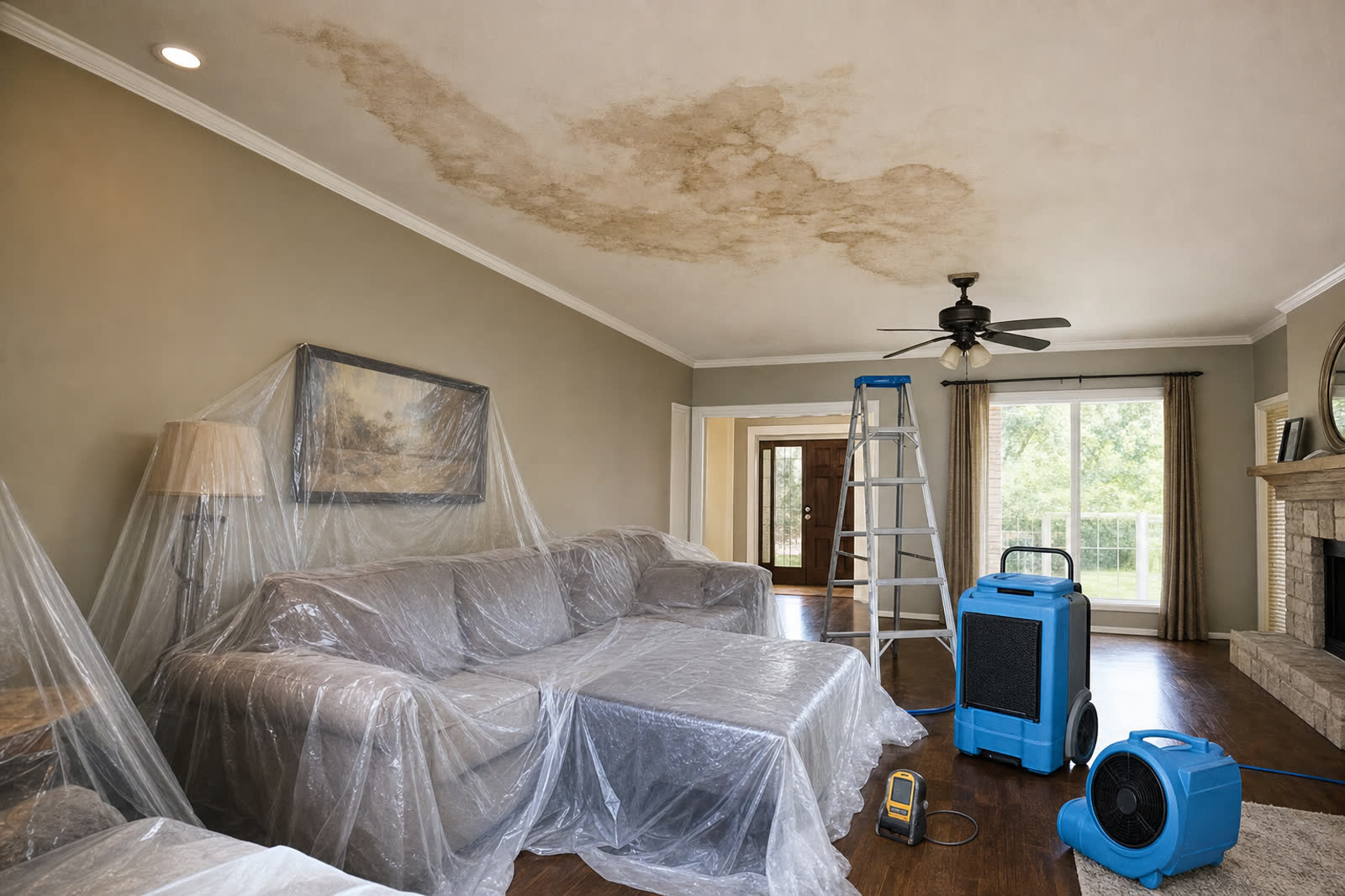
Tulsa's spring and summer storms dump heavy rain on flat commercial roofs. Clogged drains create standing water that finds any weak point in the membrane. We've documented multiple restaurants with dining room ceiling collapses after roof drains backed up during May thunderstorms. Ice storms in winter add another risk factor for roof penetration damage.
Sprinkler System Issues
Commercial fire suppression systems occasionally malfunction or get accidentally triggered. A single sprinkler head releases 15 to 40 gallons per minute. In older buildings, corroded pipes sometimes burst without activation. The resulting damage affects every surface and piece of equipment in the spray zone.
Sewage Backups
Category 3 black water from sewer backups requires complete sanitization protocols. Grease buildup in restaurant drain lines increases backup risk. City sewer main problems can push sewage back through your floor drains. This type of water damage often forces complete kitchen shutdowns until proper remediation and health department clearance.
What to Do Immediately After Water Damage Occurs
The first 30 minutes after discovering water damage determine how quickly you'll reopen. Quick decisions protect your equipment, inventory, and building structure. Panic leads to mistakes that extend downtime and increase costs.
Shut off the water source if you can locate it safely. Most restaurants have main shut-off valves near where the supply line enters the building. If water comes from above or you can't find the source, document everything with photos and video before it gets worse.
Contact your insurance company immediately. Commercial policies often require notification within hours, not days. Tell them you're bringing in a professional restoration company. Get a claim number and the adjuster's contact information.
Call a commercial water damage restoration team experienced with restaurants. Residential crews don't understand health department requirements or commercial equipment salvage. We respond to Tulsa restaurant calls knowing that every hour closed costs you revenue.
Move undamaged food inventory to working coolers if possible. Document everything you discard. Insurance companies need itemized lists with purchase dates and costs. Take photos of all damaged food products before disposal.
Turn off electrical power to affected areas only if you can do so safely from a dry location. Water and electricity create fatal hazards. Never wade through standing water to reach breaker panels.
Do not start cleanup yourself beyond basic water removal with mops or wet vacs. Improper drying creates hidden moisture problems that lead to mold growth behind walls and under equipment. Health inspectors will ask about your remediation process. Professional documentation helps you pass reinspection.
Notify your staff about the situation and projected timeline. Employees need to know whether they should report for shifts or find temporary work elsewhere. Clear communication prevents staffing problems when you're ready to reopen.
How Do You Salvage Restaurant Equipment After Water Damage?
Equipment salvage after restaurant water damage depends on water type, exposure duration, and equipment complexity. Clean water from supply lines creates different risks than contaminated water from sewage backups. Each piece requires individual assessment.
High-value equipment like commercial ovens, ranges, and fryers can often be salvaged if water exposure was brief and contamination was minimal. Electrical components need complete drying and testing before reconnection. Gas lines require inspection for water intrusion. We work with commercial kitchen equipment technicians who test and certify equipment safe for food service use.
Refrigeration equipment faces particular challenges. Walk-in cooler compressors sitting in water usually require replacement. Control panels with circuit boards rarely survive even clean water exposure. The insulation inside cooler walls absorbs water and creates long-term moisture problems if not properly dried.
Dishwashers and ice machines have complex plumbing and electrical systems vulnerable to water damage. Even after drying, internal components may corrode over weeks or months. Insurance adjusters often total these units rather than risk future failures.
Small appliances and electronics generally can't be salvaged after submersion. Coffee makers, blenders, food processors, and POS systems require replacement. The cost of testing and certifying these items exceeds replacement value.
Stainless steel prep tables, shelving, and sinks usually survive water damage with proper cleaning and sanitization. Solid construction without electrical components makes them straightforward to restore. We clean, sanitize, and document the process for health department review.
In our experience, equipment sitting in water for more than 24 hours faces significantly higher replacement rates. Corrosion starts fast in restaurant environments with grease residue and food particles. The decision to salvage or replace often comes down to insurance adjuster calculations of repair costs versus replacement value.
Restaurant Drying and Dehumidification Process
Professional restaurant drying goes far beyond running fans and hoping for the best. Commercial spaces require industrial equipment, moisture monitoring, and coordinated procedures that residential jobs don't need. Your building structure, equipment placement, and health code compliance all factor into the drying strategy.
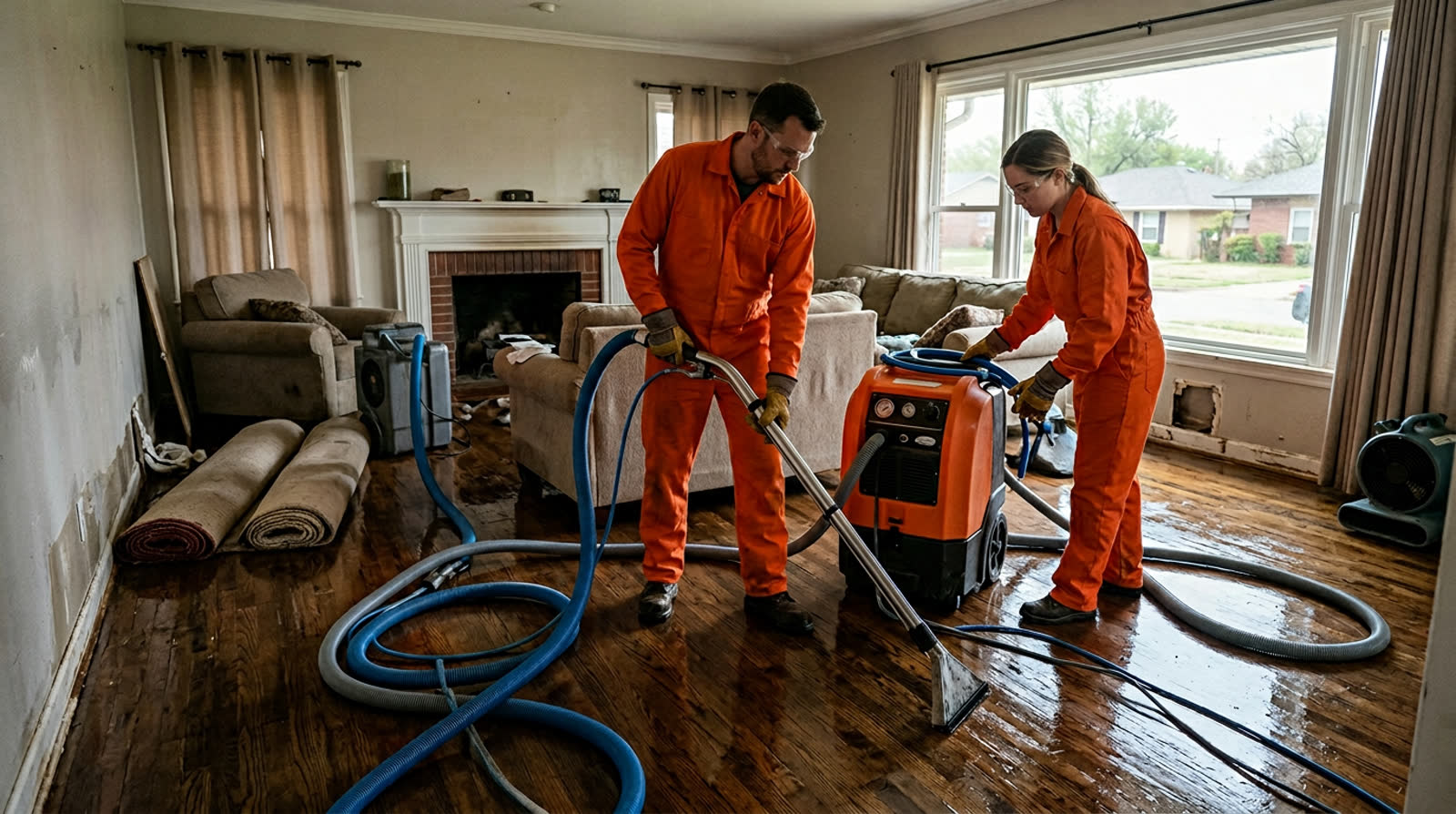
We start with complete water extraction using truck-mounted or portable extractors. Standing water removal is step one. Every gallon we extract is one less gallon that needs to evaporate. Restaurant floors with grease buildup require special attention during extraction to prevent spreading contamination.
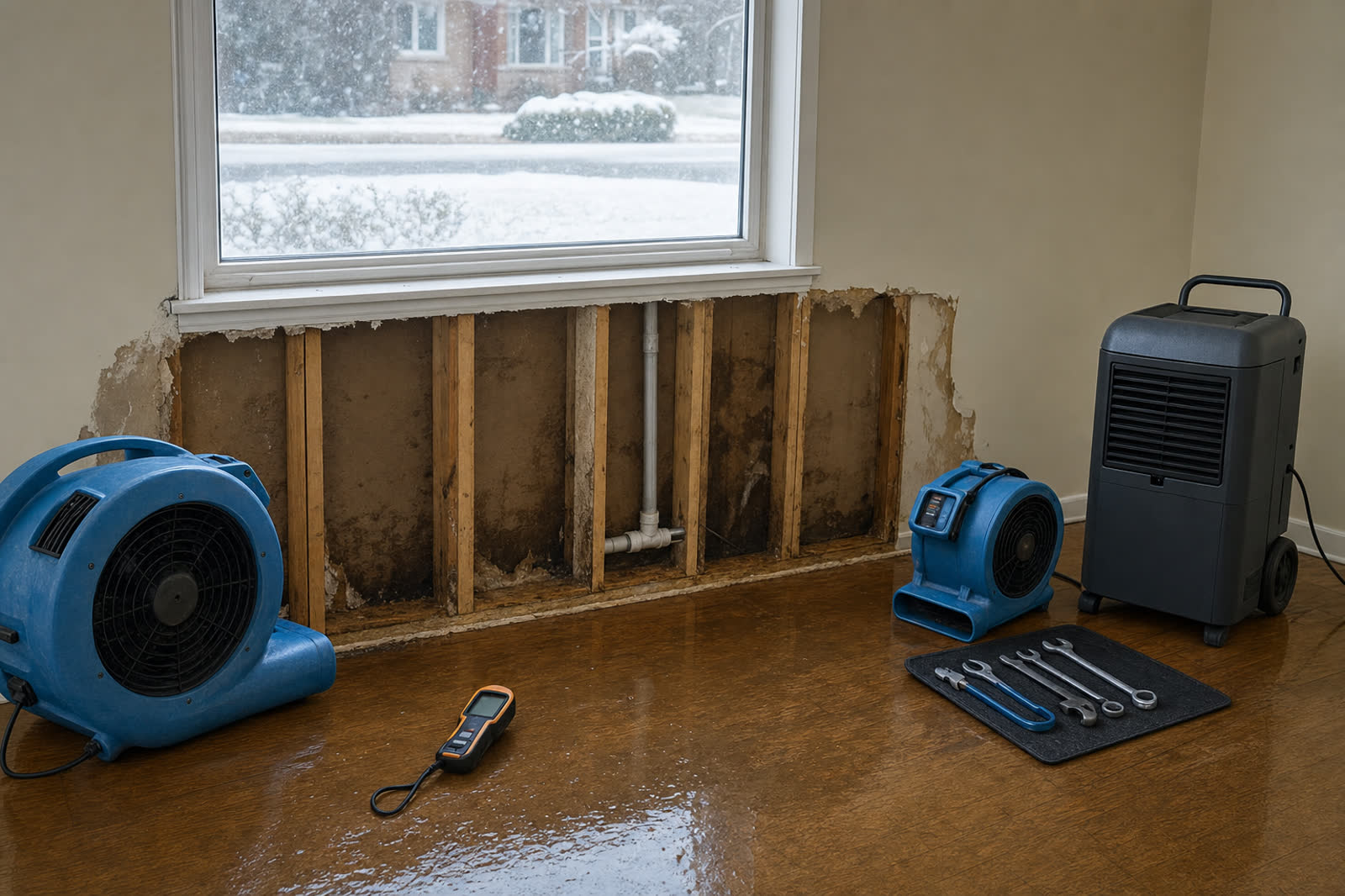
Air movers create airflow across all wet surfaces. We position dozens of high-velocity fans to maximize evaporation from floors, walls, and under equipment. Proper placement prevents air stagnation in corners and dead zones behind kitchen lines.
Commercial dehumidifiers run continuously to remove moisture from the air. As water evaporates from surfaces, humidity rises. Dehumidifiers capture that moisture and maintain optimal drying conditions. Restaurant spaces often need multiple large-capacity units running 24/7 for several days.
We move equipment away from walls to dry hidden areas. Water trapped behind kitchen lines or under prep tables creates mold growth if left untreated. This equipment relocation requires careful coordination to protect gas lines, water connections, and electrical hookups.
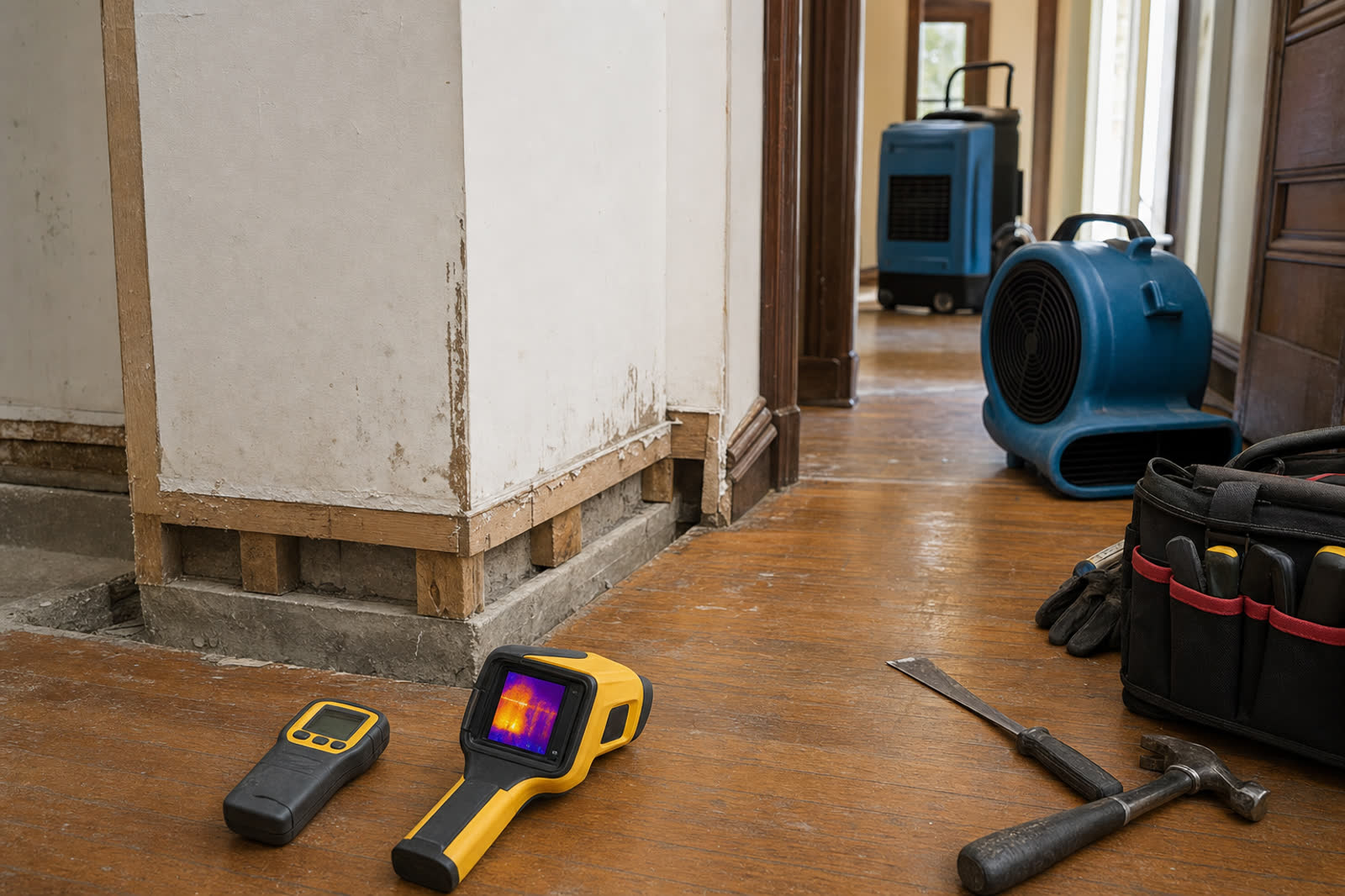
Moisture meters track progress in floors, walls, and building materials. We document readings twice daily to verify drying is proceeding properly. Insurance companies and health inspectors want this documentation. It proves the space is truly dry, both surface-level acceptable.
Tile floors seem dry on the surface and often have saturated concrete underneath. We check subfloor moisture in multiple locations. Ceramic tile creates a vapor barrier that slows drying. Some situations require removing sections of tile to dry the concrete properly.
Wall cavities need attention too. We drill small inspection holes to check insulation and framing moisture levels. Water wicks up drywall from floor contact. Hidden moisture in walls leads to mold problems weeks after you think everything is dry.
Climate control during drying is critical. We maintain temperatures between 70 and 90 degrees to optimize evaporation rates. Tulsa's humidity levels vary seasonally. Summer drying takes longer than winter because outdoor air holds more moisture. The dehumidifiers work harder in July than January.
Health Department Compliance and Reopening Requirements
Tulsa County Health Department regulations control when you can reopen after water damage. Food service establishments must meet specific sanitation standards before resuming operations. Assuming you can just clean up and flip the sign back to open creates serious legal and liability problems.
Category 1 clean water damage from supply lines requires thorough cleaning and sanitization of all food contact surfaces. You must discard any food products that contacted flood water. Packaged goods in waterproof containers may be salvageable if properly cleaned and sanitized on the exterior.
Category 2 gray water or Category 3 black water from sewage requires complete remediation following IICRC S500 water damage standards. All porous materials that contacted contaminated water must be removed and replaced. This includes drywall, insulation, and unsealed wood materials.
Before reopening, health inspectors want to see documentation of your water damage recovery process. This includes:
- Photos of the damage and affected areas
- Moisture readings showing dry conditions were achieved
- List of all discarded food and equipment
- Cleaning and sanitization procedures used throughout the space
- Equipment testing and certification for items that were salvaged
- Professional restoration company documentation and invoices
We provide detailed reports documenting our entire water damage restoration process. These reports satisfy health department information requests and support your insurance claim. Inspectors appreciate working with restaurant owners who took the recovery seriously.
Some insurance adjusters push for faster reopening than health codes allow. Don't cut corners to save a few days. A failed health inspection or foodborne illness complaint costs far more than proper recovery time. Your reputation depends on reopening right, not reopening fast.
Insurance Claims for Restaurant Water Damage
Commercial property insurance claims for restaurant water damage involve higher stakes than residential claims. Your policy likely includes business interruption coverage, equipment breakdown coverage, and spoilage coverage. Understanding what each covers helps you maximize your recovery.
Business interruption coverage pays for lost income during the closure period. You need to document your normal revenue patterns to establish the loss amount. Provide recent profit and loss statements, tax returns, and daily sales records. The insurance company calculates payment based on your historical earnings.
Equipment coverage pays to repair or replace damaged kitchen equipment, refrigeration units, and other business property. You'll need original purchase receipts, maintenance records, and professional assessments of repairability. Keep every invoice related to equipment evaluation and repair attempts.
Food spoilage coverage reimburses you for inventory lost due to power outages, equipment failure, or direct water contamination. Itemized lists with purchase dates, quantities, and costs are necessary. Take photos of everything before disposal. We've seen claims denied because owners couldn't prove what they actually lost.
The water damage restoration costs themselves fall under your property coverage. This includes water extraction, drying equipment, antimicrobial treatment, and repairs to building materials. Professional documentation from your restoration company supports these costs.
Most policies require immediate action to prevent additional damage. This means you can't wait for adjuster approval before starting emergency water extraction. Document everything you do and save all receipts. The insurance company will review your mitigation efforts.
Commercial adjusters often push back harder than residential adjusters. They question equipment values, drying timelines, and necessity of specific procedures. Having a restoration company experienced with commercial claims helps counter lowball settlement offers.
We work directly with insurance adjusters on Tulsa restaurant water damage projects. Our documentation, moisture readings, and industry-standard procedures support your claim. Adjusters respect restoration companies that follow IICRC guidelines and provide detailed reporting.
One limitation we always mention is that insurance policies don't cover losses from deferred maintenance or pre-existing conditions. If your water damage resulted from a roof you knew needed replacement or plumbing you'd been ignoring, expect coverage disputes. Regular maintenance records help prove sudden and accidental loss.
Need help now? See our full Water Damage Restoration service page or browse all restoration services. Don't see your city above? The full Oklahoma service area covers 27 cities.
Local context for this article: see our Tulsa, OK restoration page and the Water Damage Restoration in Tulsa service page.
This guide also pairs with emergency water mitigation and mold remediation when drying is missed.
How long does restaurant water damage recovery take in Tulsa?
Typical restaurant water damage recovery in Tulsa takes three to ten days depending on the extent of damage, water category, and space size. Clean water from a supply line in a small café might require three to five days of drying. Sewage backup in a full-service restaurant kitchen could need two weeks for complete remediation, equipment replacement, and health department clearance. Equipment lead times sometimes extend the timeline beyond drying completion. We've reopened small restaurants in under a week when damage was limited and equipment survived. Large operations with major equipment losses can face month-long closures waiting for commercial appliance delivery and installation.
Authoritative resources referenced
Need restoration help in Oklahoma?
24/7 dispatch, IICRC standards, direct insurance billing.