What Should You Do Immediately After a Kitchen Fire?
Ensure the fire is completely out and the Fire Department has cleared your Oklahoma City home as safe to enter. Disconnect power to the kitchen at the breaker panel. Open windows and doors to begin ventilation, but avoid using ceiling fans that may spread soot. Do not attempt cleanup until you have documented all damage with photos and video for.
The first hours after a kitchen fire are critical. Soot and smoke residue become harder to remove as time passes. Acidic smoke byproducts can permanently etch glass, corrode metal fixtures, and discolor painted walls within 24 to 48 hours. Quick action protects your property value and reduces total restoration costs.
We've seen Oklahoma City homeowners make the mistake of turning on their HVAC system too early. This forces smoke particles and odor molecules through ductwork and into every room of the house. Keep the system off until professional fire mitigation teams can assess contamination levels and clean or seal ducts as needed.
Contact your insurance company before you begin any cleanup work. Most policies require prompt notification, and your adjuster needs to see the damage firsthand. Ask about advance payment for temporary lodging if your kitchen remains unusable. Many Oklahoma City policies include Additional Living Expenses coverage for exactly this scenario.
Secure your property against weather and unauthorized entry. Kitchen fires often break windows or damage exterior walls. Board up openings and cover roof damage with tarps. This prevents rain from adding water damage to your smoke and fire damage, and it satisfies your policy's requirement to mitigate further loss.
How Do You Remove Soot and Smoke Residue from Kitchen Surfaces?
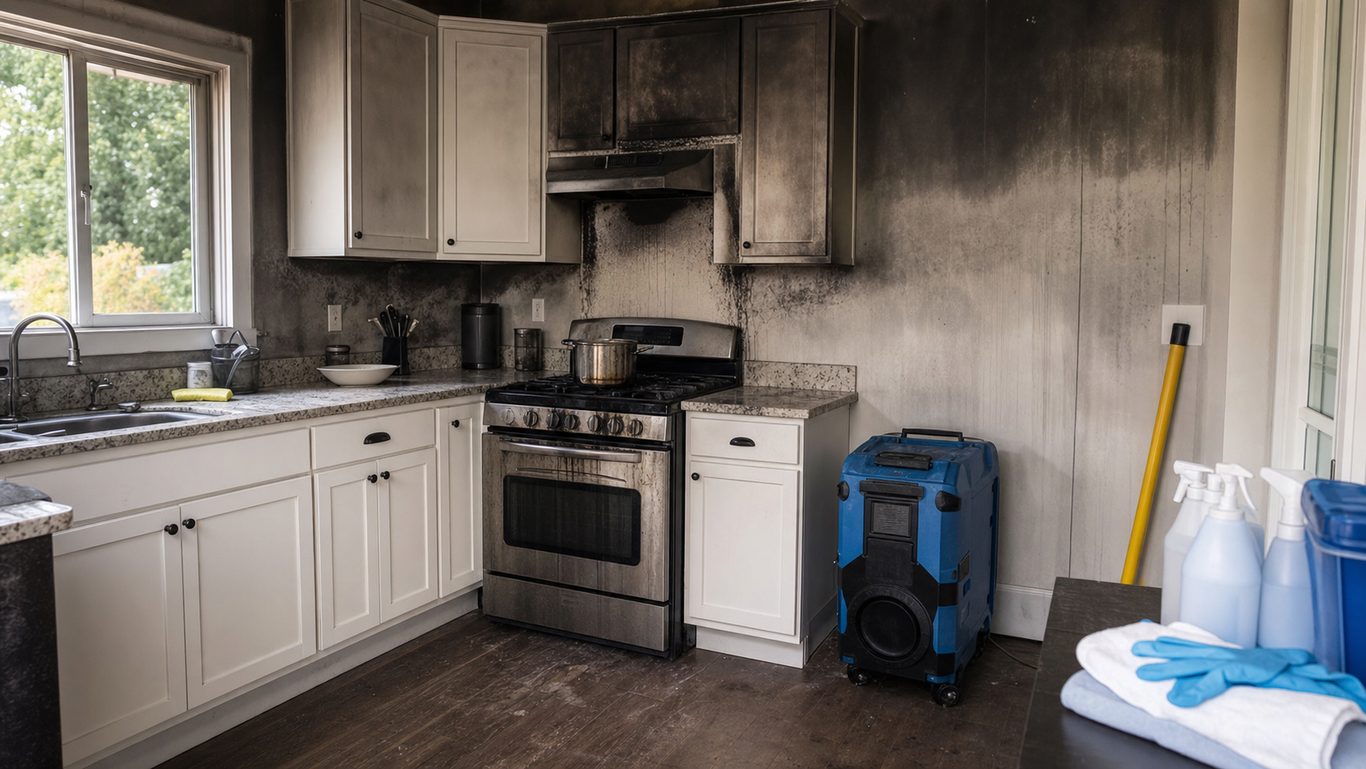
Start with dry cleaning methods using chemical sponges designed for soot removal. These latex sponges lift particles without smearing. Work from top to bottom, starting with ceilings and upper cabinets. Replace the sponge frequently as it becomes saturated with soot. Never use water-based cleaners on smoke residue until dry methods remove the bulk of deposits.
Different surfaces require different cleaning approaches. Painted drywall often responds to dry sponging followed by TSP (trisodium phosphate) solution. Wood cabinets need oil-based cleaners to avoid raising the grain. Stainless steel appliances clean with specialized degreasing agents that won't scratch. Glass and tile can tolerate stronger alkaline cleaners after initial dry soot removal.
In our experience with Oklahoma City kitchen fires, the areas behind and beneath appliances hold the heaviest soot accumulation. Pull out refrigerators, ranges, and dishwashers to access walls and floors. These hidden spaces often show the true extent of smoke travel and require the same attention as visible surfaces.
Soot contains toxic combustion byproducts. Wear N95 respirators, safety goggles, and disposable gloves during cleanup. Bag all cleaning materials and disposal items in heavy plastic and seal before discarding. Change protective equipment regularly, and shower immediately after working in the affected area.
Porous materials like curtains, dish towels, and upholstered chairs absorb smoke particles deep into their fibers. These items rarely clean successfully with home methods. Professional ozone treatment or thermal fogging may restore some textiles, but many require replacement. Document everything you discard for your insurance claim with photos showing labels and condition.
Kitchen Fire Smoke Odor Elimination Methods
Smoke odor persists because microscopic particles lodge in every porous surface throughout your home. Simple air fresheners or scented candles only mask the smell temporarily. True odor elimination requires removing or neutralizing the actual smoke particles embedded in walls, insulation, ductwork, and structural materials.
Thermal fogging replicates smoke behavior by creating a deodorizing fog that follows the same pathways smoke traveled during the fire. The fog penetrates cracks, cavities, and porous materials to neutralize odor molecules at their source. This process works best in sealed environments and requires temporary evacuation of people and pets.
Ozone generators produce O3 molecules that break down odor compounds at a molecular level. Ozone treatment requires complete sealing of the affected space and several hours of exposure time. All living things must leave during treatment because high ozone concentrations irritate respiratory systems. After treatment, the space needs thorough ventilation before reoccupation.
Hydroxyl generators offer a safer alternative that works while you remain in your Oklahoma City home. These machines produce hydroxyl radicals that neutralize odors without creating harmful ozone. The process takes longer but allows continued occupancy, which helps families who cannot easily relocate during restoration.
We recently completed a kitchen fire cleanup in Edmond where the homeowner had tried multiple DIY odor removal products before calling us. The odor remained because smoke had penetrated the drywall and attic insulation above the kitchen. We sealed the affected drywall and replaced insulation in the directly impacted area, then treated the home with hydroxyl technology. Some odor situations require removal of affected materials rather than just cleaning.
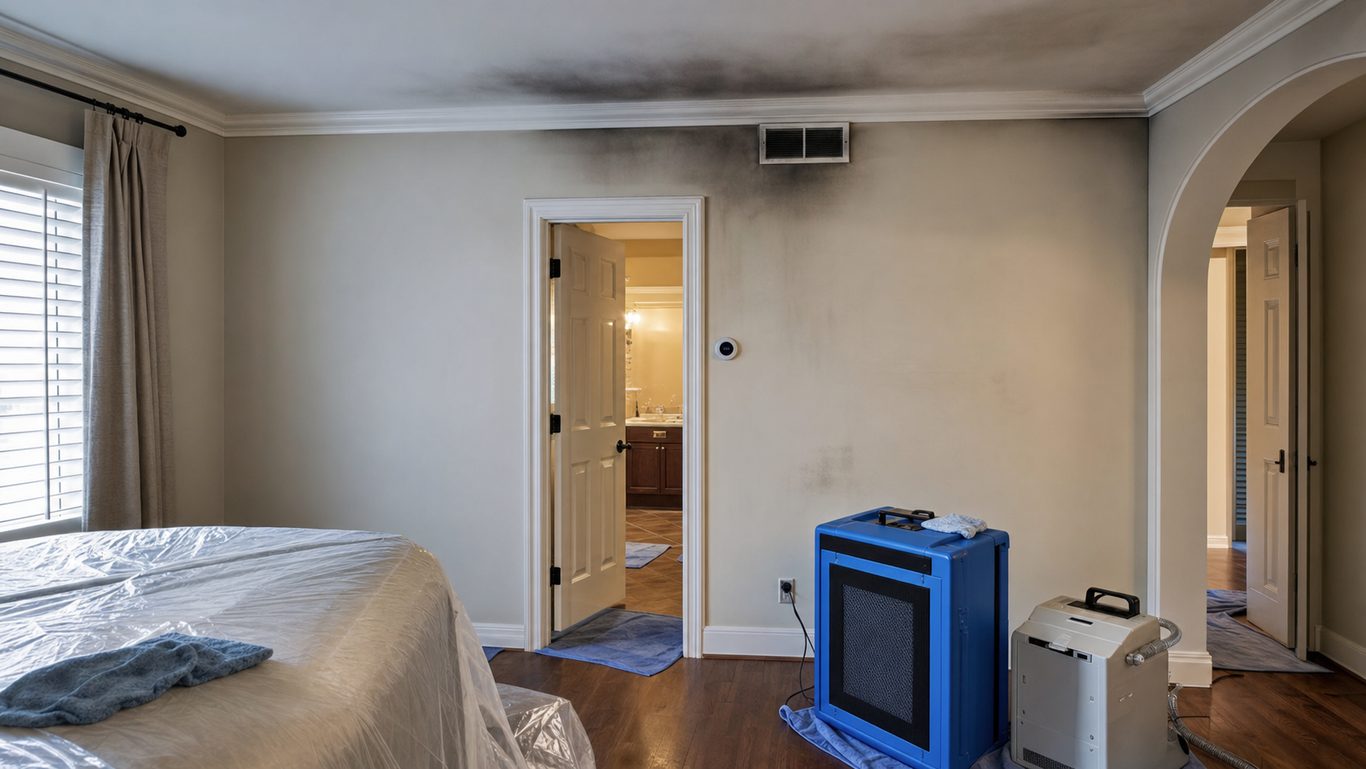
HVAC systems often circulate smoke odor long after visible soot is cleaned. Ductwork may need professional cleaning or sealing. Replace all air filters immediately after a fire, and consider upgrading to HEPA filters during the restoration period. Check the blower compartment and evaporator coils for soot accumulation that standard filter changes won't address.
Assessing and Repairing Fire Damaged Kitchen Materials
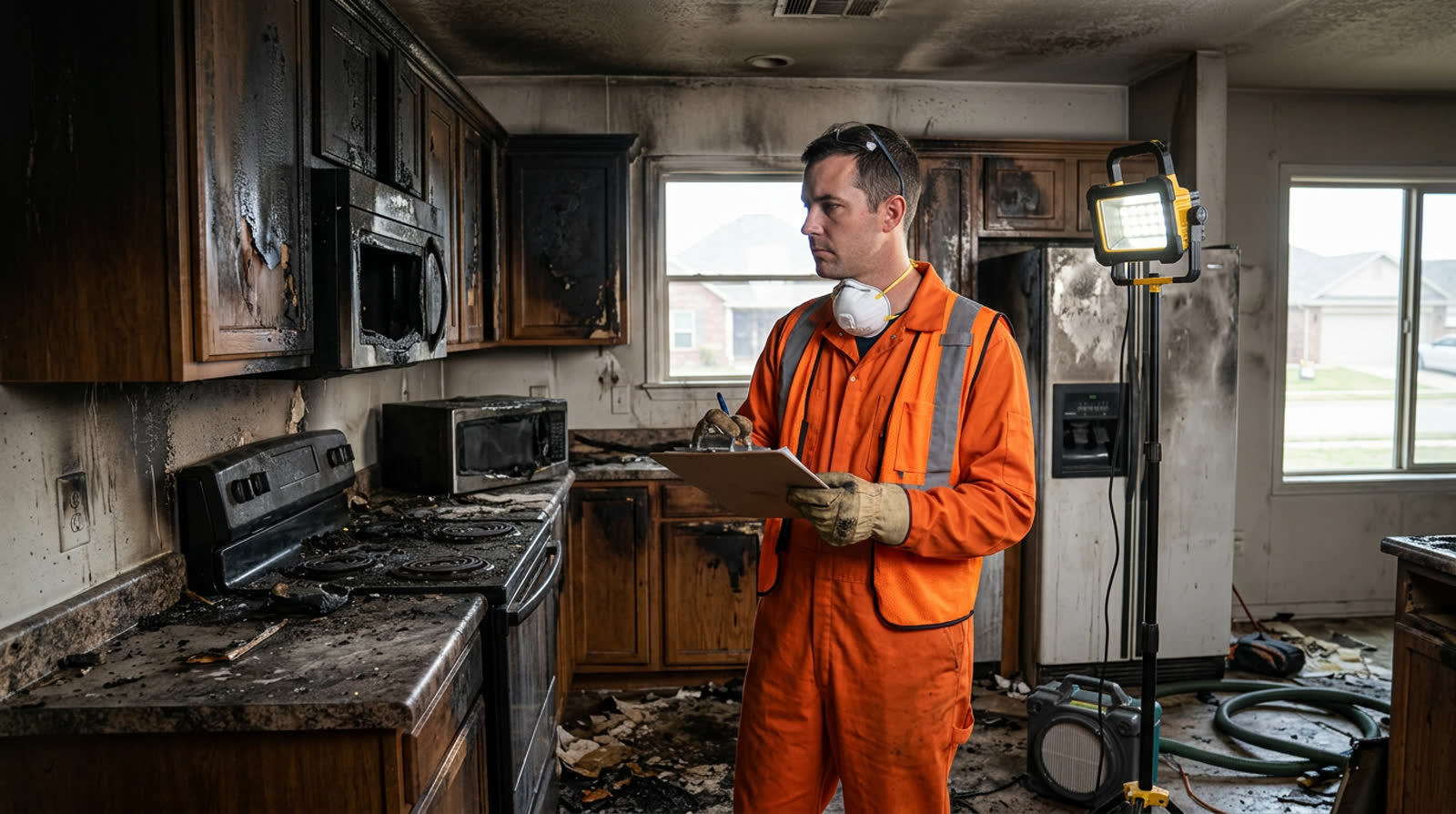
Heat damage extends beyond visible char marks. Cabinets may look intact but have weakened joints from steam and heat exposure. Countertops can develop hidden cracks. Drywall loses structural integrity even when surface damage appears minor. A thorough assessment identifies all compromised materials before you invest in cleaning items that ultimately need replacement.
Check cabinet interiors for delamination, warping, and discolored wood that indicates heat penetration. Open all doors and drawers to inspect unexposed surfaces. Laminate counters bubble and separate when adhesives fail from heat. Granite and quartz can crack from thermal shock if firefighters applied cold water to hot surfaces. Tile and grout often survive but need testing for hollowness that indicates substrate failure.
Electrical systems in fire-affected kitchens require professional inspection before restoration. Wiring insulation melts at relatively low temperatures. Outlets and switches exposed to heat or water need replacement. Circuit breakers may have tripped but still suffered internal damage. Never assume electrical components are safe just because they still function.
Plumbing lines, especially plastic supply lines and drain pipes, can melt or weaken from heat exposure. Check under the sink for damaged connections. Gas lines near the range require professional inspection and testing. Any visible damage or detected gas odor means immediate shutoff and professional service before any restoration work continues.
Structural framing rarely sustains serious damage in typical kitchen fires, but we always inspect ceiling joists and wall studs in the directly impacted area. Prolonged burning or extremely hot fires can char wooden structural members, requiring sister framing or complete replacement. Local building codes apply to any structural repairs, and permits may be required depending on the scope of reconstruction.
What Kitchen Items Can Be Saved After a Fire?
Non-porous items like metal cookware, glass baking dishes, and ceramic plates can usually be cleaned and reused if they show no cracks or heat damage. Wash these items multiple times in hot soapy water or run them through a dishwasher cycle. Inspect carefully for residual odor after cleaning. If the smoke smell persists after three washing cycles, the item likely.
Wooden cutting boards, utensils, and serving pieces are difficult to fully deodorize. Wood's porous nature traps smoke particles deep in the grain. You might remove surface residue but the odor often returns, especially in humid conditions. Most restoration professionals recommend replacing wooden kitchen items exposed to significant smoke.
Small appliances present a judgment call. Toasters, coffee makers, and blenders with direct smoke exposure often have contaminated internal components and motors. The cost of professional cleaning usually exceeds replacement value. If you choose to keep a small appliance, run it outdoors first to check for odor or unusual operation.
Food and food-contact surfaces need careful consideration. Discard any food that was exposed to heat, smoke, or firefighting chemicals. This includes sealed packages if they were in the fire area. Canned goods are safe only if the cans show no damage and you wash the exterior thoroughly. Oklahoma health officials recommend discarding any questionable food items rather than risking contamination.
Dishes and utensils stored in closed drawers or cabinets away from direct smoke often survive without special treatment. Standard washing removes light soot exposure. Document both kept and discarded items for your insurance claim. Insurers typically cover replacement of contaminated kitchenware under contents coverage.
Refrigerators and freezers require a different approach than smaller appliances. If the fire occurred near your refrigerator, smoke and soot can infiltrate the cooling system through the condenser coils and fan. We often see homeowners focus on cleaning the visible interior shelves and drawers while ignoring the mechanical components. The rubber door gaskets are particularly vulnerable because rubber absorbs smoke odor and becomes brittle when exposed to heat. Replacing these gaskets costs between $50 and $150 depending on the model, which is worthwhile if the appliance itself is undamaged. Pull the refrigerator away from the wall and inspect the coils and motor housing. If soot covers these areas, professional cleaning is necessary because contaminated coils reduce efficiency and create ongoing odor problems.
Pantry goods stored in containers need individual assessment. Dried beans, rice, pasta, and grains in factory-sealed packaging away from the fire zone are usually safe if the packaging shows no heat damage or soot penetration. However, anything stored in cardboard boxes, paper bags, or thin plastic should be discarded. Cardboard is highly porous and wicks smoke contamination into its contents even from several feet away. Oklahoma's summer humidity makes this worse because moisture reactivates smoke particles trapped in packaging materials. Canned goods present a gray area. If the cans show no bulging, rust, or damage and were not directly exposed to flames, the contents are typically safe after you remove the labels and wash the cans thoroughly. Never consume anything from a can that shows heat damage or swelling.
Countertop materials also determine what stays and what goes. Granite and quartz counters can usually be deep-cleaned and sealed after fire exposure. Laminate countertops with heat blistering or delamination need replacement because the particle board core absorbs smoke and holds odor permanently. Grout lines in tile backsplashes trap soot and require specialized cleaning or regrouting. We use alkaline cleaning agents followed by acid rinses to lift smoke residue from porous tile and grout without damaging the surface.
Working with Insurance on Kitchen Fire Claims
Contact your insurance carrier within 24 hours of the fire. Your policy likely requires prompt notification and may impose deadlines for filing formal claims. Ask your agent about emergency advance payments for immediate needs like temporary housing, emergency repairs, and professional cleaning services. Many Oklahoma City insurers authorize fast-track payments for fire losses.
Document everything before cleaning or discarding damaged items. Take photos and video of all affected areas from multiple angles. Photograph labels on appliances, food products, and packaged goods you must throw away. Create a written inventory with descriptions, approximate ages, and purchase prices if you remember them. This documentation forms the foundation of your contents claim.
Your insurance adjuster will visit to assess damage and estimate restoration costs. Accompany the adjuster during the inspection and point out all affected areas, including hidden damage behind appliances and inside cabinets. Ask questions about coverage limits, deductibles, and depreciation factors that affect your payout. Request a copy of the adjuster's estimate for your records.
Understand the difference between Actual Cash Value and Replacement Cost coverage. ACV pays the depreciated value of damaged items, while Replacement Cost covers the price of new equivalents. Most policies pay ACV initially, then reimburse the depreciation amount after you complete repairs and submit receipts. Keep all invoices from restoration work and replacement purchases.
We work directly with insurance companies on fire damage restoration projects throughout Oklahoma City. Our detailed estimates help adjusters understand necessary restoration steps and associated costs. Customers tell us this coordination speeds the claims process and reduces disputes over coverage and pricing. You have the right to choose your restoration contractor, regardless of any company your insurer might suggest.
If you disagree with your insurer's damage assessment or payout offer, Oklahoma law allows you to request a second opinion or invoke your policy's appraisal clause. Many homeowners also find that hiring a public adjuster to represent their interests produces better claim outcomes, though public adjusters charge a percentage of the settlement as their fee.
Need help now? See our full Fire Damage Restoration service page or browse all restoration services. Don't see your city above? The full Oklahoma service area covers 27 cities.
Local context for this article: see our Oklahoma City, OK restoration page and the Fire Damage Restoration in Oklahoma City service page.
This guide also pairs with water damage restoration for suppression-water cleanup and storm-driven structure fires after lightning.
How long does professional kitchen fire cleanup take in Oklahoma City?
Most kitchen fire cleanup projects take three to ten days depending on damage severity. Light smoke and soot cleaning may finish in three to four days. Extensive jobs requiring cabinet replacement, drywall repair, and structural work can take two to three weeks. Odor elimination adds one to three days to any timeline. Your restoration company provides a detailed schedule after the initial assessment, and insurance approval processes can affect start dates and project duration.
Authoritative resources referenced
Need restoration help in Oklahoma?
24/7 dispatch, IICRC standards, direct insurance billing.