What Happens During the Initial Garage Fire Assessment?
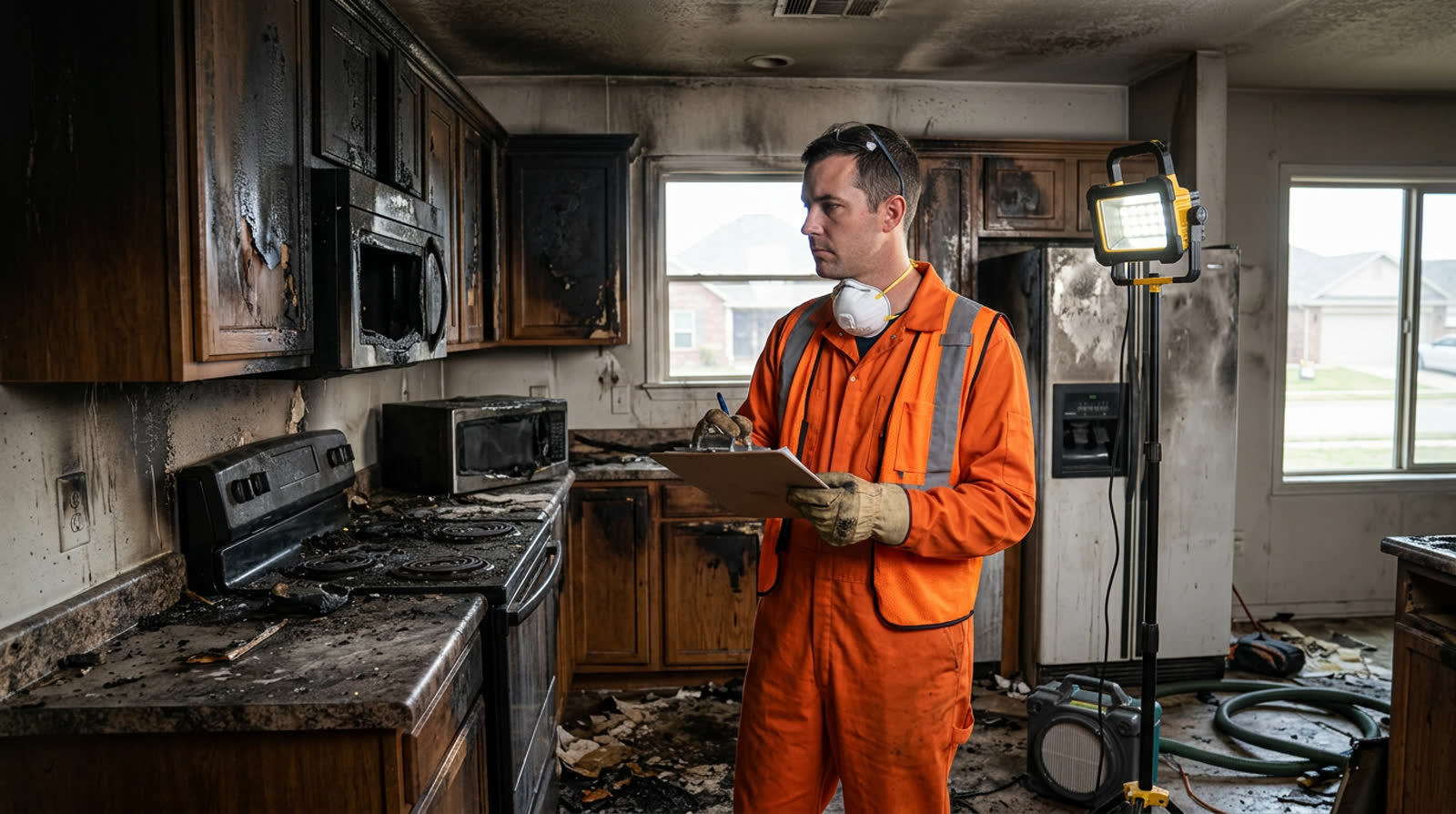
The first step in the garage fire cleanup process for Yukon homes is a thorough safety and structural assessment. Our team inspects the entire garage for collapse risk, electrical hazards, and remaining hotspots. We check roof trusses, wall framing, and concrete slabs for fire damage that compromises structural integrity.
Garage fires often spread through attic spaces or shared walls into the main house. We map the full extent of fire, smoke, and water damage in every connected area. This includes checking insulation, drywall, and HVAC ductwork that may have carried smoke throughout your home.
We document every damaged item and surface with photos and detailed notes for your insurance claim. This initial assessment typically takes two to four hours depending on garage size and fire severity. Safety is the priority, so we may restrict access to certain areas until structural engineers can evaluate them.
Many Yukon garages house water heaters, furnaces, and vehicle fuel, which create unique hazards after a fire. We test for carbon monoxide, natural gas leaks, and hazardous material contamination before any cleanup begins. If we find asbestos-containing materials that were damaged, we document them and recommend a licensed abatement contractor handle removal separately.
Emergency Board-Up and Security Measures
Fire often destroys garage doors, windows, and exterior walls, leaving your property exposed to weather and unauthorized entry. We provide emergency board-up services to secure openings and protect undamaged belongings. Plywood panels seal door openings, broken windows, and roof penetrations.
Oklahoma weather can change quickly, and even a short rain can cause additional water damage to fire-weakened materials. Temporary tarps cover compromised roofing until permanent repairs are scheduled. We've seen too many Yukon homeowners suffer secondary damage because they waited to secure their property.
Our team also coordinates with your insurance company about securing the site. Most policies require reasonable steps to prevent further loss after a fire. We provide documentation of all emergency measures taken, which supports your claim and demonstrates responsible property management.
If your garage contained high-value tools, equipment, or personal items that survived the fire, we can arrange secure storage during the cleanup process. This prevents theft and protects items from contamination during heavy cleaning work.
Debris Removal and Hazardous Material Handling
Garage fire debris contains burned lumber, melted plastics, damaged vehicles, and often hazardous chemicals from paint, fertilizers, and automotive fluids. Professional removal requires sorting materials by disposal category. Some items go to standard construction landfills, while others need hazardous waste facilities.
We carefully remove burned contents and structural debris using proper safety equipment. Fire residue contains carcinogens, heavy metals, and toxic combustion byproducts. Our crew wears respirators, gloves, and protective clothing throughout the process. Homeowners should never attempt to clean up garage fire debris without proper safety gear.
Damaged drywall, insulation, and ceiling materials are stripped to the studs in fire-affected areas. This exposes structural members for inspection and removes porous materials that absorbed smoke odor. We use HEPA-filtered vacuums during demo to control dust and particulates that could spread contamination to clean areas.
Vehicle removal requires special handling, especially if gasoline tanks, batteries, or fluids are involved. We coordinate with auto salvage companies and ensure all fluids are properly contained before transport. The concrete slab is then cleared of all debris and prepared for deep cleaning.
In our experience, debris removal from a typical two-car Yukon garage generates three to six truckloads of material. This phase usually takes one to three days depending on fire severity and accessibility.
How Do Professionals Clean Soot and Smoke Residue?
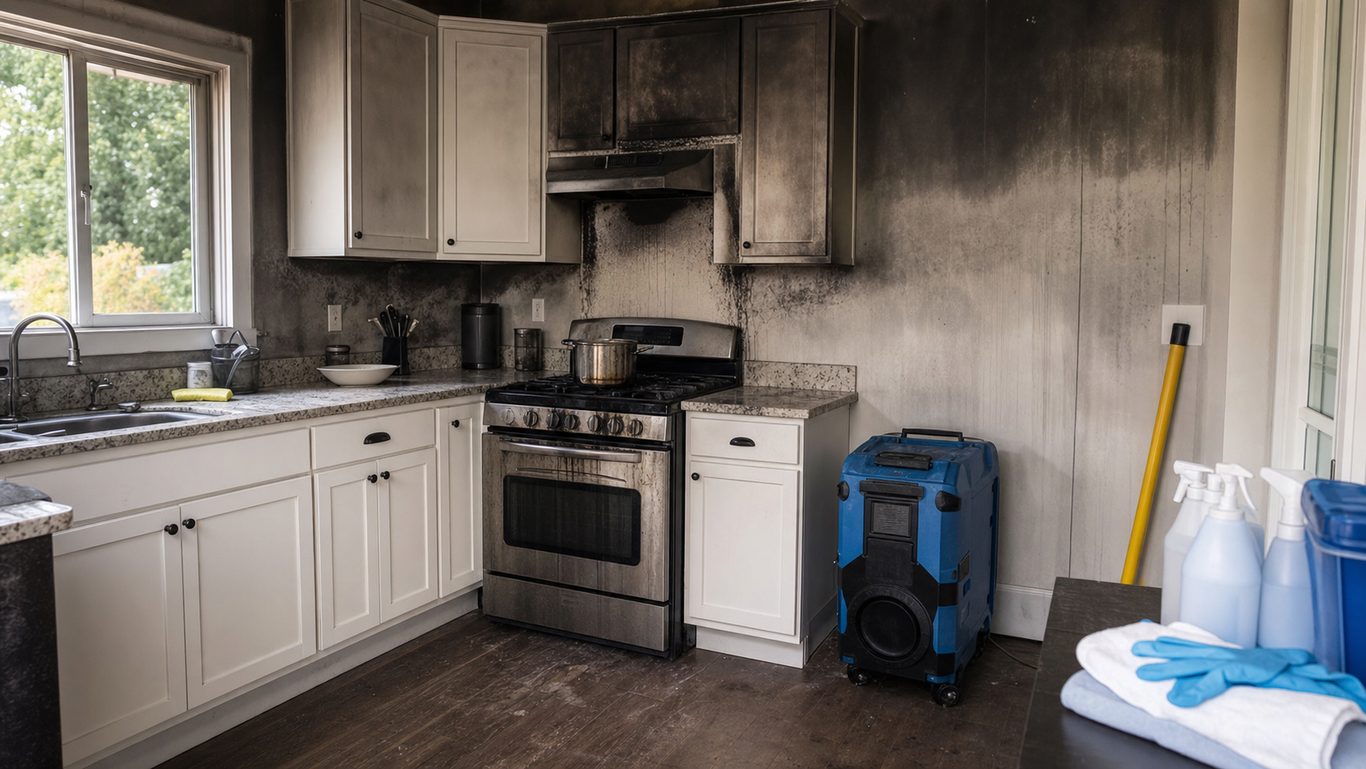
Soot and smoke residue cleaning requires specialized techniques based on the materials burned and the surfaces affected. Protein fires from burning plastics and synthetics leave sticky, pungent residues. Dry fires from wood and paper create powdery ash. Each type needs different cleaning chemistry and methods.
We start with dry sponging to remove loose soot from walls, ceilings, and structural members without spreading it. Chemical sponges lift particulates without water, which can set stains permanently. After dry cleaning, we apply specific detergents formulated for fire residue to scrub remaining deposits from wood framing, concrete, and metal.
Pressure washing is used on concrete garage floors and exterior surfaces where appropriate. We contain runoff to prevent contaminating soil or storm drains with fire residue. Interior surfaces receive gentler wet cleaning with controlled moisture to avoid saturating materials.
Exposed wood framing is cleaned, sealed, and sometimes sanded to remove embedded soot. We pay special attention to areas where smoke concentrated, like corners and overhead spaces. HVAC systems that service both the garage and home require duct cleaning to prevent recontaminating living spaces with smoke particles.
Glass, metal tools, and salvageable equipment are cleaned using ultrasonic baths or hand wiping with appropriate solvents. We've restored many valuable items that initially appeared total losses. Proper cleaning can save homeowners thousands in replacement costs.
Yukon's climate adds complexity to soot cleaning timelines. Oklahoma's humidity swings mean moisture meters guide every step. During spring and summer when humidity climbs above 60 percent, we monitor drying progress closely because damp conditions slow evaporation and can reactivate acidic residues on metal surfaces. Winter work benefits from lower moisture levels, but cold temperatures require heated drying equipment to maintain proper chemical reaction rates for cleaning agents. We typically complete initial soot removal within two to four days for a standard two-car garage, though protein residue from burned car interiors or oil-based materials can extend that window to a full week.
Oklahoma's red clay soil presents another challenge during exterior garage cleaning. When we pressure wash concrete aprons and driveway areas contaminated with fire residue, we must prevent runoff from mixing with the clay-heavy soil around your foundation. We use containment berms and vacuum recovery systems to capture water mixed with soot, oil, and chemical cleaners. This contaminated water goes into holding tanks for proper disposal, not into Yukon's storm drains. The clay soil here doesn't absorb contaminants well. It channels them toward foundations and into neighborhoods, so containment is not optional.
Overhead garage door tracks and opener mechanisms collect enormous amounts of soot that homeowners overlook. These areas trap smoke particulates in grease and lubricants, creating a sticky residue that continues to smell for months if not addressed. We disassemble track hardware when contamination is heavy, clean each component separately, and reinstall with fresh lubricant. Garage door openers themselves often require replacement rather than cleaning if the motor housing was exposed to high heat or if soot infiltrated the gearbox. A replacement opener typically costs $250 to $600 installed, which is usually less than the labor to fully disassemble and clean a contaminated unit.
Textured surfaces common in Yukon garages require different approaches than smooth drywall. Many garages here have unpainted concrete block walls or rough-trowel texture on drywall. These porous, irregular surfaces trap soot in crevices that dry sponging cannot reach. We use soft-bristle brushes with alkaline cleaning solutions, working in small sections to lift residue from texture valleys. Badly stained concrete block sometimes needs soda blasting, a gentler alternative to sandblasting that uses sodium bicarbonate media to remove embedded soot without damaging the block surface. This process costs roughly $3 to $6 per square foot and generates waste that must be vacuumed immediately to prevent tracking into your home.
We test all cleaning methods on inconspicuous areas first. Some older garage surfaces in Yukon homes have oil-based paints or sealers that react poorly to modern alkaline cleaners. A test patch reveals whether the surface will tolerate the chemistry we need or whether we must switch to solvent-based products or mechanical removal methods. This testing adds perhaps an hour to the project but prevents ruining salvageable surfaces.
Smoke Odor Neutralization and Air Quality Restoration
Smoke odor penetrates porous materials and lingers long after visible soot is removed. Professional odor neutralization uses multiple methods applied in sequence. Surface cleaning alone rarely eliminates stubborn fire smells, especially from synthetic materials and plastics common in garage fires.
We apply hydroxyl generators and ozone machines in empty, sealed spaces to break down odor molecules at a chemical level. These treatments run for 24 to 72 hours depending on odor severity. During treatment, the space must remain unoccupied and sealed. Ozone is effective but requires careful application by trained technicians.
Thermal fogging introduces deodorizing particles that penetrate the same pathways smoke traveled. The fog reaches cracks, pores, and hidden spaces that can't be physically cleaned. This process works particularly well on wooden framing and concrete that absorbed smoke.
We seal cleaned structural wood with odor-blocking primers before new drywall is installed. This encapsulates any remaining odor molecules and prevents them from migrating into finished spaces. Skipping this step often leads to odor problems reappearing months later.
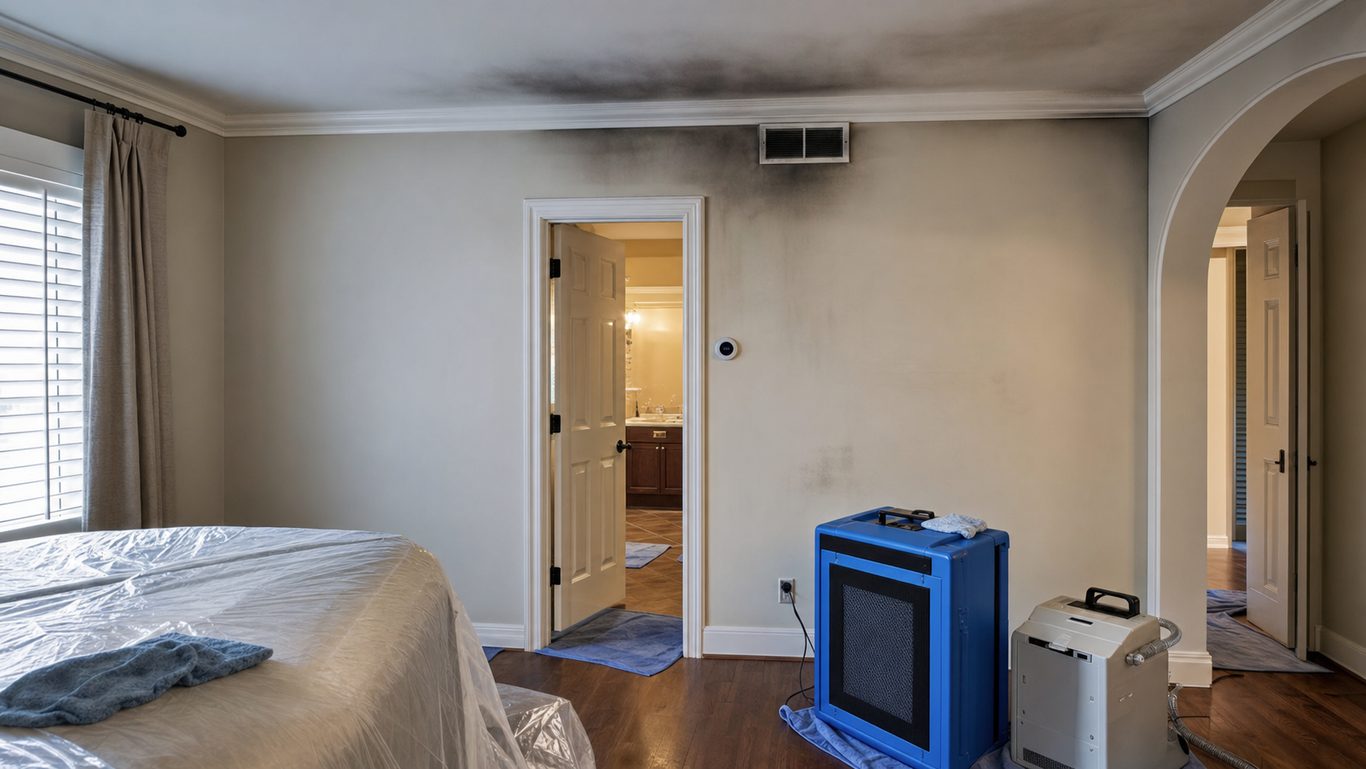
Air scrubbers with HEPA and activated carbon filters run continuously during cleanup to capture airborne particles and odors. We monitor air quality with meters that detect particulates and volatile organic compounds. The goal is to return the space to pre-loss air quality standards before reconstruction begins.
Customers tell us that odor elimination is often their biggest concern after a fire damage event. We don't consider the job complete until both testing and your own assessment confirm the smoke smell is gone.
Structural Drying and Moisture Control
Firefighting efforts dump hundreds or thousands of gallons of water into your garage. This moisture soaks wooden framing, insulation, drywall, and concrete. Without proper drying, mold growth can begin within 48 hours and secondary water damage can exceed the original fire loss.
We use moisture meters to map water distribution throughout the structure. Readings are taken in wood studs, floor joists, subflooring, and any materials that contacted water. Baseline documentation establishes drying goals and tracks progress through the process.
Commercial dehumidifiers and air movers are positioned to create optimal drying conditions. We focus airflow on wet materials and monitor temperature and humidity levels continuously. Concrete slabs require special attention because they dry slowly and can trap moisture that later damages flooring.
Drying typically takes three to seven days for standard garage fires where water was used for suppression. We take daily moisture readings and adjust equipment as needed. The structure must reach equilibrium moisture content before any reconstruction materials are installed.
Oklahoma's variable humidity, especially during spring and summer, affects drying times. We've learned to account for ambient conditions and adjust our approach. Sealed garages dry faster than those with broken doors or windows exposing them to outside humidity.
If the garage shares walls or attic space with the main house, we check those areas for hidden moisture migration. Water often travels along framing and can cause problems in rooms that appear unaffected by the fire.
Preparing for Garage Reconstruction and Rebuild
Once cleaning, odor treatment, and drying are complete, the garage is ready for reconstruction. We provide detailed documentation of all work performed, moisture readings, and photos showing the space is clean and dry. This package supports your insurance claim and provides a clear starting point for contractors.
Our team coordinates with general contractors, electricians, and other trades needed for the rebuild. Garage reconstruction often requires updated electrical service, new garage door installation, HVAC modifications, and sometimes foundation repairs. Having a central point of contact streamlines the process for homeowners.
We can handle reconstruction directly for many Yukon homeowners, managing the entire project from cleanup through final finishes. Oklahoma requires registration with local building departments for construction work, and we maintain proper credentials with the City of Yukon and Canadian County.
The reconstruction scope depends on fire severity. Minor fires may only require new drywall, paint, and electrical repairs. Severe fires can mean rebuilding walls, roof structures, and replacing the garage door system. We provide detailed estimates and work with your insurance adjuster to agree on scope and pricing.
If your garage contained workspace, storage systems, or specialty equipment, we discuss your plans for the rebuilt space. This is an opportunity to improve functionality, add better lighting, or upgrade electrical service. Many homeowners choose to make strategic improvements during the rebuild rather than simply replacing what was lost.
We've completed numerous fire restoration projects across the Oklahoma City metro, including many garages. The process is interruptive, but professional handling minimizes your stress and gets your property back to full function as quickly as possible.
Need help now? See our full Fire Damage Restoration service page or browse all restoration services. Don't see your city above? The full Oklahoma service area covers 27 cities.
Local context for this article: see our Yukon, OK restoration page and the Fire Damage Restoration in Yukon service page.
This guide also pairs with water damage restoration for suppression-water cleanup and storm-driven structure fires after lightning.
Can I clean up garage fire damage myself to save money?
Small, contained fires with minimal damage might be manageable for homeowners with proper safety equipment and knowledge. However, most garage fires create hazardous conditions that require professional equipment and training. Soot contains toxins, structural damage may not be visible, and improper cleaning often fails to eliminate smoke odor. Insurance typically covers professional restoration, so attempting DIY cleanup rarely saves money and can compromise your claim if done improperly. Professional teams also document everything needed for insurance approval.
Authoritative resources referenced
Need restoration help in Oklahoma?
24/7 dispatch, IICRC standards, direct insurance billing.