What Makes Electrical Fire Damage Different from Other Fire Types?
Electrical fires create distinct damage patterns that set them apart from cooking fires or other residential blazes. The damage originates from wiring, outlets, or appliances, often hidden inside walls or ceilings before flames become visible.
The combustion temperature of electrical fires runs hotter than many other residential fire types. This intense heat melts plastics, vaporizes insulation materials, and creates a sticky, acidic soot that adheres to every surface it touches. We've seen outlet fires in Edmond homes spread through wall cavities without showing exterior signs until structural damage was severe.
Plastic and synthetic materials burned during electrical fires release particularly toxic smoke. The soot residue contains chlorides and other corrosive compounds that continue damaging metal, electronics, and HVAC systems long after the flames are out. In our experience, electrical fire soot requires specialized cleaning agents that neutralize these acids rather than just wiping surfaces clean.
Hidden damage is the biggest concern. Electrical fires often start in areas you cannot see: behind drywall, above ceilings, or inside appliance housings. By the time smoke appears, the fire may have already compromised structural framing, electrical conduits, or insulation throughout multiple rooms. A visible scorch mark around one outlet often indicates extensive damage through the entire circuit.
Water damage from firefighting efforts compounds the problem. Electricity and water create hazards that persist after the fire department leaves. Wet electrical systems cannot be safely energized without thorough inspection, drying, and often replacement. The combination of fire, smoke, and water damage makes electrical fire restoration more complex than surface-level cleaning.
Immediate Steps After an Electrical Fire in Your Edmond Home
Call 911 first, even for small electrical fires. Firefighters will ensure the fire is completely extinguished and verify structural safety before allowing re-entry. Electrical fires can smolder inside walls for hours, reigniting without warning.
Do not turn power back on after an electrical fire. The circuit that failed may have damaged wiring throughout your home. The utility company or a licensed electrician must inspect and approve electrical systems before re-energization. We've responded to Edmond properties where homeowners restored power themselves and caused secondary fires or electrocution hazards.
Contact your insurance company within 24 hours of the fire. Most homeowners policies cover electrical fire damage, but timely notification is required. Document everything with photos before cleanup begins. Your insurer will assign an adjuster to assess damage and authorize restoration work.
Secure the property if windows or doors were damaged during firefighting. Board openings to prevent weather exposure, theft, or animal entry. Oklahoma weather can quickly worsen fire damage through rain, humidity, or temperature fluctuations, especially during spring storm season.
Avoid entering fire-damaged areas without proper protection. Soot particles are toxic and easily inhaled. The structure may be compromised, with weakened floors, ceilings, or staircases. Professional assessment should occur before you attempt to retrieve belongings or evaluate damage yourself.
Do not attempt cleanup before restoration professionals document the damage. Moving or cleaning items before assessment can complicate insurance claims and accidentally spread soot contamination to unaffected areas. Our fire mitigation team photographs and inventories damage before any restoration work begins.
The Electrical Fire Restoration Process from Start to Finish
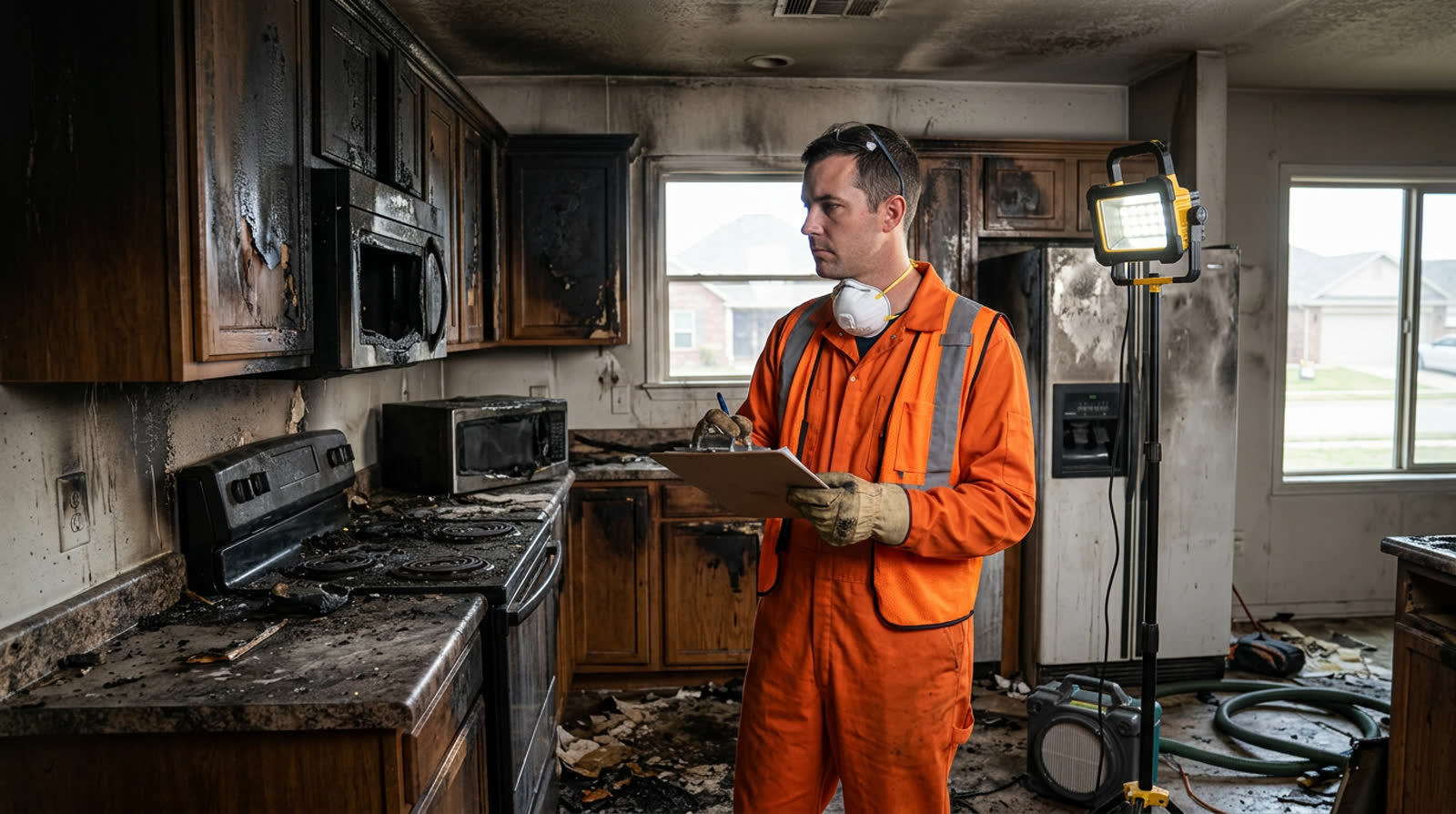
Emergency contact and damage assessment come first. A restoration company will visit your property to evaluate fire extent, structural stability, and safety hazards. This initial inspection identifies all affected areas, including hidden damage inside walls or attic spaces.
Content protection and pack-out happens next for salvageable belongings. Furniture, clothing, electronics, and personal items are removed from the fire zone, inventoried, and transported to a secure facility for specialized cleaning. Items that cannot be restored are documented for insurance purposes.
Structural stabilization addresses immediate safety concerns. Compromised roof sections are tarped, unstable walls are braced, and water extraction begins if firefighting efforts left standing water. The goal is preventing additional damage while the full restoration plan develops.
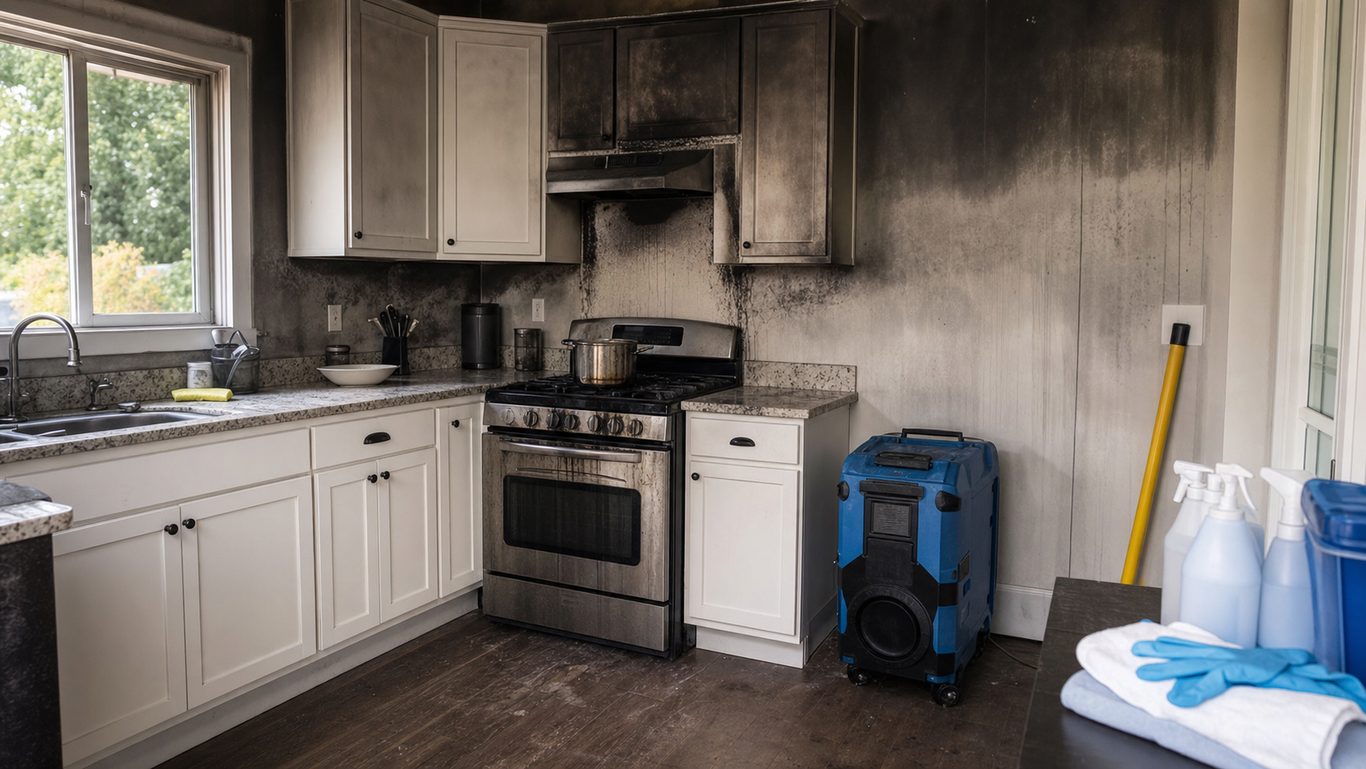
Soot and smoke residue removal requires specialized equipment and cleaning agents. Different surfaces need different approaches. Metal surfaces receive acid-neutralizing treatments, while wood may require sanding or sealing depending on penetration depth. HVAC systems are cleaned or replaced because smoke particles circulate through ductwork and contaminate the entire home.
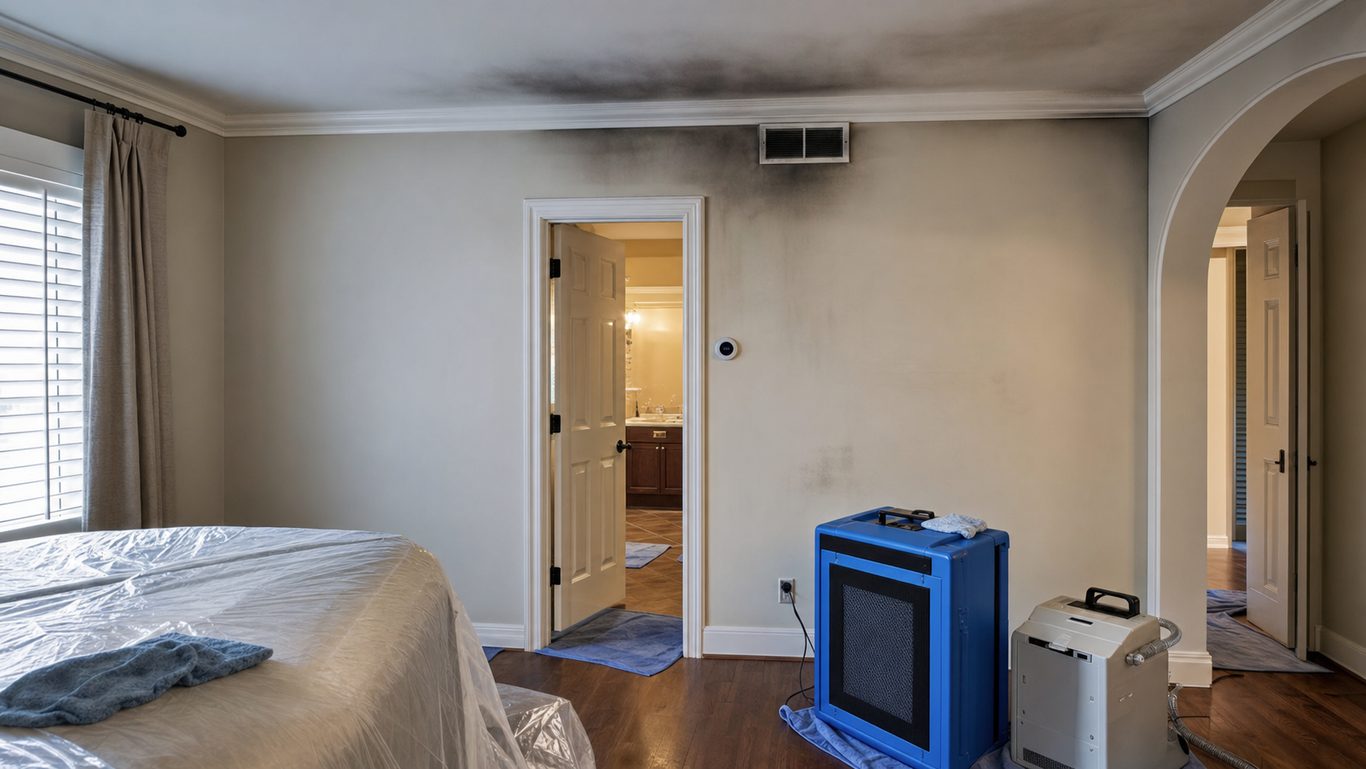
Odor elimination goes beyond air fresheners. Thermal fogging, ozone treatment, or hydroxyl generation breaks down smoke molecules at a chemical level. We recently completed restoration on a two-story home in Edmond where an outlet fire behind the master bedroom wall created smoke odor throughout the second floor. Complete odor removal required sealing the subfloor, replacing insulation, and treating all affected surfaces before reconstruction.
Reconstruction rebuilds what the fire destroyed. Licensed contractors replace drywall, flooring, cabinetry, and structural framing. Electrical systems are completely rewired by licensed electricians who pull new permits and ensure code compliance. Paint, trim, and finishes restore the home to pre-loss condition.
Final inspection and testing verify all systems function safely. Electrical panels are tested under load, HVAC systems are balanced, and moisture readings confirm complete drying. Many insurance companies require third-party verification before closing claims on electrical fire damage.
How Much Does Electrical Fire Restoration Cost in Edmond?
Electrical fire restoration costs vary dramatically based on fire severity and affected square footage. Industry data suggests minor electrical fires limited to one room typically range from $3,000 to $15,000 for complete restoration. Moderate fires affecting multiple rooms or requiring structural repairs often fall between $15,000 and $50,000.
Extensive electrical fires requiring whole-home rewiring and major reconstruction can exceed $100,000. Homes with significant structural damage, complete electrical system replacement, or HVAC contamination reach the higher end of this range. Every electrical fire creates a unique damage pattern, so these figures represent general industry estimates rather than specific quotes.
Several factors influence final restoration costs. Square footage of damaged area, extent of structural damage, type of flooring and finishes, contamination level in HVAC systems, and content restoration needs all affect pricing. Older Edmond homes built before 1980 may require additional electrical upgrades to meet current code, adding to restoration expenses.
Insurance coverage typically handles most restoration costs after your deductible. Standard homeowners policies cover sudden and accidental damage, which includes electrical fires. Review your policy limits for dwelling coverage, personal property, and additional living expenses if you need temporary housing during restoration.
Additional living expenses add to the total financial impact. If your home is uninhabitable during restoration, insurance usually covers hotel stays, meal costs above your normal budget, and other displacement expenses. Restoration timelines of 3-8 weeks are common for electrical fires, so these costs accumulate quickly.
We cannot provide exact quotes without inspecting your specific damage. Each electrical fire creates different restoration requirements. A detailed assessment identifies all necessary work, allowing accurate estimates and insurance coordination. Beware of contractors who quote prices over the phone without seeing the actual damage.
Edmond homeowners face specific cost considerations tied to the city's building permit requirements and inspection timelines. The City of Edmond requires separate electrical permits for fire restoration work involving circuit replacement or panel upgrades, with permit fees ranging from $75 to $300 depending on project scope. Inspection scheduling adds three to seven business days to most restoration timelines, as city inspectors must verify all electrical work meets National Electrical Code standards before walls can be closed. Restoration companies coordinate these inspections, but the waiting period extends your timeline and can affect temporary housing costs if you cannot occupy the home during repairs.
Oklahoma's clay soil composition creates another cost factor many homeowners overlook. Edmond sits on expansive clay soils that shift with moisture changes, sometimes causing foundation movement that compromises electrical conduit and junction boxes. If electrical fire damage occurred in a home already experiencing foundation settlement, restoration may reveal cracked conduit or stressed wiring connections throughout the structure. Addressing these pre-existing electrical vulnerabilities during restoration adds $2,500 to $8,000 to total costs but prevents future fire risks. Many restoration professionals recommend addressing foundation-related electrical issues during the repair process rather than facing another emergency later.
The timeline for electrical fire restoration directly impacts your out-of-pocket expenses for temporary housing. Most insurance policies cover Additional Living Expenses, but understanding realistic timeframes helps you plan. Small electrical fires confined to one room typically require two to three weeks for complete restoration after the initial emergency response. Moderate fires affecting multiple rooms generally take four to eight weeks from start to final inspection. Extensive fires requiring structural rebuilding and complete electrical system replacement often extend twelve to sixteen weeks. These timeframes assume normal permit processing and material availability, though supply chain issues can add two to four weeks for specialty electrical panels or custom millwork matching your home's original finishes.
Smoke and soot remediation from electrical fires involves specialized cleaning agents and equipment that affect final costs. Electrical fires produce particularly acidic soot that etches glass, corrodes metal fixtures, and penetrates porous surfaces deeper than other fire types. Professional crews use HEPA vacuum systems and chemical sponges specifically designed for electrical fire residue, followed by thermal fogging to neutralize lingering odors. This specialized cleaning adds $1,500 to $5,000 for an average Edmond home, depending on contamination severity and the number of rooms requiring treatment.
Common Causes of Electrical Fires in Edmond Homes
Outdated electrical systems top the list of fire causes. Many Edmond neighborhoods built between 1960 and 1990 still have original wiring that was never designed for modern electrical loads. Adding computers, large televisions, and multiple phone chargers to circuits designed for lamps and radios overloads the system.
Aluminum wiring presents specific hazards in homes built during the 1960s and 1970s. Aluminum expands and contracts differently than copper, creating loose connections over time. These loose connections generate heat and eventually ignite surrounding materials. If your home has aluminum wiring, a licensed electrician should inspect and potentially retrofit connections.
Overloaded outlets and extension cords cause frequent fires. Plugging space heaters, window air conditioners, or multiple appliances into a single outlet exceeds the circuit's capacity. Extension cords used as permanent wiring solutions degrade over time, especially when run under carpets or furniture where damage goes unnoticed.
Faulty appliances and damaged cords spark fires throughout homes. Frayed charging cables, appliances with internal shorts, and devices with recalled components all create fire risks. We responded to a kitchen fire in Edmond last year where a malfunctioning dishwasher ignited the surrounding cabinetry while the homeowners were at work.
Light fixtures with incorrect bulb wattage generate excessive heat. Installing a 100-watt bulb in a fixture rated for 60 watts causes heat buildup that ignites insulation, dust, or nearby combustibles. Recessed lighting in attics or insulated ceilings is particularly vulnerable because heat cannot dissipate properly.
Oklahoma's temperature extremes stress electrical systems. Summer heat causes expansion, while winter cold creates contraction. This seasonal cycling loosens connections over time. Ice storms also create power surges during restoration that can damage sensitive electronics or ignite compromised wiring.
Preventing Future Electrical Fires After Restoration
Schedule regular electrical inspections with a licensed electrician. Homes older than 25 years should have full electrical assessments every 3-5 years. These inspections identify loose connections, outdated components, and overloaded circuits before they become fire hazards.
Install arc-fault circuit interrupters (AFCIs) throughout your home. These devices detect dangerous arcing conditions and shut off power before fires start. Current electrical code requires AFCIs in most living areas, and retrofitting them during restoration significantly improves safety.
Replace outdated electrical panels and service. If your home still has a fuse box or a panel under 100 amps, upgrading to a modern 200-amp breaker panel accommodates today's electrical demands safely. This upgrade often becomes necessary during electrical fire restoration anyway.
Use appliances and electronics according to manufacturer specifications. Never exceed outlet capacity, and retire damaged cords immediately. Space heaters should plug directly into wall outlets, never extension cords, and should have automatic shutoff features if tipped over.
Keep electrical panels accessible and clear. Store items at least three feet away from panels to allow heat dissipation and emergency access. Many Edmond homes have panels in garages or utility rooms where storage gradually encroaches, creating both fire risks and code violations.
Install and maintain smoke detectors on every level. Interconnected detectors provide the earliest warning of electrical fires starting in unoccupied areas. Test detectors monthly and replace batteries annually. Detectors older than 10 years should be completely replaced regardless of apparent function.
Consider whole-home surge protection for your electrical system. Oklahoma's severe weather creates frequent power fluctuations that stress electrical components. Whole-home surge protectors installed at the main panel defend against these damaging events better than individual outlet protectors.
Need help now? See our full Fire Damage Restoration service page or browse all restoration services. Don't see your city above? The full Oklahoma service area covers 27 cities.
Local context for this article: see our Edmond, OK restoration page and the Fire Damage Restoration in Edmond service page.
This guide also pairs with water damage restoration for suppression-water cleanup and storm-driven structure fires after lightning.
Can I stay in my Edmond home during electrical fire restoration?
Most homeowners cannot safely occupy homes during electrical fire restoration. Soot particles create respiratory hazards, and construction dust compounds air quality problems. Power remains disconnected until electrical systems are inspected and approved, leaving you without lights, heating, cooling, or refrigeration. Strong smoke odors persist until specialized treatment is complete. The restoration process creates noise, foot traffic, and security concerns as workers access all areas. Insurance policies typically cover temporary housing costs during this period. In rare cases of very minor, localized damage, partial occupancy may be possible if unaffected areas can be isolated and sealed from the work zone.
Authoritative resources referenced
Need restoration help in Oklahoma?
24/7 dispatch, IICRC standards, direct insurance billing.