Why Commercial Water Damage Requires a Different Approach Than Residential
Commercial water damage in Oklahoma City presents challenges that residential jobs rarely match. Scale matters. A 15,000-square-foot office building holds more water in its carpet and drywall than ten houses combined. Business operations demand speed. Every hour of closure costs money in lost sales, employee productivity, and customer confidence.
Stakeholder complexity multiplies the variables. Property managers, business owners, tenants, insurance adjusters, and building engineers all need coordination. A flooded retail space in Oklahoma City may require after-hours work to avoid interrupting daytime sales. Restaurants need kitchen equipment dried and sanitized to meet health codes. Medical offices face HIPAA compliance when patient files get wet.
We've responded to commercial losses in everything from two-story office parks near Nichols Hills to warehouse facilities in the industrial corridor along I-40. Each property type brings its own complications. Multi-tenant buildings require access coordination. High-rise structures need staging areas for equipment. Data centers demand humidity control that won't risk server damage.
Insurance policies differ too. Commercial policies often include business interruption coverage that residential policies lack. Claim documentation requirements run deeper. Adjusters expect moisture mapping, equipment logs, and daily progress photos. The stakes justify the scrutiny. A large commercial claim can reach six figures before demolition even starts.
Our commercial water damage restoration protocol accounts for these differences from the first call. We ask about occupancy schedules, critical equipment, inventory at risk, and contractual obligations. A flooded law office has different priorities than a flooded yoga studio. Both need water out fast, but the lawyer may need document recovery while the studio owner worries about hardwood floors and liability.
What Happens During the First Four Hours of a Commercial Water Event
The first four hours determine whether a commercial water loss becomes a manageable restoration or a total gut job. Water spreads fast in commercial buildings. Open floor plans, raised access floors, and interconnected HVAC systems move water between rooms and floors. A supply line break on the third floor can flood the second floor ceiling cavity before anyone notices.
Our typical commercial response starts with a phone assessment. We ask the caller to identify the water source, affected areas, and any immediate safety hazards. Electrical panels near standing water require shutdown. Slip hazards need barriers. If the water source is still active, we walk them through emergency shutoffs while our crew mobilizes equipment.
On arrival, we conduct a rapid visual survey before moving gear inside. Structural safety comes first. Ceiling tiles sagging with water get propped or removed. Buckling floors get marked. We've seen enough Oklahoma buildings to know that 1970s flat-roof construction and 1990s metal buildings each have their weak points.
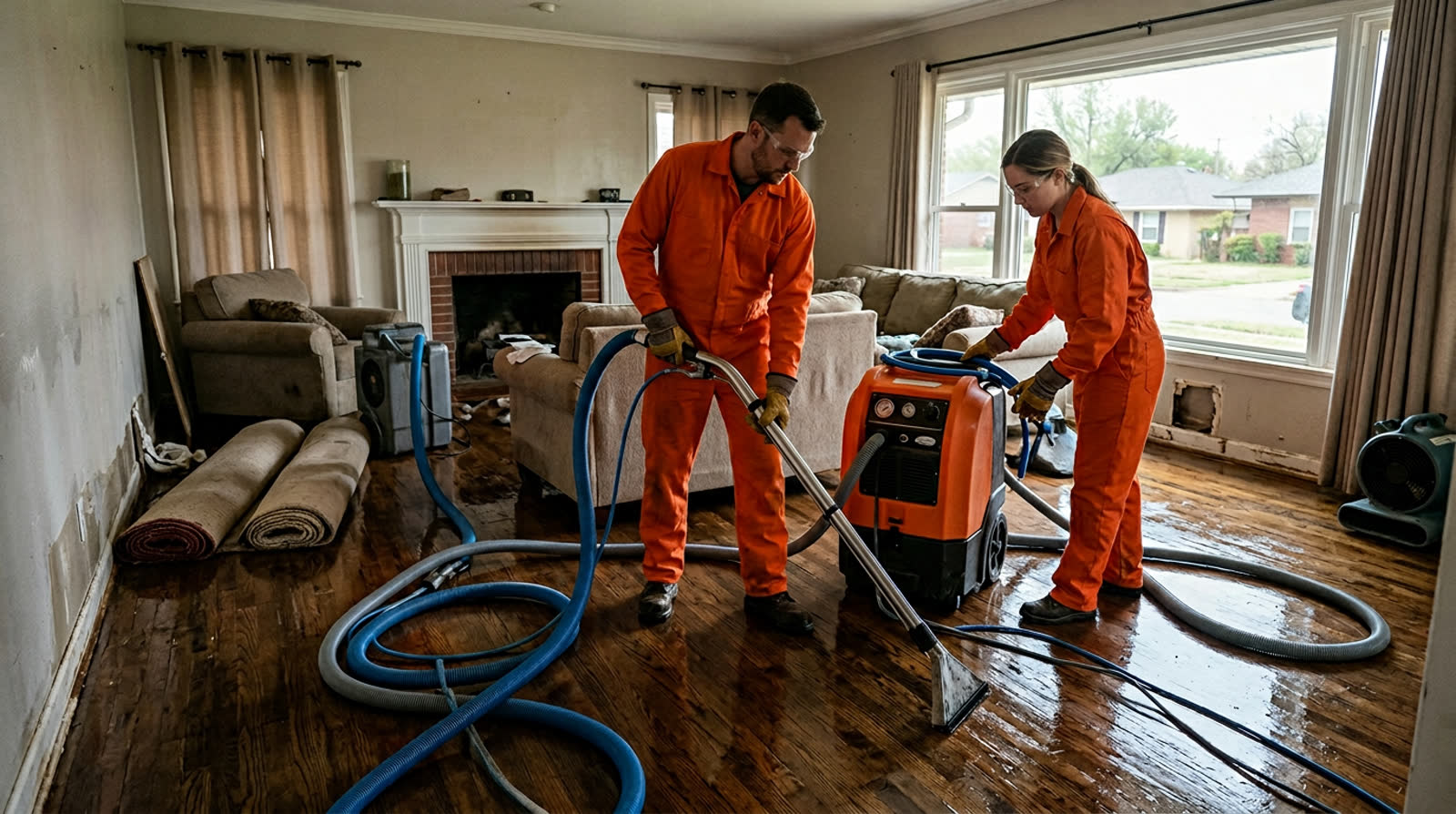
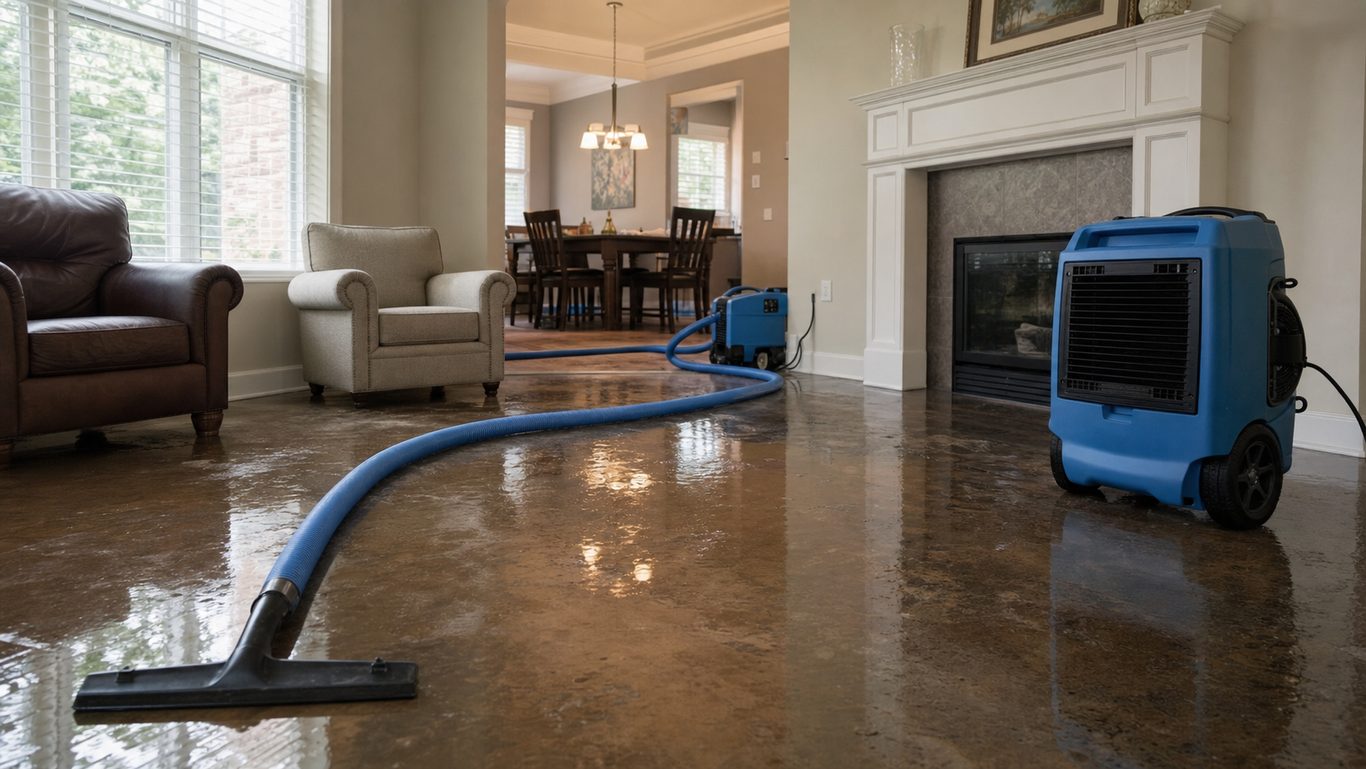
Water extraction begins within 30 minutes of arrival on most jobs. Truck-mount extractors pull standing water from carpet at 100 gallons per minute. Weighted extraction tools compress carpet pad to remove trapped moisture. Hard floors get squeegeed and wet-vacuumed. We stage extracted water outdoors when possible or route discharge hoses to functioning drains.
Documentation runs parallel to extraction. We photograph every affected room from multiple angles. Moisture meters record readings in walls, floors, and contents. Infrared cameras map hidden moisture in ceiling plenums and wall cavities. Insurance adjusters need this baseline data to approve scopes and settle claims. We've learned that over-documenting early saves disputes later.
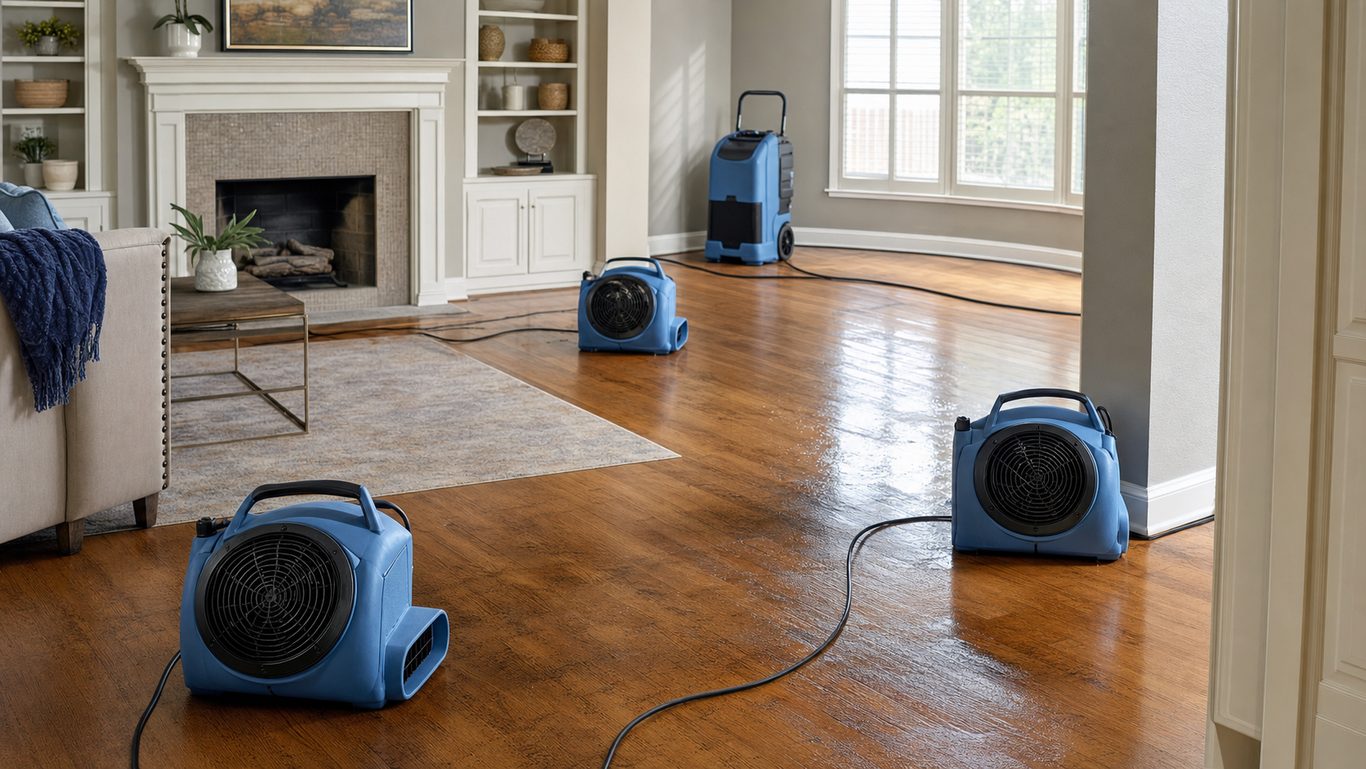
Air movement starts as soon as extraction finishes. Commercial air movers push 2,000 to 3,000 cubic feet per minute across wet surfaces. We position them to create circular airflow patterns that prevent dead spots. Dehumidifiers remove moisture from the air. A 10,000-square-foot space might need six commercial dehumidifiers running simultaneously to drop relative humidity below 50 percent.
How Oklahoma City Weather Patterns Affect Commercial Drying Timelines
Oklahoma City's climate complicates commercial water damage recovery in ways that surprise out-of-state property managers. Humidity swings between seasons change how fast buildings dry. Summer humidity averages 60 to 70 percent, which slows evaporation and forces us to run more dehumidification equipment. Winter brings drier air but also freeze risks if heat fails in an unoccupied building.
Spring tornado season creates its own problems. Roof damage during a water loss means we're racing rain forecasts. A May thunderstorm can dump two inches in an hour. If we're drying a building with temporary roof tarps, we monitor radar constantly and stage extra extraction equipment. We've had jobs in Edmond and Moore where weather delayed final dry-out by a week.
Red clay soil affects buildings differently than sandy or rocky soils. Oklahoma's expansive clay swells when wet and shrinks when dry. A commercial building with a slab foundation can develop new cracks or widen existing ones after significant water intrusion. We've seen cases where a broken water main flooded a warehouse, and the soil movement afterward caused additional foundation settlement.
Heat and air conditioning availability shape our drying strategy. A heated building in January dries faster than an unheated one. But if the HVAC system was damaged by water, we bring in portable heating or cooling units. Ideal drying happens between 70 and 80 degrees Fahrenheit. Too cold and evaporation stalls. Too hot and we risk damaging temperature-sensitive inventory or finishes.
Outdoor air exchange helps on low-humidity days. We open windows and doors to flush moist indoor air with drier outdoor air. This works well in October and November. It backfires in July when outdoor dew points hit 70 degrees. Our crews check weather station data each morning to decide whether to ventilate or seal the building.
Protecting Business Operations While Restoration Work Continues
Most commercial water losses don't allow for full building closure. Businesses need to keep operating. We plan restoration work around occupancy schedules and revenue priorities. A retail store losing weekend sales is losing peak income. An accounting firm approaching tax season can't afford downtime. Our job is to dry the building without shutting down the business.
Containment barriers let us isolate wet areas from dry, functional spaces. We use plastic sheeting and zip walls to create dust and moisture barriers. HEPA-filtered air scrubbers maintain negative pressure in the work zone so humid air doesn't migrate into clean areas. A law office in downtown Oklahoma City can keep seeing clients in the west wing while we demo and dry the east wing.
After-hours scheduling reduces interruption. We often run extraction and demolition during evenings and weekends, then maintain drying equipment during business hours with minimal crew presence. Equipment noise is unavoidable, but we position the loudest units in storage rooms, break areas, or vacant offices. White noise from air movers becomes background hum after a day or two.
Temporary relocation helps when a space is too wet to occupy safely. We've coordinated with property managers to move tenants into vacant suites while their original space dries. Modular office furniture makes this easier than built-in millwork. A flooded call center moved 30 workstations in one weekend and resumed operations Monday morning.
Communication prevents confusion. We post daily updates in common areas showing restoration progress and expected timelines. Property managers get morning and evening check-ins. If we discover new damage or need access to locked areas, we call immediately rather than waiting. Business owners tell us that predictability matters as much as speed. Knowing the plan reduces stress even when the plan takes two weeks.
Critical equipment protection takes priority over cosmetic repairs. If a server room floods, we dry the room and restore cooling before we worry about replacing carpet or ceiling tiles. Medical office sterilizers, restaurant refrigeration, and manufacturing machinery get assessed first. Sometimes we bring in specialty vendors for equipment we don't service. We know our limits and coordinate rather than overpromise.
What Commercial Property Managers Should Document for Insurance Claims
Commercial water damage claims require more documentation than residential claims. Adjusters scrutinize larger losses more carefully. Missing documentation can delay payment or reduce settlement amounts. We provide detailed moisture logs and photo records, but property managers need to document their own losses and decisions.
Photograph everything before any cleanup starts. Capture wide shots showing the full extent of damage, then close-ups of specific items. Date-stamp photos if your camera or phone allows it. Insurance companies want proof of pre-loss condition and post-loss damage. A photo showing water halfway up a wall proves severity better than a written description.
Inventory damaged contents by room and category. List furniture, equipment, files, inventory, and supplies separately. Include purchase dates and costs where known. For older items, note replacement cost versus actual cash value. A ten-year-old conference table is worth less than a new one, but documentation establishes the baseline.
Save repair estimates and invoices from all vendors. The restoration company, electricians, HVAC contractors, and equipment repair technicians all contribute to the total loss. Some commercial policies require multiple estimates for work over a certain threshold. We can provide detailed scopes, but property managers should get competing bids if the policy requires it.
Track business interruption costs separately. Document lost revenue, continuing expenses during closure, and extra expenses incurred to maintain operations. Payroll for employees who couldn't work, costs to relocate temporarily, and rush fees for expedited repairs all factor into business interruption claims. Accountants or bookkeepers should compile this data contemporaneously.
Maintain a claim diary. Note the date and time of the water event, when it was discovered, who was notified, and what actions were taken. Record every conversation with the insurance company, including the adjuster's name and what was discussed. Email summaries after phone calls to create a paper trail. We've watched claims stall because the adjuster and property manager remembered conversations differently.
Understand your policy's requirements for mitigation. Most commercial policies require policyholders to take reasonable steps to prevent further damage. That means shutting off water sources, removing standing water, and protecting undamaged areas. Failure to mitigate can reduce or deny coverage. Document mitigation efforts with photos and receipts. If you hire emergency tarping or board-up services, save those invoices.
Common Commercial Water Damage Scenarios We See in Oklahoma City
Oklahoma City's commercial building stock spans from 1950s mid-century offices to brand-new mixed-use developments. Each era brings predictable failure points. Older buildings have cast iron drain lines that corrode from the inside. Newer buildings have plastic supply lines that fail at compression fittings. We've responded to both types in the same week.
Roof leaks top the list, especially on flat or low-slope commercial roofs. Oklahoma's freeze-thaw cycles crack membrane seams. Wind-driven rain finds gaps around HVAC curbs and skylights. A slow roof leak can saturate insulation and ceiling tiles for months before anyone notices. We've found active leaks in Tulsa and Norman buildings where tenants assumed the stains were old and ignored them.
HVAC condensate line failures flood rooms silently. Air handlers in ceiling plenums drip water into catch pans. When the pan drain clogs or the pan rusts through, water overflows into ceiling tiles and down walls. A clogged condensate line in a restaurant kitchen can dump 20 gallons a day into the dining room ceiling. By the time the owner notices, the drywall is destroyed.
Supply line breaks cause sudden, dramatic flooding. A burst pipe in a second-floor restroom can flood three floors in under an hour. Copper pipe failures happen when buildings are left unheated during winter, causing freeze splits. PEX and CPVC lines fail at fittings under normal pressure. We recently extracted water from an office building near the Capitol where a hot water line let go at 2 a.m. and flooded 8,000 square feet before the alarm company noticed.
Sprinkler system accidents destroy more contents than they save. Accidental activations from forklifts hitting heads, overheated storage areas, or frozen pipes cause massive water discharge. A single sprinkler head flows 15 to 30 gallons per minute until the system is shut down. Warehouse inventory, retail merchandise, and office equipment get drenched in seconds. Some losses are total even if the building structure survives.
Sewage backups in commercial buildings carry health risks that extend beyond the water itself. A backed-up floor drain in a restaurant or medical office requires disinfection protocols and disposal of porous materials. We handle sewage cleanup as a separate scope because it involves different safety procedures and documentation. Oklahoma City's older sewer infrastructure sees backups during heavy rain when stormwater overwhelms combined systems.
Tenant-caused water damage complicates liability and recovery. A tenant who leaves a sink running or fails to report a leak may be liable for damage to the landlord's property and to neighboring tenants. We document the source and sequence of events carefully because these jobs often involve multiple insurance carriers. Property managers should review lease language around water damage responsibility before a loss happens.
Estimating Commercial Water Damage Restoration Costs and Timelines
Commercial water damage costs vary so widely that quoting a number without seeing the job is guesswork. A 1,000-square-foot office with wet carpet might cost $3,000 to $6,000 to dry. A 20,000-square-foot warehouse with flooded inventory and structural damage can run $150,000 or more. We provide estimates after the initial assessment, but final costs depend on hidden damage and change orders.
Emergency water extraction typically costs $500 to $2,000 for the first visit, depending on water volume and after-hours premiums. Equipment rental runs $50 to $150 per unit per day. A medium commercial job might need 12 air movers, four dehumidifiers, and two air scrubbers for seven days. That's $7,000 to $15,000 in drying costs alone before any repairs start.
Demolition and disposal add up fast. Removing wet drywall, insulation, baseboards, and flooring produces debris. A 30-yard dumpster costs $400 to $600. Large jobs need multiple dumpsters. Labor to remove materials runs $40 to $75 per hour per worker. A crew of three can demo 2,000 square feet of wet drywall in a day, but hauling debris to the dumpster takes time.
Reconstruction costs depend on finishes and building codes. Basic drywall, tape, texture, and paint run $2 to $4 per square foot. Higher-end finishes, custom millwork, or specialty ceilings cost more. Flooring replacement varies from $3 per square foot for basic carpet tile to $15 per square foot for engineered hardwood or luxury vinyl plank. We work with property managers to match existing finishes or upgrade during reconstruction.
Timelines stretch longer than residential jobs because of coordination requirements. A small office might dry in three to five days. A large commercial building with multiple floors can take two weeks to reach dry standard. Reconstruction adds another two to six weeks depending on scope and permit requirements. Projects in Broken Arrow or Yukon may need building permits for structural work, which adds review time.
Business interruption costs often exceed the physical restoration costs. A retail store losing $10,000 per day in sales during a two-week closure loses $140,000 in revenue. Business interruption insurance helps, but claim processing takes time. Property managers should factor lost income into the decision to repair or relocate. Sometimes a faster, more expensive restoration approach saves money by reopening the business sooner.
We provide written estimates broken down by category: extraction, drying, demolition, disinfection, reconstruction, and project management. Transparent pricing helps property managers and insurance adjusters understand where the money goes. We flag items that might change based on hidden damage and build contingency into the budget. Nobody likes surprises on a commercial claim.
Need help now? See our full Water Damage Restoration service page or browse all restoration services. Don't see your city above? The full Oklahoma service area covers 27 cities.
Local context for this article: see our Oklahoma City, OK restoration page and the Water Damage Restoration in Oklahoma City service page.
This guide also pairs with emergency water mitigation and mold remediation when drying is missed.
How long does it take to dry a commercial building after water damage in Oklahoma City?
Most commercial buildings in Oklahoma City reach dry standard in 3 to 14 days depending on size, construction type, and water category. Single-story office spaces with direct roof or exterior wall access dry faster than multi-story buildings where water travels through floor assemblies. Concrete substrates take longer than wood framing. We monitor moisture levels daily and adjust equipment as readings drop. High summer humidity or cold winter temperatures can extend drying by several days. Business continuity needs sometimes require us to dry occupied spaces more slowly to manage noise and interruption.
Authoritative resources referenced
Need restoration help in Oklahoma?
24/7 dispatch, IICRC standards, direct insurance billing.