Why Church Buildings in Broken Arrow Face Water Damage Risks
Churches in Broken Arrow deal with water damage more often than most people realize. The combination of older construction, large roof spans, and infrequent building inspections creates vulnerability. Many congregations operate on tight budgets and delay maintenance until a crisis hits.
Broken Arrow sits in a flood-prone region of Oklahoma. Spring storms dump heavy rain that overwhelms gutters and drainage systems. Ice storms in winter freeze pipes in unheated wings. Tornado season brings roof damage that lets water pour into sanctuaries and classrooms. We've seen fellowship halls flood from backed-up floor drains during severe weather events across the Tulsa metro area.
Church architecture presents specific challenges. High ceilings in sanctuaries make leak detection difficult. Flat or low-slope roofs on educational wings are prone to ponding. HVAC systems that run intermittently allow humidity to build up between services. Carpeted areas trap moisture against concrete slabs. Historic buildings may have outdated plumbing or inadequate waterproofing around foundations.
In our experience, churches often discover water damage weeks after the initial event. A slow leak behind a baptistry or under a kitchen sink goes unnoticed until mold appears or flooring buckles. By that point, the damage extends beyond the visible area. Professional water damage restoration becomes necessary to prevent long-term structural issues and protect the congregation's investment.
What Makes Church Water Damage Different from Residential Loss
Restoring a church building requires a different approach than a typical home. Square footage alone changes the scope. A 10,000-square-foot sanctuary needs industrial dehumidifiers and air movers that dwarf residential equipment. Extraction takes longer. Drying timelines extend because of the sheer volume of affected materials.
Churches contain materials not found in homes. Pews absorb water like sponges. Pipe organs suffer permanent damage from humidity spikes. Sound systems and projection equipment are expensive and moisture-sensitive. Stained glass windows require careful monitoring during the drying process to prevent thermal stress. Altar furnishings, communion tables, and pulpits often have historic or sentimental value that demands specialized care.
Building use patterns complicate the work. Most churches host services on Sundays, plus midweek activities, preschool programs, and community events. Restoration teams must coordinate around these schedules. We've set up containment barriers to isolate damaged areas so the congregation can continue meeting in unaffected spaces. Night and weekend work is common to avoid interrupting worship or children's programs.
Insurance coverage for churches differs from standard homeowner policies. Many congregations carry commercial property insurance with specific provisions for religious buildings. Deductibles tend to be higher. Some policies require documentation of preventive maintenance. Claims adjusters may need education about the unique features of church construction. Clear communication between the restoration contractor, church leadership, and the insurance carrier prevents delays and coverage disputes.
How Water Enters Church Buildings in Broken Arrow
Roof leaks top the list of water intrusion points in churches. Large roof areas collect massive volumes of rain. Broken Arrow's spring storms can drop two inches of rain in an hour. If gutters clog with leaves and debris, water backs up under shingles or pools on flat sections. We recently responded to a church near the Rose District where a missing flashing detail allowed water to stream down an interior wall during a thunderstorm.
Plumbing failures happen frequently in older church buildings. Galvanized pipes corrode after decades of service. Water heaters in closets or mechanical rooms fail and flood adjacent spaces. Toilets in heavily used restrooms overflow. Kitchen sinks in fellowship halls develop slow leaks that saturate cabinets and subfloors. Broken Arrow's hard water accelerates mineral buildup in supply lines, increasing pressure and the risk of ruptures.
HVAC systems introduce water through condensate drain problems. Air handlers in attics or closets produce gallons of condensation during Oklahoma summers. If drain lines clog or disconnect, water overflows the drip pan and soaks ceiling tiles or drywall below. We've seen this damage pattern in dozens of churches across the Broken Arrow and Tulsa area. It often goes undetected because the affected space is a storage room or unused classroom.
Foundation issues cause recurring water problems. Broken Arrow's expansive clay soil shifts with moisture changes. Cracks open in basement walls or slab foundations. Poor grading around the building directs runoff toward the structure instead of away from it. Downspouts that dump water too close to the foundation create persistent seepage. These chronic moisture sources lead to mold growth and require both restoration and corrective construction to solve permanently.
The Church Water Damage Restoration Process Step by Step
Emergency response starts with a building assessment. Our team inspects the entire affected area to map out water migration. We check for safety hazards like electrical shorts, structural instability, or contaminated water. Churches often have locked rooms, crawl spaces, or attic areas that need inspection. We document everything with photos and moisture readings for insurance purposes.
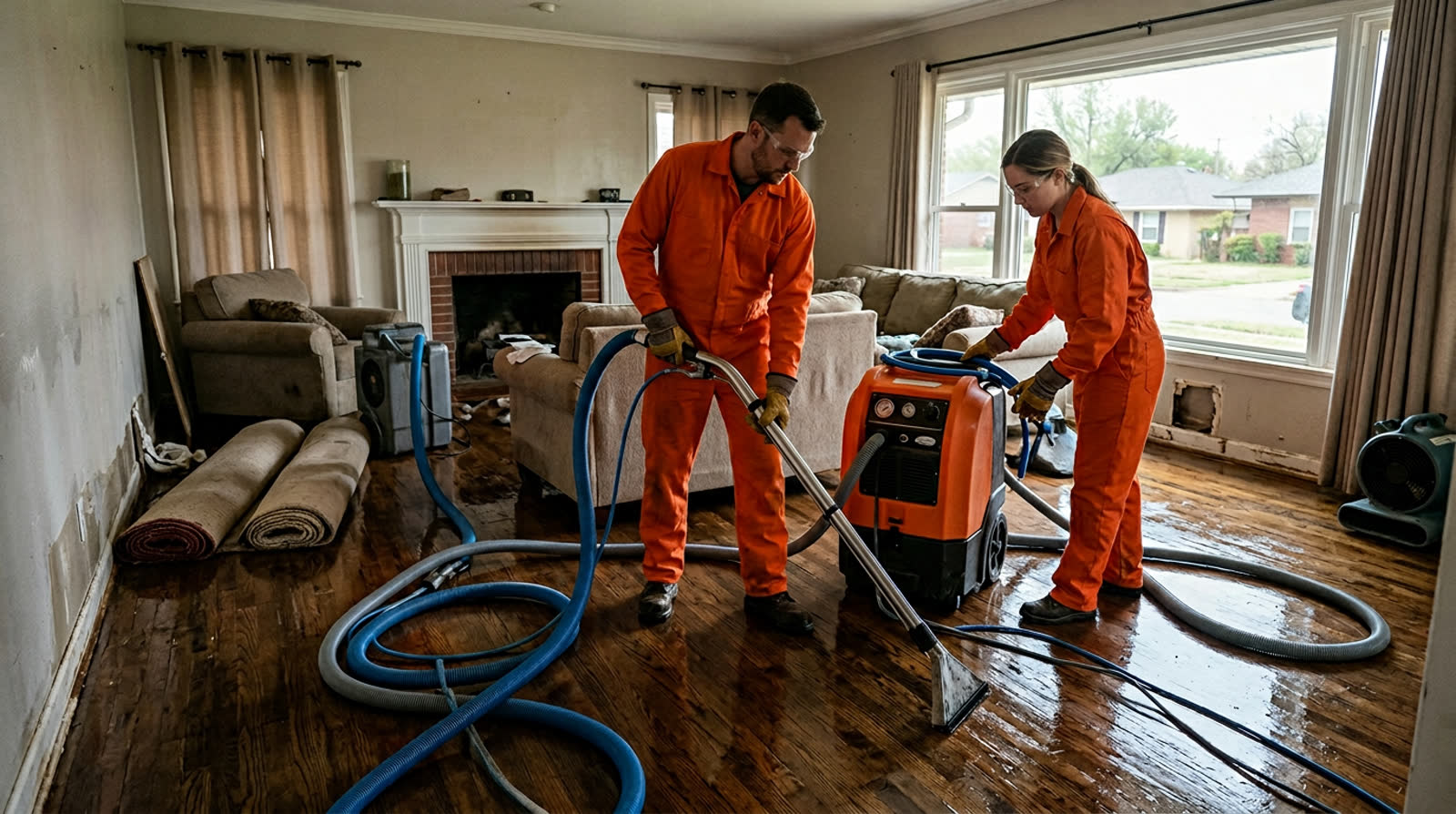
Water extraction comes next. Truck-mounted extractors remove standing water from carpet and hard floors. Submersible pumps handle deeper flooding in basements or mechanical rooms. We pull wet insulation from walls if necessary. Pews and furniture get moved to dry areas or raised on blocks. Quick extraction prevents water from wicking up drywall or into wooden structural members.
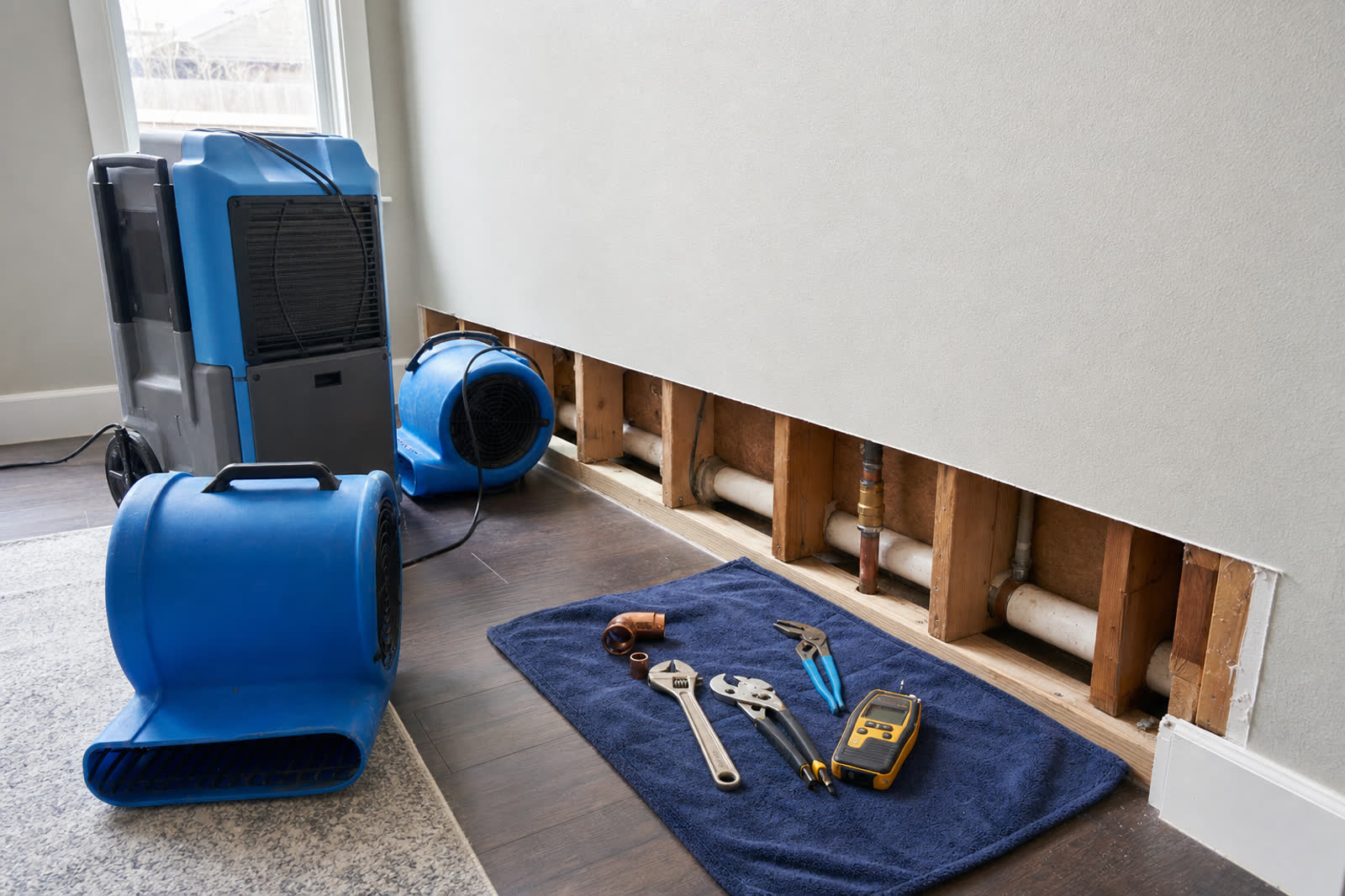
The drying phase uses commercial dehumidifiers and air movers positioned throughout the building. We monitor moisture levels in walls, floors, and ceilings with thermal imaging and pin meters. Large sanctuaries may need ten or more dehumidifiers running continuously. Drying typically takes three to seven days depending on building materials and outdoor humidity. Broken Arrow's summer humidity slows the process compared to winter conditions.
Content restoration addresses damaged items. Books in libraries get frozen to prevent mold until they can be cleaned. Carpet receives anti-microbial treatment. Pews and furniture dry in controlled conditions to prevent warping. Sound equipment and electronics go to specialists for evaluation. We coordinate with church staff to identify items with irreplaceable sentimental value that need extra attention. Not everything can be saved, but we maximize recovery whenever possible.
Final reconstruction repairs structural damage. This might include replacing drywall, repainting, installing new flooring, or rebuilding damaged cabinetry. If the church has a maintenance team, we coordinate with them. For larger projects, we connect the congregation with licensed contractors in Broken Arrow who handle reconstruction work. Our role is stabilization and drying. We leave the building ready for rebuild or safe for occupancy if only minor repairs are needed.
Once structural drying is complete, we move into the sanitization and cleaning phase. Churches in Broken Arrow often face specific contamination issues because the buildings sit empty most of the week. Standing water in an unoccupied building can develop bacteria and mold growth faster than a regularly heated or cooled home. We apply EPA-registered antimicrobial treatments to all affected surfaces, including subfloors that were exposed during restoration. Porous materials like hymnals, Bibles, and upholstered chairs require individual assessment. Some items can be freeze-dried or cleaned, while others need disposal if contamination is severe.
Oklahoma's clay-heavy soil creates another complication for church water damage work. Broken Arrow sits on expansive clay soils that shift with moisture changes. After a major water event inside the building, we inspect the foundation and slab for cracks or movement that may have contributed to the intrusion. Hairline cracks in a concrete slab can allow groundwater to seep up during heavy spring rains. We document these findings because foundation repairs fall outside standard water restoration work, but the church will need that information for long-term planning.
Restoration costs for church buildings vary widely based on square footage and materials. A small chapel with 2,000 square feet of water damage might run between $4,000 and $8,000 for extraction, drying, and basic cleaning. Larger sanctuaries with 10,000 square feet of affected space, plus fellowship halls and classrooms, can reach $25,000 to $50,000 or more. Costs climb quickly if the water damaged the sound system, musical instruments, or custom woodwork. Churches rarely have the same insurance coverage as commercial buildings, so we work directly with congregations to prioritize the work and phase projects when needed.
The final restoration step involves repairs and reconstruction. Drywall that wicked water more than two feet up the wall gets cut out and replaced. Baseboards and trim are removed during drying and reinstalled after new drywall goes up. Carpet padding always gets discarded after water damage, even if the carpet itself can be saved. We coordinate with electricians if outlets or wiring were submerged. Broken Arrow follows standard Oklahoma building codes, but churches built before 1980 sometimes have older electrical systems that need updating during restoration work. Timeline for full repairs runs two to four weeks after drying is complete, assuming materials are available and no mold remediation is required.
How to Prevent Mold Growth in Church Buildings After Water Damage
Mold prevention starts during active restoration. Speed matters because mold spores begin colonizing wet surfaces within 24 to 48 hours. Churches in Broken Arrow face higher risk due to Oklahoma humidity and the tendency for building issues to go unnoticed between services. We apply anti-microbial treatments to all affected surfaces during the drying process.
HVAC systems require special attention. Ductwork can distribute mold spores throughout the building if contamination occurs. We inspect air handlers, plenums, and accessible ductwork for moisture or visible growth. Filters get changed. If water entered the system, we recommend professional duct cleaning. Running the HVAC during restoration helps with drying but only if the system itself is clean.
Hidden moisture causes most post-restoration mold problems. Water migrates into wall cavities, above ceilings, or under flooring where it stays wet for weeks. Our moisture mapping identifies these areas so we can place drying equipment strategically. We drill small access holes when necessary to insert air movers or verify dryness. Thermal imaging cameras show temperature differences that indicate trapped moisture.
Oklahoma regulations require disclosure about mold inspection and remediation. Under state law (15 O.S. §765.4), if the combined cost of mold inspection and remediation exceeds $200, the same company cannot perform both services. We handle water damage restoration and take steps to prevent mold. If visible mold is already present before we start, or if it develops during our work, that becomes a separate remediation project requiring a different contract. This protects churches from conflicts of interest and ensures proper oversight of mold work.
Long-term prevention requires building improvements. We provide recommendations after completing restoration. Common suggestions include upgrading gutters, improving attic ventilation, sealing foundation cracks, or installing moisture alarms in mechanical rooms. Churches that implement these changes reduce the likelihood of repeat water damage. An ounce of prevention saves thousands of dollars and prevents interruption to congregation activities.
Working with Insurance on Church Water Damage Claims
Church insurance claims involve more complexity than residential policies. Most congregations carry commercial property coverage through specialized carriers familiar with religious buildings. Policy language varies significantly. Some policies cover flood damage, others exclude it. Gradual damage from long-term leaks may have limited coverage compared to sudden pipe bursts.
Documentation determines claim success. We photograph all damage before starting work. Moisture readings get recorded for each affected area. We write detailed scope-of-loss reports that explain what happened, what materials were affected, and why specific restoration steps are necessary. This documentation supports the church's claim and helps the adjuster understand the project scope.
Churches should file claims quickly after discovering damage. Many policies have notification deadlines. Waiting too long can jeopardize coverage. We've worked with dozens of churches across Broken Arrow and the surrounding service area through the claims process. Our reports integrate with standard estimating software that adjusters use, which speeds approval.
In our experience, disputes usually center on causation or scope. An adjuster might question whether damage resulted from a covered peril or from deferred maintenance. They may challenge the need for certain equipment or materials. Having detailed documentation and professional assessments resolves most disagreements. We participate in adjuster meetings when requested to explain technical aspects of the restoration.
Some limitations apply to church coverage. Policies may have sublimits for specific items like organs, stained glass, or electronics. Older buildings might have actual cash value coverage rather than replacement cost. Deductibles on commercial policies often run $2,500 to $10,000. Churches need to understand these provisions before loss occurs. Reading the policy and asking questions during the renewal process prevents surprises during a claim.
Need help now? See our full Water Damage Restoration service page or browse all restoration services. Don't see your city above? The full Oklahoma service area covers 27 cities.
Local context for this article: see our Broken Arrow, OK restoration page and the Water Damage Restoration in Broken Arrow service page.
This guide also pairs with emergency water mitigation and mold remediation when drying is missed.
Can we hold services while water damage restoration is underway?
In many cases, yes. We set up containment barriers to isolate affected areas from the rest of the building. If only the fellowship hall or a classroom wing has damage, the sanctuary often remains usable. Air movers and dehumidifiers create noise, so we position equipment to minimize interruption. For extensive damage affecting the main worship space, churches typically relocate services temporarily to an unaffected area, a nearby school, or another congregation's building. We work closely with church leadership to coordinate around service schedules and minimize impact on worship activities and community programs.
Authoritative resources referenced
Need restoration help in Oklahoma?
24/7 dispatch, IICRC standards, direct insurance billing.