Why Apartment Water Damage Spreads Faster Than Single-Family Homes
Apartment buildings present unique water damage challenges because shared walls, ceilings, and plumbing systems allow water to travel between units rapidly. A single toilet overflow on the second floor can saturate drywall and insulation in multiple units below within hours.
We've seen water from a broken supply line in an Oklahoma City third-floor unit reach the ground floor within 90 minutes. The vertical structure of apartment buildings acts like a funnel. Water follows gravity through wall cavities, electrical chases, and HVAC penetrations that connect all floors.
Older apartment stock in neighborhoods near downtown Oklahoma City often features shared attic spaces and interconnected plumbing stacks. These features speed water migration. Newer properties with fire-rated assemblies between units can slow the spread, but water always finds pathways through the smallest gaps.
The red clay soil common throughout the Oklahoma City metro can also cause foundation settling that creates cracks in slab foundations. These cracks allow slab leaks to spread beneath multiple ground-floor units before surfacing. Detecting the origin point becomes difficult when water appears in several apartments simultaneously.
Quick identification and containment are critical. Every hour of delay increases the number of affected units and the total repair cost. Property owners who understand these migration patterns can respond more effectively and limit liability exposure.
Immediate Steps for Apartment Owners After Water Intrusion
Your first action should be stopping the water source if possible. Locate and shut off the valve feeding the affected fixture or turn off water to the entire building if necessary. Most Oklahoma City apartments have individual unit shutoffs plus main building valves.
Next, notify all potentially affected tenants immediately. Water travels downward, so alert occupants in units directly below the source and in adjacent units sharing common walls. Provide clear instructions about safety and property protection. Ask tenants to move belongings away from wet areas and avoid standing water if electrical outlets are nearby.
Document everything with timestamped photos and video. Capture the water source, all visible damage, and affected areas in every unit. This documentation protects you during insurance claims and potential tenant disputes. Walk through common areas, hallways, and mechanical spaces where water may have spread unseen.
Contact your commercial property insurance carrier before starting cleanup. Many policies require notification within 24 to 48 hours. Ask about coverage for tenant relocation, lost rent, and contents damage. Understanding your policy limits helps you make informed decisions about restoration scope.
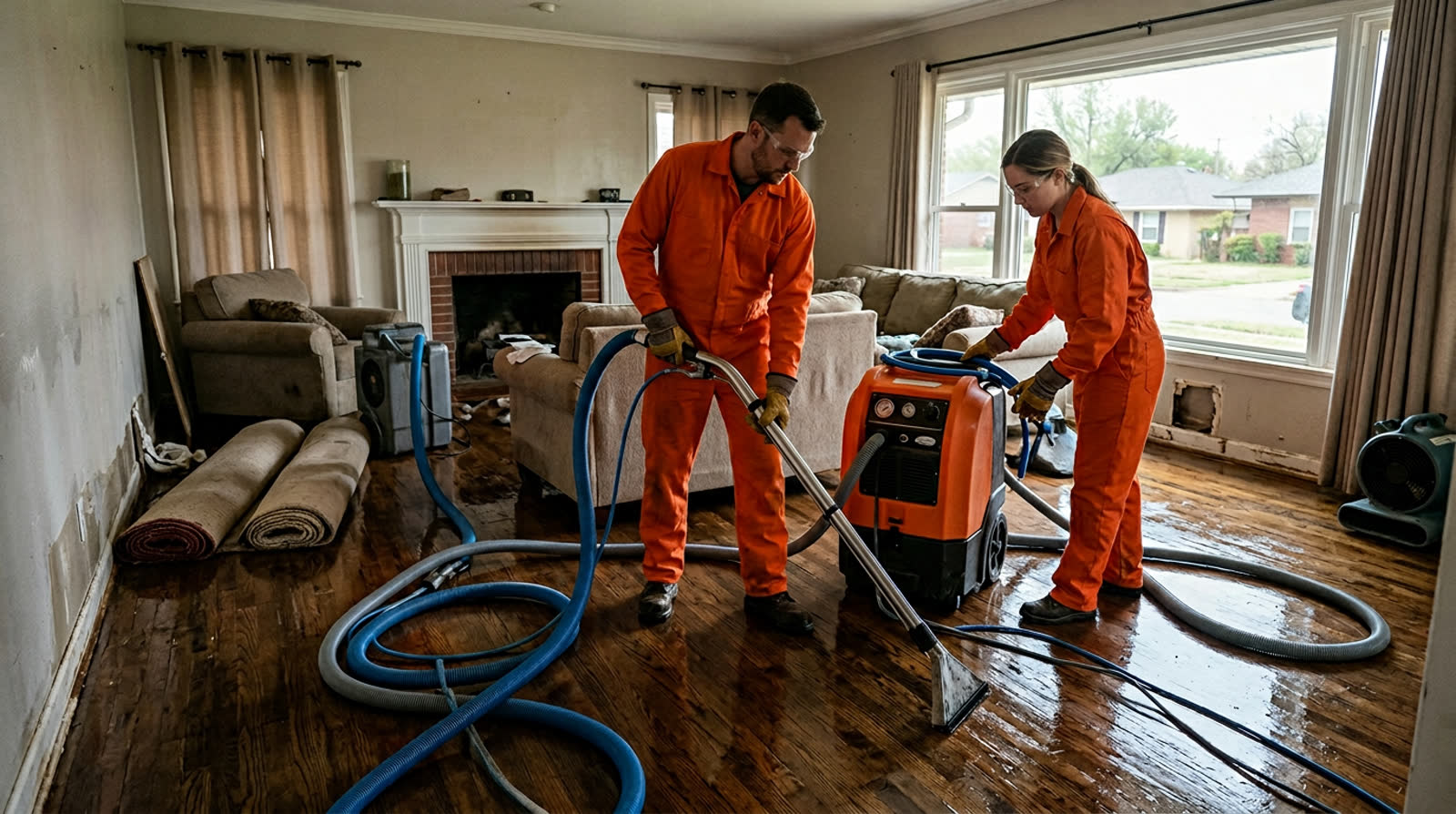
Call a professional water damage restoration company experienced with multi-unit properties. Apartment restoration requires coordinated equipment placement, air balancing across units, and careful moisture tracking in shared building components. We respond to Oklahoma City apartment emergencies with industrial extraction equipment and moisture mapping technology designed for commercial properties.
How Water Damage Affects Multiple Units Simultaneously
Water follows the path of least resistance through building assemblies. In apartments, this means traveling along ceiling joists, through wall studs, and into insulation cavities that span multiple units. A bathroom supply line failure can saturate drywall in three units before the leak is even discovered.
Ceiling assemblies are particularly vulnerable. Water collects on top of drywall ceilings and spreads laterally before soaking through. By the time you see a ceiling stain or drip, significant hidden saturation has already occurred. The ceiling may need removal across a wider area than the visible damage suggests.
Shared HVAC systems can distribute moisture throughout a building. If water enters ductwork or the air handler gets wet, the blower spreads humidity and potential mold spores to every connected unit. We inspect HVAC systems during apartment restoration projects because contaminated ductwork can recontaminate dried spaces.
Exterior water intrusion from Oklahoma's severe storms affects multiple units through compromised building envelopes. A damaged roof membrane or failed window flashing allows rain to enter the building structure. These leaks often go unnoticed until water reaches occupied spaces several floors below the entry point.
In our experience working across the Oklahoma City metro, determining the exact origin of water damage in apartments requires moisture meters, thermal imaging, and systematic investigation of all potentially affected building cavities. Surface-level assessment misses hidden saturation that leads to mold growth and structural decay.
Oklahoma City's clay-heavy soil creates unique foundation settlement patterns that directly impact multi-unit water damage scenarios. As the expansive clay shrinks during dry periods and swells during wet seasons, apartment buildings experience differential settling that creates cracks in shared plumbing chases and vertical pipe penetrations. A hairline crack in a drain line serving upper units becomes a slow leak that saturates wall cavities through multiple floors. During spring when Oklahoma receives the heaviest rainfall, these foundation movements accelerate and existing structural cracks widen, turning minor seepage into flooding events that affect entire vertical sections of apartment buildings.
The timing for drying multi-unit water damage ranges from three to seven days under normal conditions, but apartment projects typically take longer due to access coordination and the sheer volume of affected materials. A single-unit overflow might require 72 hours of drying equipment. A three-unit saturation event with shared wall cavities can require seven to ten days because we must dry the interstitial spaces between units, not just the visible surfaces. Equipment costs for multi-unit projects reflect this scale. Expect daily equipment rental in the range of $180 to $320 per unit when industrial dehumidifiers and air movers run continuously across multiple spaces.
Thermal imaging cameras have become standard tools in apartment restoration because they reveal moisture patterns invisible to visual inspection. We scan walls between units to map saturation boundaries and identify which spaces need drying equipment. The camera shows temperature differentials where wet insulation or damp drywall pulls heat differently than dry materials. This technology prevents unnecessary demolition in unaffected units while ensuring we address all compromised areas. Without thermal scanning, crews either remove too much material as a precaution or miss hidden pockets that later develop mold.
Oklahoma City building codes require fire-rated assemblies between apartment units, which complicates water extraction. These fire-resistant walls use multiple layers of Type X gypsum board and specific insulation types that trap moisture more readily than standard assemblies. You cannot simply cut access holes wherever convenient. Penetrations through fire-rated walls must be properly sealed with approved materials after drying to maintain the fire rating. This adds time and cost but remains non-negotiable for code compliance and resident safety. Restoration work in one unit that compromises a shared fire wall affects the safety of neighboring units until properly restored.
Tenant Communication and Temporary Relocation Protocols
Clear, timely communication with affected tenants reduces confusion and protects you from liability claims. Provide written notice describing the damage, restoration timeline, and any required access to their units. Oklahoma landlord-tenant law requires reasonable notice before entering rental units except in emergencies.
Some tenants will need temporary relocation if their units are uninhabitable during restoration. Your insurance policy may cover hotel costs or temporary housing. Discuss relocation benefits with your carrier early. Providing alternative housing quickly maintains goodwill and reduces the chance of lease termination or withheld rent disputes.
Establish a single point of contact for tenant questions. Property managers or owners should be available by phone and email throughout the restoration process. We've found that daily or every-other-day updates prevent anxiety and repeated inquiries about completion dates.
Respect tenant belongings during the restoration process. Professional crews should protect furniture with plastic sheeting, create contained work areas, and minimize dust and noise. If contents need to be moved for equipment placement, document their original locations with photos and return items when possible.
Address concerns about mold immediately. Tenants often worry about health effects once they learn water damage has occurred. Explain your drying timeline and emphasize that proper drying within 48 to 72 hours prevents mold growth. If mold is discovered, reference the separate inspection and remediation process required under Oklahoma mold regulations.
Insurance Claims Process for Multi-Unit Water Losses
Commercial property insurance for apartments differs from homeowner policies. Most apartment policies cover building damage but exclude tenant personal property. Understanding this distinction helps you set correct expectations with tenants, who should file their own renter's insurance claims for damaged belongings.
Loss of rent coverage is critical for apartment owners. If units are uninhabitable during restoration, you lose rental income. Many policies provide business interruption or loss-of-rent coverage that reimburses lost income during the repair period. Calculate your monthly rental income per unit when discussing coverage with your adjuster.
The insurance adjuster will inspect all affected units and building areas. Provide complete access and accompany the adjuster during the inspection. Point out all damage, including hidden areas you've identified. Adjusters sometimes miss moisture in wall cavities or subfloor saturation if not specifically directed to those areas.
Your restoration company should provide detailed estimates and moisture documentation to support your claim. We use thermal imaging reports and daily moisture logs to show the adjuster the full scope of affected materials. This documentation justifies the repair costs and drying timeline.
Some carriers require multiple bids for restoration work. Others have preferred vendor programs. Clarify these requirements before signing restoration contracts. You have the right to choose your restoration company in Oklahoma, but understanding carrier preferences can streamline the approval process for water damage restoration work.
Professional Drying Equipment for Multi-Unit Buildings
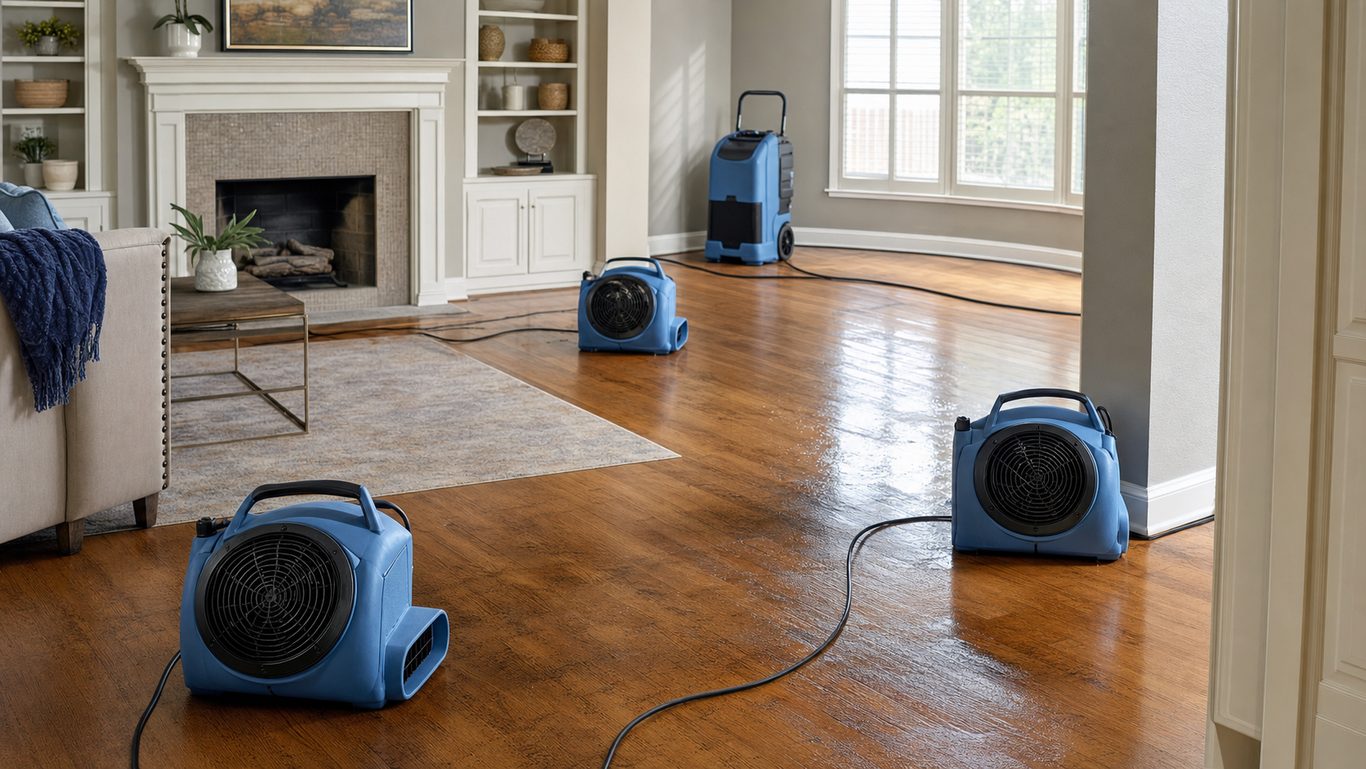
Apartment water damage requires commercial-grade equipment that can handle large volumes and operate across multiple spaces simultaneously. Standard residential dehumidifiers and fans cannot remove moisture from shared wall assemblies and building cavities fast enough to prevent mold growth.
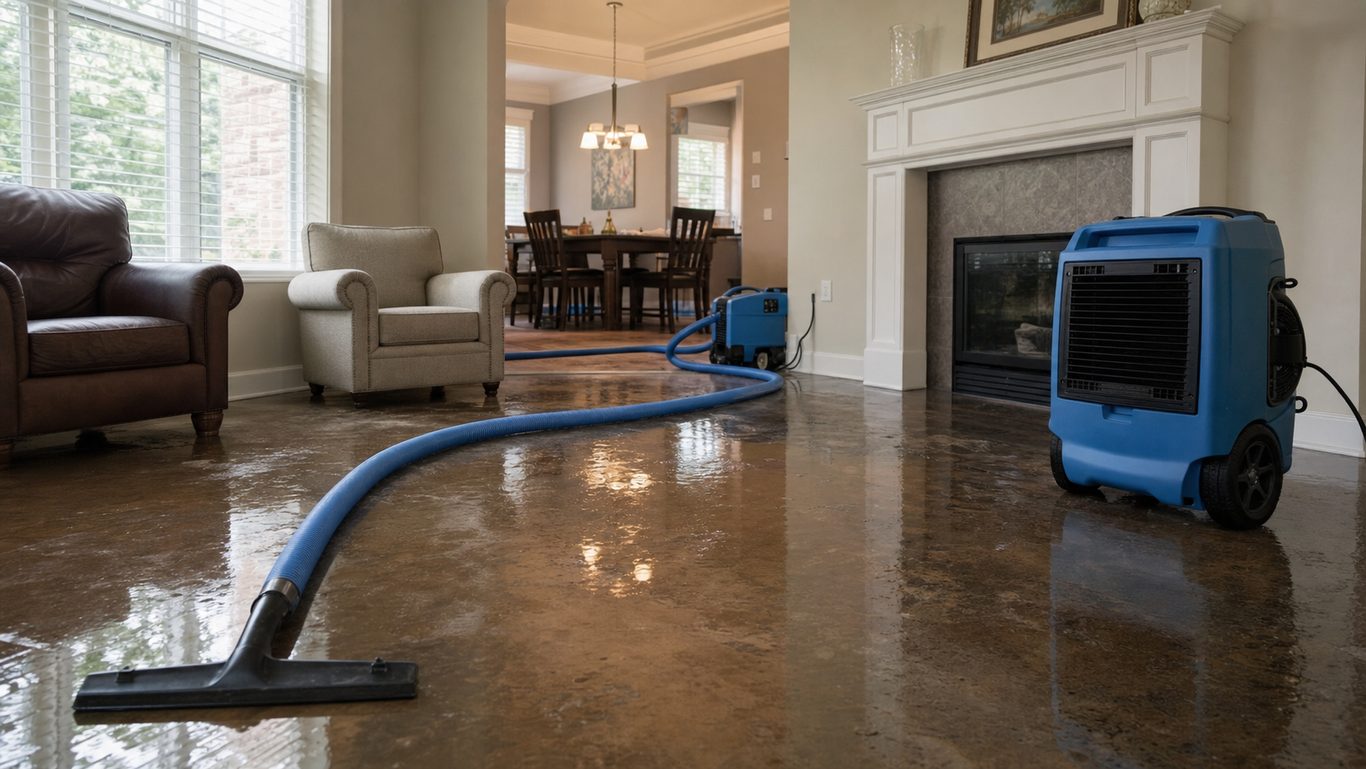
We deploy large desiccant dehumidifiers and low-grain refrigerant units that remove hundreds of pints of water per day. These machines are staged in hallways or vacant units to create negative air pressure that draws moisture from affected apartments. Air movers are placed strategically to create airflow across wet surfaces and through wall cavities.
Moisture monitoring is continuous throughout the drying process. Technicians take daily readings with moisture meters and document progress in each affected unit. Drying is complete only when moisture content returns to normal levels in all building materials. This typically requires three to seven days depending on the extent of saturation and building construction.
Floor drying systems may be needed if water has saturated hardwood, tile, or carpet in multiple units. We use injection drying systems that force warm, dry air beneath flooring materials to dry subfloors and slab foundations without removing finished floors. This saves time and reduces replacement costs.
Air scrubbers with HEPA filtration may be used if mold growth is suspected or confirmed. These devices filter airborne spores and prevent cross-contamination between units during restoration. Protecting indoor air quality is especially important in occupied buildings where healthy tenants remain in adjacent units.
Customers tell us that seeing the professional equipment and monitoring process gives them confidence the job is being done right. The visible presence of drying equipment also reassures tenants that you're addressing the problem thoroughly.
Preventing Future Water Damage in Oklahoma City Apartments
Regular plumbing inspections catch problems before they become emergencies. Schedule annual inspections of water heaters, supply lines, toilet connections, and washing machine hoses in all units. Replace rubber washing machine hoses with braided stainless steel lines that resist bursting.
Install water leak detection systems in mechanical rooms, laundry facilities, and units with high-risk fixtures. These systems shut off water automatically when leaks are detected. Some newer systems send alerts to property managers via smartphone apps, allowing rapid response even when buildings are unoccupied.
Roof and exterior envelope maintenance is critical for Oklahoma City apartments. Our tornado season and severe storms test roofing systems hard. Inspect roofs twice yearly and after major storm events. Check window and door flashing, and reseal any gaps where water could enter the building structure.
Educate tenants about proper fixture use and early warning signs of leaks. Provide written instructions about shutting off water in emergencies. Many tenants don't know where their unit shutoff valves are located. A simple orientation during move-in prevents confusion during actual emergencies.
Consider upgrading older plumbing in buildings constructed before 1990. Galvanized steel pipes corrode and fail over time. Polybutylene pipes, common in 1980s construction, are known for sudden failures. Repiping entire buildings is expensive but eliminates the constant risk of supply line failures in occupied units.
We've seen property owners in Edmond, Norman, and Moore reduce water damage incidents by 60% or more through proactive maintenance programs. Prevention costs far less than emergency restoration and lost rental income.
Need help now? See our full Water Damage Restoration service page or browse all restoration services. Don't see your city above? The full Oklahoma service area covers 27 cities.
Local context for this article: see our Oklahoma City, OK restoration page and the Water Damage Restoration in Oklahoma City service page.
This guide also pairs with emergency water mitigation and mold remediation when drying is missed.
Who pays for water damage restoration in apartments, the owner or tenant?
The property owner typically pays for structural repairs, drying equipment, and restoration of building components like drywall, flooring, and fixtures. Tenants are responsible for their personal belongings through renter's insurance. If tenant negligence caused the damage, the owner may seek reimbursement through the tenant's liability coverage or legal action. Oklahoma lease agreements should clearly define these responsibilities. Most commercial property insurance covers sudden and accidental water damage to the building but excludes tenant contents.
Authoritative resources referenced
Need restoration help in Oklahoma?
24/7 dispatch, IICRC standards, direct insurance billing.